| ▲ | tclancy 3 hours ago |
| > I don’t mind the ways in which my job is dysfunctional, because it matches the ways in which I myself am dysfunctional As a fellow traveller, I offer one caution: learn to turn this down in personal relationships as it can be counterproductive. It took decades for my wife to finally get through and explain not every problem she voices is something that needs a solution. Some times people just want to be heard. It bugs the hell out of me because I tend to need to solve All The Problems before I can do any self-care, but rather than seem heroic, I think this attitude can seem transactional or uncaring as though everyone is just a screw that needed a bit of tightening, etc. |
|
| ▲ | n4r9 2 hours ago | parent | next [-] |
| I frame it not as turning a dial down, but as switching channel from practical problem-solver to emotional problem-solver. Often when someone wants to talk about a situation involving difficult feelings, they're actually trying to process those feelings: to understand where the feelings are coming from, to be validated, and to be able to take a broader perspective. You can help by being curious about what they're saying, reflecting it back to them in your own terms, explaining how what they're feeling is understandable, and offering context or alternative viewpoints. These are actually complex problem-solving skills, although they can all fall under the umbrella of what people mean when they say "to be heard". As a man, I've realised that once my emotions feel validated and accepted, I relax and the practical solutions just pop into my mind. |
| |
| ▲ | thisislife2 2 hours ago | parent | next [-] | | > switching channel from practical problem-solver to emotional problem-solver Thank you for this useful tip! I've recently become aware that I may not be as good a listener I thought I was - I too make the common mistake of immediately offering solutions, or talking too much about my own relatable situations and feelings, instead of trying to really listen to them and help them figure out their own world view and feelings of a particular situation (and thus understand them better too in the process). | |
| ▲ | Aurornis 2 hours ago | parent | prev | next [-] | | > they're actually trying to process those feelings: to understand where the feelings are coming from, to be validated, and to be able to take a broader perspective. If you’re speaking to a rational person with good intentions and good self-management this can help a lot. If the other person doesn’t have good emotional regulation and is prone to catastrophizing, exaggeration, or excessive self-victimization then validating and reinforcing their emotions isn’t always helpful. It can be harmful. I know this goes against the Reddit-style relationship stereotype where the man must always listen and nod but not offer suggestions, but when someone is prone to self-destructive emotional thought loops behind their emotional validator can be actively harmful. Even if validation is what they seek and want. | | |
| ▲ | embedding-shape 8 minutes ago | parent | next [-] | | > then validating and reinforcing their emotions isn’t always helpful I think you might misintrepet what "validating someone's emotions" is/should do. It's not "You're absolutely right for feeling completely sad and broken down because the cafe wasn't open", but more "That must be such a horrible feeling, to feel so sad and broken down", without saying "yes/no" to if you think it's "justified or not". The point is that the person is feeling what they're feeling, that's what the validation and acceptance comes in, not about what they're feeling those feelings about. | |
| ▲ | n4r9 an hour ago | parent | prev | next [-] | | It can be a challenging skill to apply, and you need to use your judgement to discern whether the other person is in a place to engage with what you say. One comment I'd make is the difference between "valid" and "rational". Emotions and feelings are always "valid", in the sense that they are a natural consequence of events and prior conditioning. But feelings are rarely "rational" - they often don't reflect the complete truth of a situation. For example, suppose someone says "Jennifer sent me this short snippy reply today, I swear she's upset with me about something and won't tell me what it is". It is perfectly legitimate to validate that you can see where that fear comes from, but nevertheless offer alternative possibilites: maybe Jennifer is going through a tough time personally, or has a really tight work schedule at the moment. You don't have to fully buy into someone's thoughts and feelings in order to help them process them. In fact this is rarely going to help. | | |
| ▲ | Aurornis an hour ago | parent [-] | | > Emotions and feelings are always "valid", in the sense that they are a natural consequence of events and prior conditioning. If “validating” someone’s emotions comes down to simply saying that, yes, I agree you felt that way, then I suppose that’s true. But when people talk about validating other people’s emotions it implies that they’re saying the emotional response was valid for the circumstances. I have someone in my extended family who has a strong tendency to catastrophize and assume the worst. When she was in a relationship with someone who constantly validated her emotions and reactions it was disastrous. It took someone more level headed to start telling her when her reactions were not valid to certain situations to begin stabilizing the behavior. There’s a hand wavey, feel good idea where we’re supposed to believe everyone’s lived experience and emotions are valid, but some people have problems with incorrect emotional reactions. Validating these can become reinforcing for that behavior. I’m not saying we should start doubting every emotional reaction or white knighting everything, but it’s unhealthy to take a stance that validating other people’s emotions is de facto good. | | |
| ▲ | lcnPylGDnU4H9OF 38 minutes ago | parent | next [-] | | > It took someone more level headed to start telling her when her reactions were not valid to certain situations to begin stabilizing the behavior. I guess at the risk of splitting hairs, I think it's more likely they stopped misappropriating more than they started invalidating. I see a difference between "you shouldn't feel that way" and "I disagree with that conclusion" such that one can logically say both (well, the former being "it's okay to feel that way") in the same breath. | |
| ▲ | n4r9 an hour ago | parent | prev [-] | | I quite like the definition on Wikipedia: > Emotional validation is a process which involves acknowledging and accepting another individual's inner emotional experience, without necessarily agreeing with or justifying it, and possibly also communicating that acceptance. https://en.wikipedia.org/wiki/Emotional_validation It sounds perhaps like your family member's former partner was going further than validating the emotions, and trying to justify or prove them right. But this is quibbling over semantics; I think we both agree that challenging someone is sometimes the kindest thing to do. |
|
| |
| ▲ | burnished 29 minutes ago | parent | prev [-] | | I think you missed the bit where they suggested being curious and offering perspective - it really does work out differently |
| |
| ▲ | dan00 an hour ago | parent | prev | next [-] | | > Often when someone wants to talk about a situation involving difficult feelings, they're actually trying to process those feelings: to understand where the feelings are coming from, to be validated, and to be able to take a broader perspective. Right, talking about feelings is a way of regulating yourself. Conflicts with my wife are a lot easier if I'm able to empathize with her emotional distress, acknowledging it, instead of jumping directly into logical problem solving. If I'm only looking logically at the issue, I can't really understand the issue she is having. I like the view of the therapist Terry Real, that during conflicts you can either be right or stay connected. That doesn't mean that you hide your views, but that you also emotionally acknowledge the view of your partner. It's surprising how effectively this takes out the fire in conflicts. | |
| ▲ | funkyfiddler69 2 hours ago | parent | prev | next [-] | | > they're actually trying to process those feelings Exactly, help exploring their problem, maybe direct them into one nook or the other, support a proper perspective from different angles (to a small extent within the context and constraints they provided!!!), but don't solve the riddle for them. They might not even know how they really feel about it all, yet. | |
| ▲ | lazide 2 hours ago | parent | prev [-] | | Be careful you don’t end up with people who have constant emotional problems that need fixing - or that you’re 100% sure that you’ll never need to say ‘no’. Speaking from experience. Some people really don’t like ‘no’, especially when they have emotional problems. | | |
| ▲ | Aurornis an hour ago | parent | next [-] | | Another pitfall with this approach is when someone has constant emotional but irrational reactions to everything. Being the person who validates their emotions becomes harmful if they’re over-reacting or developing harmful emotional reactions and you’re always there to validate them. | | |
| ▲ | Cthulhu_ an hour ago | parent [-] | | If it becomes damaging to you (the person that is expected to be emotional support), "grey rocking" is the next step. Acknowledge, but don't respond. "uh huh" instead of "I am so sorry" or whatever. Don't take advice from me though. |
| |
| ▲ | n4r9 2 hours ago | parent | prev [-] | | I've heard that's true; compassion and empathy can be a draw for highly insecure people. You need to balance it with assertiveness and self-regulation, which are also part of emotional intelligence. |
|
|
|
| ▲ | Aurornis 2 hours ago | parent | prev | next [-] |
| > It took decades for my wife to finally get through and explain not every problem she voices is something that needs a solution. This can become toxic in itself, though. Some times venting and being angry is what someone wants to do, but in a workplace environment that’s not a good thing to implicitly condone and support. I’ve had some team members who just wanted to vent but not discuss solutions and (again, in a workplace, not personal relationship) it was a sign that something deeper was amiss: Being a perpetual victim of their circumstances and believing those circumstances were beyond their control was a safe, comforting place to exist. It was always easier to build up excuses that problems were thrust upon them by others, who could be held solely responsible for the results. In some cases I had to be very clear that they were responsible for working with teammates to address these issues together, not become a passive receiver of everything that happens with their peers. Swooping in as the hero to solve everything for someone else isn’t a good solution, but (in a workplace environment) getting someone to switch from the passive victim mindset to the active mindset of engaging with their own problems is very important. This is one topic where carrying advice from personal romantic relationships into the workplace isn’t a good idea, IMO. |
| |
| ▲ | hypeatei 13 minutes ago | parent | next [-] | | Venting all the time can actually be quite harmful to the venter. Negative energy drives change and if all you're doing is offloading then you're going to get stuck in a loop of feeling bad -> vent -> repeat while the underlying problem doesn't get solved. | |
| ▲ | tayo42 an hour ago | parent | prev [-] | | The advice to surrive the workplace is to not act like a human lol | | |
| ▲ | Aurornis an hour ago | parent [-] | | Treating workplace relationships with the same techniques as romantic relationships is a bad idea, IMO |
|
|
|
| ▲ | al_borland 2 hours ago | parent | prev | next [-] |
| I learned this from the show Parks and Recreation. Ann is pregnant and trying to vent, and Chris is looking to solve all her problems. This drives her nuts. Clip: https://www.youtube.com/watch?v=OdA8QNTqn-A |
|
| ▲ | dmichulke 3 hours ago | parent | prev | next [-] |
| Good point. Tangentially, you could ask: Are you addicted to being useful or to being recognized as useful. One is your own need, the other often a covered contract where you lash out or silently resign if you don't get the recognition that you think you deserve. |
| |
| ▲ | amelius 3 hours ago | parent | next [-] | | I'm surprised nobody asks whether you're at fault here, or she is. Next time, maybe ask her to come up with solutions, e.g. do a brainstorm session. If she then says she doesn't really want a solution, you can tell her then don't phrase your issues like that. | | |
| ▲ | krisoft 2 hours ago | parent | next [-] | | > asks whether you're at fault here, or she is Or maybe nobody is? Why does someone has to be “at fault”? > you can tell her then don't phrase your issues like that. Sometimes people just want to be heard. There is value in recognising that. | |
| ▲ | y-curious 2 hours ago | parent | prev | next [-] | | There’s an old adage that is very important to logical people (as software engineers are, for example). “Do you want to be right or do you want to be happy?” My wife wants to throw out our perfectly functional table to get a better looking one. Financially and practically, I am right in fighting this. Is a few hundred bucks worth making someone aesthetically-minded not feel satisfied? No, you have to pick your battles. | | |
| ▲ | pdimitar an hour ago | parent | next [-] | | That really depends if you like (or are mostly indifferent to) the new table. If you hate it then it becomes a game of "who of us two is more important to satisfy with a table". Definitely not a position you want to be in. Relationships must be two-way streets, always. I have made quite a lot of concessions for my wife for the current rented flat -- simply because I did not care about 99% of the things she wanted to change. I only gave her a rather loose framework: "this must fit these physical dimensions as you yourself can see here in this corner" and "I am not willing to spend hundreds to change something that is currently performing to 90% of the standards of both of us" and "how difficult it is to ship and install this?" -- and she has been mature and considerate enough to understand the boundaries and nailed them every single time so far in our 11.5 years together. And she still got almost everything she wanted and is visibly happier with the environment. When both sides have preferences they feel safe sharing but are still reasonable above all, then things are going smoothly and flow naturally. Of course there are the rare exceptions where I just gave up and said to her: "OK, I am leaving this to you, figure all the details out and I'll just pay it at the end of the process". I was not unhappy but she did not want to budge on a few things and I ultimately just stashed the old thing in the garage in case she understands she made a bad deal or the new thing was underperforming. I agree strongly with "pick your battles". You have to be able to read the person in real time. It's actually much easier than most technical people think. | |
| ▲ | lazide 2 hours ago | parent | prev [-] | | Some people have a habit of creating situations that are…. Not so easy to get out of. My favorite one essentially boiled down to ‘die die die, or I’ll kill you’. Which, clearly, I struggled to find a useful compromise on. |
| |
| ▲ | lazide 2 hours ago | parent | prev [-] | | Pro tip - that usually just makes people angrier haha. (Source: twice divorced, and was - per the court - always right, but it didn’t help me one bit). The challenge is, some people (most) get stuck on some emotional thing, and will drain you dry if you try to even engage with them on it. It’s especially prevalent right now. | | |
| ▲ | TeMPOraL 2 hours ago | parent [-] | | > The challenge is, some people (most) get stuck on some emotional thing, and will drain you dry if you try to even engage with them on it. It’s especially prevalent right now. Yup. I've long learned to suppress my problem-solver nature because "people want to be heard", but then what it gets is turning me into a sounding board for people who get stuck on something indefinitely. It's easy to not jump in with solutions the first time you hear a story, but it's much harder when you hear the exact same story, with exact same underlying emotion, dozen+ times in the span of a few months. The other side is clearly not really processing their emotions - so if not that, and not practical advice, then what's the point of even talking about it? It's really draining and in some cases I'm not in a position to disengage either. | | |
| ▲ | pdimitar an hour ago | parent | next [-] | | Like with everything, none of the both extremes are good. What helps me in situations where people talk about it for the umpteenth time is trying to drill down and find the root cause with carefully worded questions. I think I might be ready to become a therapist, lol. Though my fuse is quite short due to my own stress so I don't put myself in the "I am your emotional trash bin" kind of situations. So to me even the situations you describe can be made use of. Think of it as a long-running background task with many steps; after each retry you get a new exception stack trace. F.ex. during conversation #7 you might understand one or two causes of the problem but at conversation #12 you might already have a nice root cause and you can then try to gently nudge the person towards addressing that. Of course you are not mandated to. It's all about what you need in this current phase of life as well; you don't have to be people's therapist. It's just what I find super interesting the last year or so -- root-cause analysis of human problems. But when I understand that somebody just wants to whine and be a constant victim, I mentally check out. Not worth the joules that my brain would spend on that person. | |
| ▲ | the_af 2 hours ago | parent | prev | next [-] | | I want to echo this. And there's no solution. Nothing you can do, say, or not do or say will help. Even just listening will be perceived, after the umpteenth time, as condescending; and voicing your opinion is obviously a no go. It's lose-lose. | | |
| ▲ | saidnooneever 2 hours ago | parent [-] | | the solution is mutual recognition and understanding, but as a problem solver its not satisfying as you cant implement it in your own way :'D | | |
| |
| ▲ | bflesch 2 hours ago | parent | prev [-] | | I call that "you are the garbage bin for other people's emotions". And once you realize this process you can't unsee it and re-evaluate some relationships. If it is each side taking turns being the "emotional garbage bin" then it's a healthy relationship. But if people only reach out to drop their toxic waste and leave you without the chance to get rid of your own toxic waste you feel not good afterwards. Like where you have conversations and then afterwards notice that you were not able to actually speak about any of your own problems and worries. That's what I really like about the kids and their words of the year: They used "aura" and at first I thought what a bullshit term is that, but after a while I came to understand it. It's totally fine to listen to your stomach feelings, if someone's aura is negative or their vibes are off you don't need to give them a reason why you stop interacting, you just leave. We've been trained to be helpful and nice to everyone but then wonder why we feel drained at the end of the day. It's because we're spending emotional bandwidth on people and things that don't give us any energy back. The word "aura" for all of this is extremely nice. If you see a spooky person approaching you on the street at night you also don't need to explain to them what exactly put you off about them - you just switch sides. I can only recommend to trust your feelings. |
|
|
| |
| ▲ | ChrisMarshallNY 2 hours ago | parent | prev [-] | | In my case, I really do want to be of use. In fact, I often tend to stay well in the background, and deliberately eschew credit. That said, I do tend to get upset, when I’m taken for granted, but that’s really my own fault. I know it, rationally, but my inner brat still wants to throw a tantrum. | | |
| ▲ | pdimitar an hour ago | parent [-] | | Well if none of the measures you already tried to stop that did not work, then maybe one thing that can help you is asking yourself whether you are not feeling drained after interacting with those people? I, like yourself, cannot override my engineering mindset. I ALWAYS WANT TO HELP. But at one point I reframed it as an energy budget problem and how efficiently are my time and energy spent... and then it clicked. | | |
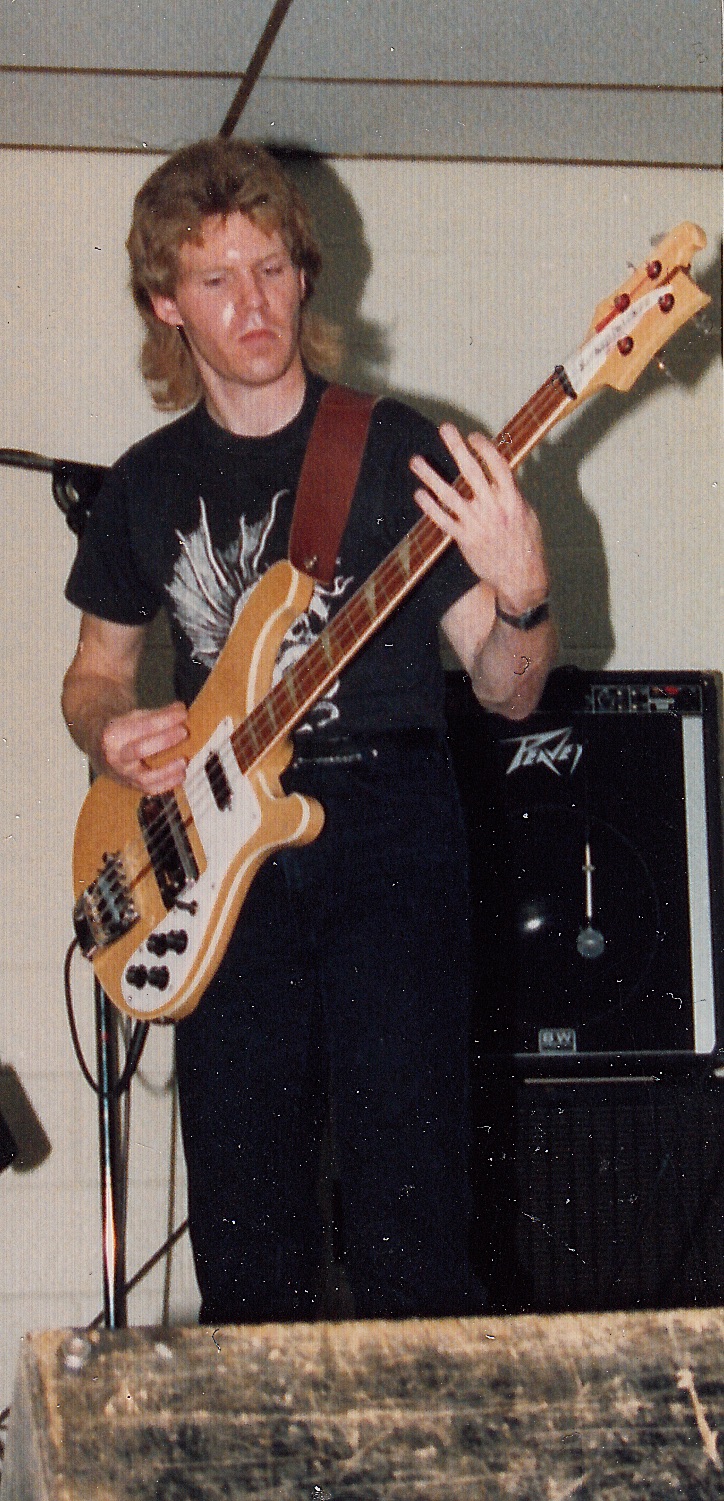
| ▲ | ChrisMarshallNY 33 minutes ago | parent [-] | | I have learned to do that, but it actually makes me uncomfortable to do it. I'm "on the spectrum," which, in my case, manifests as not being very comfortable, when people give me attention. That's why I like working on "infrastructure" stuff (and also why I used to be a bass player[0]). [0] https://cmarshall.com/MulletMan.jpg (That hair was in style, back then. I no longer look like that). |
|
|
|
|
| ▲ | opminion 2 hours ago | parent | prev | next [-] |
| I'm probably your wife. It could be related to the personality trait of how much of our world model is "in our mind" vs "out there": If I speak with you while working on the world model in my mind, it looks like I just "want to be heard". But your feedback is actually very important, it's just that it should only feed my mental world model. I am then surprised that my math coprocessor reaches for the GPIO. |
|
| ▲ | onion2k 2 hours ago | parent | prev | next [-] |
| It took decades for my wife to finally get through and explain not every problem she voices is something that needs a solution. Some times people just want to be heard. I'm glad she managed to solve this problem in the end. ;) |
|
| ▲ | sdoering 3 hours ago | parent | prev | next [-] |
| > I tend to need to solve All The Problems before I can do any self-care I can so relate. I once read something that shifted my perspective a bit and helped me start the work of learning to better care for myself. It was basically somebody talking/writing about the safety instructions when taking a flight. They tell you that in case of an emergency, when the o2 masks drop down to first put your ownmas on, before helping others. Because you are no help, if you loose conciousness. This image/metaphor , to first put my own mask on, so that I can ensure, I will be able to help others without falling over, was what helped me start this process. I sadly can't remember if it was Brené Brown or where I originally read that. |
| |
| ▲ | pjmorris 2 hours ago | parent | next [-] | | It's a great analogy. I first came across it in Gerald Weinberg's 'More Secrets of Consulting: The Consultant's Tool Kit', where he spends some time talking about burnout, what it means, and how to get out when you find your way in. | | |
| ▲ | hackable_sand 2 hours ago | parent [-] | | For a more spiritual audience: the analogy is also widely recognized in the Bible | | |
| ▲ | wrsh07 2 hours ago | parent [-] | | For what it's worth, I wanted to downvote this because it doesn't provide much additional context. Which verses? Is there a link? (I didn't downvote) Saying "oh yeah the bible mentions that" doesn't really add to a conversation - the bible mentions a lot of stuff! However, if I downvote you because you didn't provide context, you might misinterpret it as "wow, hacker news hates the bible" (I have no opinion on hn audience feelings towards religion) So for additional context, one could look up the "speck vs log" which seems most straightforwardly about taking care of your own issues first (although it's in the context of hypocrisy, which doesn't quite match the original thread iiuc) I found a few others, but none quite seemed like the close match I was hoping for (Mark 12:31, 1 Corinthians 6:19-20, etc) |
|
| |
| ▲ | lazide 2 hours ago | parent | prev [-] | | One pattern I’ve noticed, however, is that if you’re really good at doing this - and the situations being created are artificial - you might run into a situation where someone cuts or poisons your oxygen mask first. I would have said ‘no way is someone that evil’, but uh…. Ask most men in their 40’s or 50’s. | | |
| ▲ | darkwater an hour ago | parent | next [-] | | > I would have said ‘no way is someone that evil’, but uh…. Ask most men in their 40’s or 50’s. WDYM with the last sentence? | |
| ▲ | tclancy 2 hours ago | parent | prev [-] | | Buddy, this is the second comment in here where you want us to blame some unknown Other for our problems. That is a dead end. And gray hair doesn’t confer wisdom, as Thoreau said. Signed, some guy in his 50s. | | |
| ▲ | tclancy 2 hours ago | parent [-] | | Sorry, my bad, fourth comment. | | |
| ▲ | lazide 7 minutes ago | parent [-] | | Hey, it isn’t always the case - but sometimes you really are being sabotaged, and not recognizing the possibility just screws you more. |
|
|
|
|
|
| ▲ | RHSeeger 16 minutes ago | parent | prev | next [-] |
| I specifically ask my wife "Are you looking for me to help you solve this, or just venting?", because I automatically try to solve. |
|
| ▲ | ilikecakeandpie an hour ago | parent | prev | next [-] |
| I usually ask if we're chatting if my partner is looking for any feedback/solution or if she just needs to be mad. It's pretty effective |
|
| ▲ | johnisgood 3 hours ago | parent | prev | next [-] |
| Yeah, I am still learning to not be logical and fix whatever ails her. Often she really just wants to be heard, not solutions. I am ~30 years old, hopefully I will be able to just hear, without offering any solutions. It bothers me too. I am a SWE because I love solving problems! |
| |
| ▲ | TeMPOraL 2 hours ago | parent [-] | | > It bothers me too. I am a SWE because I love solving problems! In my case, I've recently been wondering whether I really love solving problems, or rather just hate stupid bullshit and solving it - quickly and efficiently - is usually the best way to make it go away for good. In many cases, the behavior is identical - I just find myself to be motivated by frustration more often than curiosity these days. |
|
|
| ▲ | p0d 2 hours ago | parent | prev | next [-] |
| Well said...I have discovered the same in my own marriage of thirty years. I would add that even bringing a good solution in a relationship can go unheard, especially if the motivation is to be the fixer, and to be honest make your own life easier by silencing the other's point of frustration. |
|
| ▲ | amiga386 an hour ago | parent | prev | next [-] |
| It's Not About The Nail: https://www.youtube.com/watch?v=-4EDhdAHrOg |
|
| ▲ | funkyfiddler69 2 hours ago | parent | prev | next [-] |
| > not every problem she voices is something that needs a solution Relatable. Is true for even the simplest problems that some people have. Sometimes they just didn't even address it yet and are only becoming adequately aware of it and here you are spelling out a plan of action during a 7 min encounter in the kitchen. |
|
| ▲ | agumonkey an hour ago | parent | prev | next [-] |
| could this be a difference in male/female brains ? talks implies action for men, while women want to communicate most and maybe plan to act ? just curious, it's an issue that has been mentioned everywhere all the time |
| |
| ▲ | hydrogen7800 an hour ago | parent [-] | | >could this be a difference in male/female brains ? Maybe socially, but I'm not sure about naturally. It took me a long time to get where the GP is, realizing that some just like to he heard rather than offered solutions. Now I notice that my family are "fixers" and any problem or difficulty is countered with "did you do this" or "you should have done that" or "why don't you.." I now realize I don't like being second guessed in a moment like that, in contrast to the gender stereotype. | | |
| ▲ | agumonkey 44 minutes ago | parent [-] | | true, there are families, groups who have naturally different reaction to the same event.. |
|
|
|
| ▲ | mutkach 2 hours ago | parent | prev | next [-] |
| Super-relatable. Now that I think about it, most of my advice starts something like "Here's what you're gonna do..." Wait, that itself sounds like a problem, but how do I fix it... |
|
| ▲ | kakacik 3 hours ago | parent | prev [-] |
| This is kind of typical situation with men and women right, they need their girl friend coffee complaint time, we guys need similar beer time, albeit contents vary wildly. At least what you write fits every ex-gf I dated, and also fits my guy-brain expectations and resulting type of discussions. Part of the setup by default, but should not take decades to discover or reveal. Similar to how women experience stuff mainly via emotions, hence what was fine yesterday may not be today albeit factually nothing changed. 101 of each adult should be also figuring out how one works (and how doesn't) and optimizing with other relevant parties further interactions. |