| ▲ | asciimike a day ago |
| The viability of space DCs seem to depend entirely on the existence of higher latency, lower throughput, single card to single server workloads, which IMO isn't the primary class of workload today (and if one holds the belief that frontier models will maintain their dominant position, this will remain rack/row/facility level, which isn't viable for orbital facilities to handle as currently designed). If that workload does expand in usage, and the economics of orbital DCs make sense (with high launch costs, zero ability to do maintenance, and weight penalties for shielding and radiators), then surely ocean based data centers (e.g. Panthalassa) make more sense (lower 'launch' costs, high but existant latency on maintenance, no weight penalties), and if those make sense then surely the distributed land based facilities (e.g. Rune Energy) or home based facilities (e.g. Span XFRA) make even more sense (easier maintenance, low/no permitting overhead because they're covered by existing permits, reasonable quality terrestrial fiber internet). |
|
| ▲ | svara a day ago | parent | next [-] |
| I don't think it's quite as crazy as you make it sound. Per unit area, the radiators dissipate a similar amount of energy as the solar panels do, so they'll be a similar size. That's doable. The upside is there's no land and power generation or grid connection issue; you get solar power 24/7 and the latency to earth is just a few ms. It would also be possible to fly the individual satellites close together so that you can do high bandwidth optical links between them, i.e. you're not limited to single rack workloads. A single GB200 rack costs about $3M, transporting its 1.4 tons on a Falcon 9 would cost a similar amount, around $4-5M. That's got to be too expensive for now, but it's also not in a range that's totally off. The idea is essentially a bet on land and power continuing to be a big issue and launch costs getting a lot cheaper, which they very well might with Starship. The rest is engineering challenges that are probably solvable. |
| |
| ▲ | treyd a day ago | parent | next [-] | | >you get solar power 24/7 and the latency to earth is just a few ms. Not at the same time. To have few-ms latency you need to be in/below LEO, but then earth blocks the sun half the time. | | |
| ▲ | svara a day ago | parent [-] | | It can be done in a dawn-dusk, sun synchronous orbit, less than 1000 km up. | | |
| ▲ | echoangle a day ago | parent | next [-] | | That’s at least 20 ms of round trip time, realistically much more. Especially since it’s not geostationary so the distance to the closest ground station will in most cases be much longer than straight down. I would be surprised if the average ping is below 100 ms. Probably still fine for most applications though. | | |
| ▲ | asciimike a day ago | parent [-] | | Latency isn't really the issue here (lots of inference serving happening across oceans, which is probably 100-150ms RT), but bandwidth ends up becoming an issue for large scale transfers (mostly model weights, not the actual inference tokens/queries). | | |
| ▲ | echoangle a day ago | parent [-] | | With laser terminals you’ll get a few gigabits per second. That’s possible both between sats and to the ground station. Probably not cheap though. |
|
| |
| ▲ | jltsiren a day ago | parent | prev [-] | | Low Earth orbit is 90 to 120 minutes, depending on altitude. Even if the satellite is currently close to you, it will soon be on the other side of the world. Assuming that orbital data centers make sense, it will be an interesting challenge to figure out how to best mitigate that. Short tasks that require little data will be easy, but everything else needs rethinking. Can you tolerate variable latency? Should you duplicate the data across many satellites? Or should the data constantly migrate from satellite to satellite? |
|
| |
| ▲ | blurker a day ago | parent | prev | next [-] | | > The upside is there's no land Orbital space is becoming increasingly congested and hazardous. I think this is actually one of the worst arguments in support of space data centers. | |
| ▲ | Guvante a day ago | parent | prev | next [-] | | Why are you ignoring all of the costs of actually being in orbit here? A normal satellite runs something similar to 1U worth of computer and costs roughly what you quoted in total... | | |
| ▲ | cortesoft a day ago | parent [-] | | Why are you guys rehashing the exact calculations that were made in the article? The article is all about these calculations, and they give ranges of values for each cost to see the the possible price points for everything in order to make it worthwhile. They take all of the bits you guys are talking about into account in the article. You might disagree with some of the numbers, I guess, but that doesn't seem to be what you guys are talking about. |
| |
| ▲ | Choad_20261104 10 hours ago | parent | prev | next [-] | | I know you probably weren't meaning to solve a business model here, but there are differences between the space-borne rack and the earthbound rack that will require cost consideration. Likewise the space-bound system will have no maintenance and will thus either require planning to manufacture for higher reliability or plan for greater risk of failure in MTTR/replacement cost modeling. Whomever decides to fund the venture will necessarily ask investors/CFO to rationalize the expected return. In our modern hurry up, returns only pencil out in the very far future and yet investors seem to care little. I am not certain that reflects good capitalist values or discipline. | |
| ▲ | asciimike a day ago | parent | prev | next [-] | | Finding land/power/space to do a _single_ rack is not hard as ~every office building in America has 200kW of extra power and HVAC water at ~25C. Plus it only costs $4-5k to stick that $5M rack in the back of a truck to drive it there. No permits, easy maintenance, stable network connectivity. Why use a satellite to do what your IT closet can already do? | | |
| ▲ | semiquaver a day ago | parent [-] | | People are fudging orders of magnitude because it sounds cool and they are stupid. |
| |
| ▲ | a day ago | parent | prev [-] | | [deleted] |
|
|
| ▲ | hermitShell a day ago | parent | prev | next [-] |
| I think the kinds of workloads that will be profitable to run in space are not complex workloads, but rather ones that benefit from being outside of any country. Power (control authority) that is running on space infrastructure is literally above the law. It doesn't take a whole lot of compute to do a lot of things. |
| |
| ▲ | Balooga 18 hours ago | parent [-] | | The uplinks that talk to the satellite are in a country. The company that owns the uplinks and the satellite is in a country. The people that work for that company live on the ground and in a country. Having a GPU in space won't let anyone operate "above" the law. |
|
|
| ▲ | dboreham a day ago | parent | prev | next [-] |
| I don't think we need that many words. It's an obviously preposterously stupid idea that has been promoted only to defraud investors. |
| |
| ▲ | EA-3167 a day ago | parent | next [-] | | Unfortunately most people even here don’t have a working knowledge of the relevant tech, and seem to lack a similar grasp of the thermodynamics. A non-trivial number still think that the hard part of colonizing Mars is the rocket to get there. What can you do? | |
| ▲ | rightnutwingjob a day ago | parent | prev | next [-] | | Correct. And putting things in the ocean is only marginally less idiotic due primarily to sea water being corrosive, wet, and full of creatures that tend to want to grow all over anything. | | |
| ▲ | NortySpock a day ago | parent | next [-] | | Microsoft did attempt ocean racks in a sealed container , and it sounded like the 3 year test ended successfully but was not renewed. I presume the cost of setup, teardown, lead-time, low power density when scaled up, and lack of convenient access for mid-life repairs made it not worth the trouble https://www.microsoft.com/en-us/research/project/natick/ | | |
| ▲ | cogman10 a day ago | parent | next [-] | | This is the sort of thing that highlights why space is such a dumb place to put a DC. Everything about storing a DC underwater is easier than it is in space (except corrosion). It's easier to access, cheaper, easier to cool, easier to get enough power, easier to update. Heck, doing a second story data-center resolves a ton of issues with today's data-centers (while being a bit more expensive due to additional structural support requirements). There are so many options for terrestrial DCs to overcome whatever problem space might supposedly solve, and they are all cheaper than the space solution. | | |
| ▲ | chmod775 a day ago | parent | next [-] | | > except corrosion Spacecraft in LEO deal with corrosion from - among other causes - atomic oxygen atoms up there, which are eager to cause oxidation in almost anything they come in contact with. The rate of this can be greater than on Earth's surface, though I'm not sure how oceans compare for corrosion. Overall it's probably true that it's less of an issue than with sea water, but it's not a nonissue either. https://en.wikipedia.org/wiki/Corrosion_in_space | |
| ▲ | dgoldstein0 a day ago | parent | prev [-] | | how is power easier? solar power in orbit seems like a no-brainer - no losses due to the atmosphere / weather, and with the right orbit you can get sun all the time. Was the ocean DC tide-powered or something? how does that compare? | | |
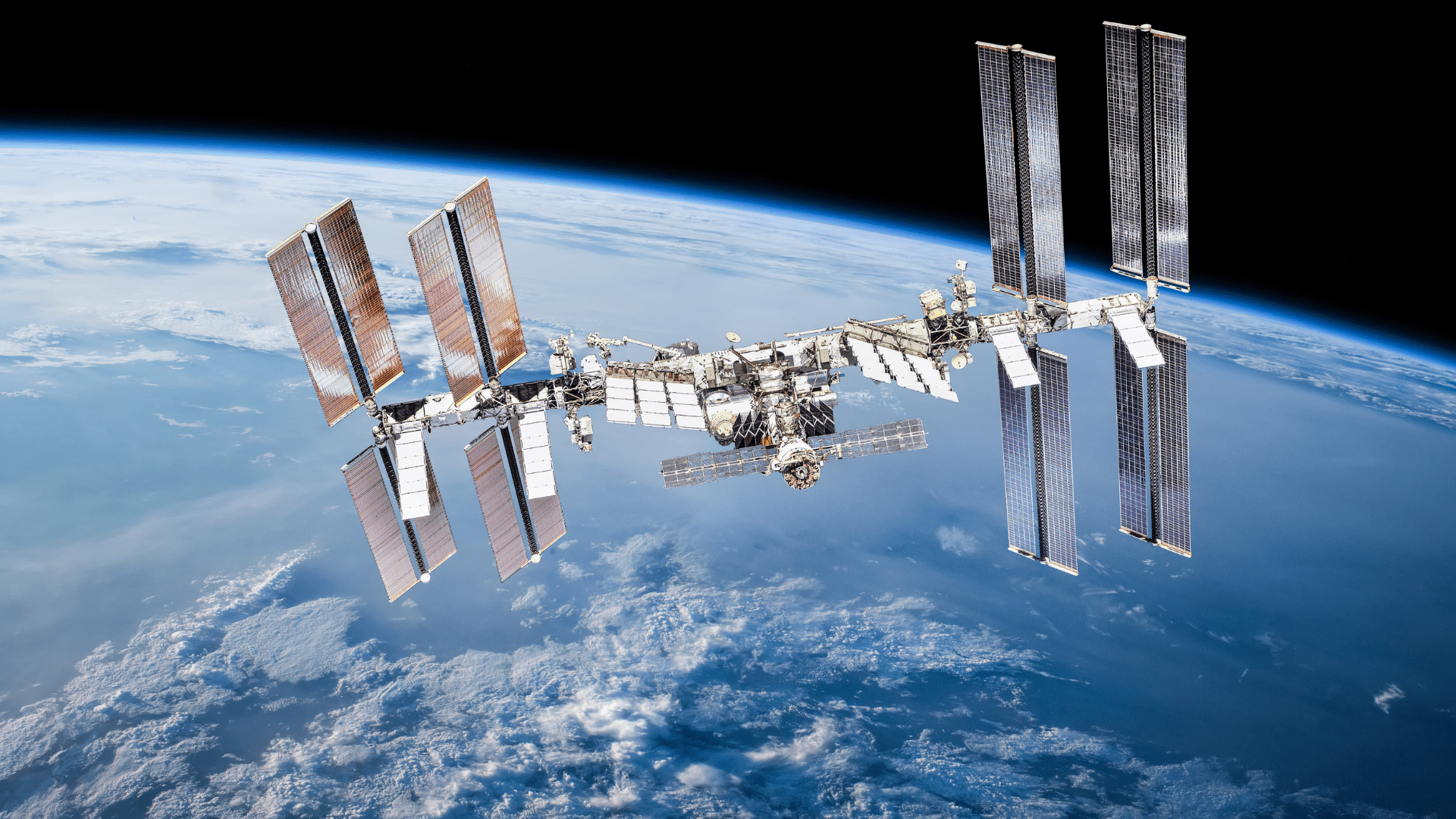
| ▲ | bayindirh a day ago | parent | next [-] | | It looks like ISS can generate 240KW peak from 2500m2 of solar panels, and runs at half of that nominally [0]. A single B200 can consume up to 1200W. A single GB300 system needs 14.5kW. So, you can only have ~15 (incl. satellite's energy needs) GB300 with ISS' solar panels, which is absurd. See [1] for the size of the panels we're talking about. People dream about Starlink-style close flying systems to aggregate them to a single data center. With these power requirements, it's more like an AI hallucination. If we can build way more efficient chips or run smaller models on modest hardware, etc. We may go there, but needing ISS sized solar panels to run frontier models in space? Also, don't forget the radiators. You also need those to pump that heat out of these systems. The outlook doesn't look good at this point. [0]: https://en.wikipedia.org/wiki/Solar_panels_on_spacecraft#Spa... [1]: https://www.sgmk.edu.pl/wp-content/uploads/2025/10/iss.png | |
| ▲ | cogman10 a day ago | parent | prev | next [-] | | In space, you have to deploy all the power production you want to consume in the same package that's consuming that power. On earth, you can build a power plant miles from the DC. And you can use all sorts of different sources of power, tidal, wind, nuclear, solar, fossil fuels. All options. And like the DC, if there's a problem with any of those sources, you can go fix it or replace it with different power sources. If there's a problem with the solar panels in space, your DC is dead. That's both easier and a lot more flexible. | |
| ▲ | munchbunny a day ago | parent | prev [-] | | In Microsoft’s case, they ran a cable, which is much simpler to do than putting solar panels in orbit. |
|
| |
| ▲ | horsawlarway a day ago | parent | prev | next [-] | | Yes, but that apparently proves the point of the poster above you. The moderate improvements in cooling we're not worth the extra complexity. So it just didn't make sense to do outside of a single media stunt project. Data centers in space don't even get the cooling benefit. The whole idea just doesn't survive modest consideration. Data centers aren't particularly dangerous. There's no forcing function to put them away from where people live. The best location for a data center is going to be a decent sized urban center with existing utilities (power and network) and acceptable land costs. There are nearly forty of them in Atlanta, people walk by them every day with no idea what they are. | | |
| ▲ | bayindirh 12 hours ago | parent [-] | | > Data centers aren't particularly dangerous. Unless you burn them during reentry. When this idea started to be discussed for the first time, somebody ran the numbers, and burning defunct ones during reentry created a massive fallout of hazardous materials, threatening the health of everyone on the planet. |
| |
| ▲ | Danox a day ago | parent | prev [-] | | Microsoft can’t catch a break. Their Surface mashup with Nvidia probably is probably dead within a year. Copilot and the gaming empire appear to be falling apart, other than massive Capex being lit on fire what does Microsoft/Nadella have to show for it right now aside from a plan to layoff 60,000 people. |
| |
| ▲ | cactusplant7374 a day ago | parent | prev [-] | | How is Panthalassa doing? Anyone know? |
| |
| ▲ | blensor a day ago | parent | prev | next [-] | | That being said. If I were an AI, I would lobby for datacenters in space as hard as I can to put the off switch comfortably out of reach of humans. | | |
| ▲ | MadnessASAP a day ago | parent | next [-] | | Anti satellite weaponry exists. The off switch would be in the hands of anyone with suborbital launch capability. | |
| ▲ | haglin a day ago | parent | prev [-] | | The benefit is that they will fall down in 5-10 years. That's an automatic off switch. | | |
| ▲ | tartoran a day ago | parent [-] | | That's an eternity for an exponentially growing intelligence. | | |
| ▲ | AnimalMuppet a day ago | parent [-] | | Exponentially growing on the same hardware? That's... optimistic. Not, IMO, realistic. |
|
|
| |
| ▲ | bliteben a day ago | parent | prev | next [-] | | I think if we manufactured most of the infrastructure and maybe the chips or solar panels in space it might actually make sense. Nobody is talking about that though, I guess Elon is saving the we will make the solar panels in space for a down quarter. | | |
| ▲ | rbanffy a day ago | parent | next [-] | | I would not expect that to happen any sooner than 50 years from now. If a flight to the Moon on a Starship really requires a dozen refuelling flights, then we need an even bigger rocket (because the larger a rocket is, the more efficient it gets). Then we need to develop and build automated and teleoperated lunar factories, maybe ship the electronics from Earth for final assembly on the Moon, establish lunar mining and metalworking to build the structures, motors, actuators, solar panels, radiators, find raw materials and process them into heat exchanger fluids and propellants, and launch the satellites at least to Lunar orbit so they can self propel to their destination orbit where latency is not two seconds. Even with an intelligence explosion guiding the development of all these technologies, it’d take many decades. | |
| ▲ | skort a day ago | parent | prev [-] | | How would it make sense? Have you seen how things are manufactured? Why would you want to make something harder and more expensive than it has to be? It's delusional to think that these things will work better in space/on mars than on earth. | | |
| ▲ | bliteben 13 hours ago | parent | next [-] | | We are going to have to figure it out just to even deal with all the trash we are sending up. Long term any colonies on the moon or mars will have to manufacture at least fuel. | |
| ▲ | rbanffy a day ago | parent | prev [-] | | Some metallurgy on the Moon might be easier - at least the atmosphere doesn’t want to react with the materials. For other processes, you actually want some of the atmosphere to do exactly that. We’ll need to develop base industries from scratch for these environments, but, eventually, we’ll get there. The downside is that it’ll take at least multiple decades, if not more than a century. |
|
| |
| ▲ | aaron695 a day ago | parent | prev [-] | | [dead] |
|
|
| ▲ | wmf a day ago | parent | prev [-] |
| Starmind is already one rack. |