| |
| ▲ | horsawlarway 3 hours ago | parent | next [-] | | Yes, but that apparently proves the point of the poster above you. The moderate improvements in cooling we're not worth the extra complexity. So it just didn't make sense to do outside of a single media stunt project. Data centers in space don't even get the cooling benefit. The whole idea just doesn't survive modest consideration. Data centers aren't particularly dangerous. There's no forcing function to put them away from where people live. The best location for a data center is going to be a decent sized urban center with existing utilities (power and network) and acceptable land costs. There are nearly forty of them in Atlanta, people walk by them every day with no idea what they are. | |
| ▲ | cogman10 4 hours ago | parent | prev [-] | | This is the sort of thing that highlights why space is such a dumb place to put a DC. Everything about storing a DC underwater is easier than it is in space (except corrosion). It's easier to access, cheaper, easier to cool, easier to get enough power, easier to update. Heck, doing a second story data-center resolves a ton of issues with today's data-centers (while being a bit more expensive due to additional structural support requirements). There are so many options for terrestrial DCs to overcome whatever problem space might supposedly solve, and they are all cheaper than the space solution. | | |
| ▲ | chmod775 3 hours ago | parent | next [-] | | > except corrosion Spacecraft in LEO deal with corrosion from - among other causes - atomic oxygen atoms up there, which are eager to cause oxidation in almost anything they come in contact with. The rate of this can be greater than on Earth's surface, though I'm not sure how oceans compare for corrosion. Overall it's probably true that it's less of an issue than with sea water, but it's not a nonissue either. https://en.wikipedia.org/wiki/Corrosion_in_space | |
| ▲ | dgoldstein0 4 hours ago | parent | prev [-] | | how is power easier? solar power in orbit seems like a no-brainer - no losses due to the atmosphere / weather, and with the right orbit you can get sun all the time. Was the ocean DC tide-powered or something? how does that compare? | | |
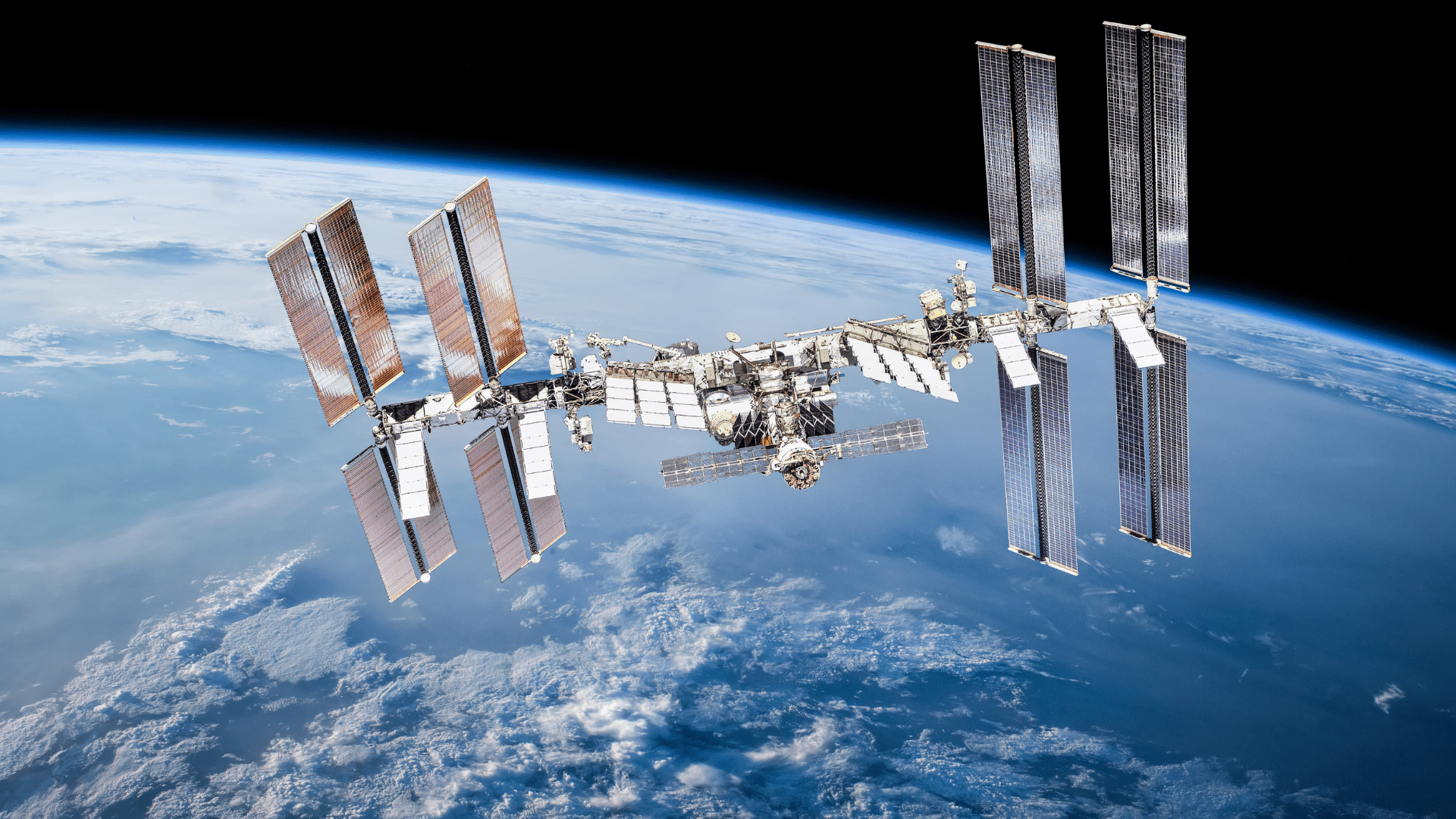
| ▲ | bayindirh 3 hours ago | parent | next [-] | | It looks like ISS can generate 240KW peak from 2500m2 of solar panels, and runs at half of that nominally [0]. A single B200 can consume up to 1200W. A single GB300 system needs 14.5kW. So, you can only have ~15 (incl. satellite's energy needs) GB300 with ISS' solar panels, which is absurd. See [1] for the size of the panels we're talking about. People dream about Starlink-style close flying systems to aggregate them to a single data center. With these power requirements, it's more like an AI hallucination. If we can build way more efficient chips or run smaller models on modest hardware, etc. We may go there, but needing ISS sized solar panels to run frontier models in space? Also, don't forget the radiators. You also need those to pump that heat out of these systems. The outlook doesn't look good at this point. [0]: https://en.wikipedia.org/wiki/Solar_panels_on_spacecraft#Spa... [1]: https://www.sgmk.edu.pl/wp-content/uploads/2025/10/iss.png | |
| ▲ | cogman10 3 hours ago | parent | prev | next [-] | | In space, you have to deploy all the power production you want to consume in the same package that's consuming that power. On earth, you can build a power plant miles from the DC. And you can use all sorts of different sources of power, tidal, wind, nuclear, solar, fossil fuels. All options. And like the DC, if there's a problem with any of those sources, you can go fix it or replace it with different power sources. If there's a problem with the solar panels in space, your DC is dead. That's both easier and a lot more flexible. | |
| ▲ | munchbunny 4 hours ago | parent | prev [-] | | In Microsoft’s case, they ran a cable, which is much simpler to do than putting solar panels in orbit. |
|
|
|