| ▲ | Aurornis a day ago |
| This is a refreshingly balanced and honest analysis of Vitamin D studies. The strongest evidence for Vitamin D is in people who are severely deficient. Bumping up to a normal range can provide some improvements. The health influencers started noticing that the Vitamin D studies coming out weren't matching their original hype for Vitamin D, so many pivoted to trying to make claims that most people are severely deficient and just don't know it, which provides a convenient out to dismiss the studies that didn't pre-filter for people who were severely deficient. You can find waves of people on social media repeating the idea that almost everyone is Vitamin D deficient and encouraging high dose supplementation still. Speaking to a doctor who runs Vitamin D labs as part of her annual physical screening process, she's now actually seeing more people who have excess Vitamin D than too little Vitamin D. Upon followup she discovers that patients have listened to a podcast about Vitamin D and started taking it regularly, unaware that they're pushing their levels into the range where it can start doing more harm than good. Vitamin D is tricky because it lasts for a very long time in the body, which means steady-state supplementation can take a very long time to stabilize. I suggest anyone supplementing for a long time get a blood test, which can be ordered without your doctor if you can't get your doctor on board. On another topic: Fish oil has also gone through a similar cycle of being hyped up based on early results, with higher powered follow on studies showing much less interesting results. |
|
| ▲ | seba_dos1 10 hours ago | parent | next [-] |
| You keep showing up under articles about vitamin D and keep telling that more people have excess than insufficient vitamin D levels without presenting any data whatsoever. We're among plenty of inside-dwelling nerds here. Do the test. Don't listen to folks like the parent, don't let yourself be discouraged; check your blood level and act on it if necessary, it's fast and cheap. I even had a test done at my home, you can schedule that online these days! You're much more likely to be severely deficient than have it in excess (it's quite hard to get to toxic levels anyway, you'd need to be really irresponsible about it) and once you confirm that, supplementing can help you tremendously with plenty of mental issues you may be experiencing. It won't fix you up, but it can make it possible for you to fix yourself up in the first place. And if the test shows you have adequate levels already - good for you. (and if you're too depressed to even arrange the test, it may make sense to start supplementing blindly - but don't exceed ~10K IU D3 daily and make sure to stop after 2-3 months tops. Hopefully at that point it'll be easier for you to finally do the test to know whether to continue or not; don't keep taking high doses blindly, toxicity is hard but not impossible to achieve and you really don't want to be suffering from it. You almost certainly won't reach it with 10K IU when starting from deficiency, but it you happened to be on the high side already at the start it could be dangerous when prolonged) |
|
| ▲ | andruby 17 hours ago | parent | prev | next [-] |
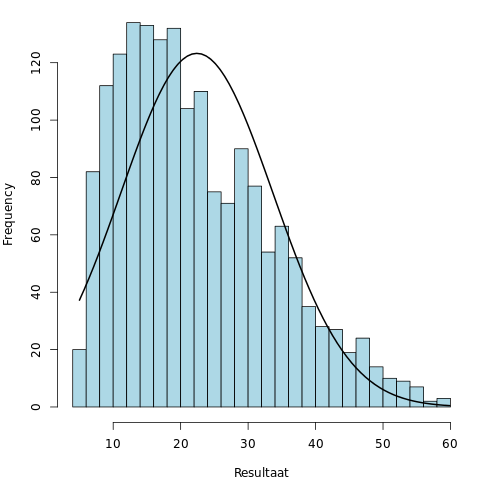
| My family runs a blood analysis lab in Belgium for which I wrote some of the statistics gathering software. The thresholds for 25-OH vitamin D: <20 ng/mL → deficient, 20–30 ng/mL → insufficient. When I looked at all 1738 blood samples that had their Vitamin D tested between Feb 1, 2020 and Mar 13, 2020 (We were looking into the link between Vitamin D and COVID-19): The median (P50) was 20.1 ng/mL and the average was 22.4 ng/mL. Standard deviation: 11.24 ng/mL Half the samples were deficient, and the next 20% was insufficient. Coming out of winter in Europe in a country with limited sunshine: most of the population is deficient in Vitamin D. Histogram: https://files.catbox.moe/p785wx.png |
| |
| ▲ | vintermann 17 hours ago | parent | next [-] | | Worth noting all the three big studies mentioned in the article were on Americans. | | |
| ▲ | strken 16 hours ago | parent [-] | | The last of the three was done on Australians. Not that it changes your point, given the latitude of Australia. |
| |
| ▲ | bluenose69 11 hours ago | parent | prev | next [-] | | The curve on your diagram makes me think that you've fitted a normal (Gaussian) curve to the data. By eye, the distribution looks a bit more like log-normal, and so if you're still working on the data, you might want to try that to see. Not that anything you've said or concluded seems wrong, though. | | |
| ▲ | andruby 11 hours ago | parent [-] | | The normal curve in the image is there for operators to visually check if the machine results are normal distributed or not. It's a "stencil", not data. The software actually does a Lilliefors normality test which returns a big No on this data. | | |
| |
| ▲ | dizhn 12 hours ago | parent | prev [-] | | What do you think about the thresholds themselves? How often are they updated usually with new research? | | |
| ▲ | seba_dos1 9 hours ago | parent | next [-] | | Based on what I've seen while researching the topic for my own health purposes: the thresholds differ in various sources, but in general research appears to suggest that they may tend to err on the too low side rather than too high (there's quite a lot of headroom between what's often considered excessive and what's actually known to be toxic, while the lower end is much fuzzier). | |
| ▲ | andruby 11 hours ago | parent | prev [-] | | I'm an engineer, not a clinical biologist or researcher. I have no idea. On a personal level: I used to struggle with "winter dip". Taking Vitamin D supplements, as well as moving to South Africa, has both improved it a lot |
|
|
|
| ▲ | noduerme 15 hours ago | parent | prev | next [-] |
| The Mediterranean diet itself has a lot of health benefits interrelated with the ones claimed about fish oil. But just as a human experience, the first time I ate cod livers, it was hard to accept. Then I started spreading them on toast for breakfast, and realized that they were quite delicious, but very very much an acquired taste (and I eat almost everything). As far as Vitamin D, there does seem to be a correlation between deficiency and severe coronavirus disease https://www.mdpi.com/2075-1729/15/5/733 [edit] to say, I love chicken and cow liver, but it took awhile to get a taste for fish liver. Pork liver, however, is putrid. I don't think I could eat that again. |
| |
| ▲ | Filligree 10 hours ago | parent [-] | | The Norwegian way to eat cod liver is “squished between two flatbread, mixed with boiled potato and also cod”. Which is absolutely delicious, even for a kid; it’s one of the meals I still remember loving. You should try it! |
|
|
| ▲ | wongarsu 13 hours ago | parent | prev | next [-] |
| Seemingly any decent way to tune in a steady-state supplementation involves multiple iterations of the "get blood test, adjust dosage, repeat" loop On the other hand, when our body synthesizes Vitamin D itself it seems to regulate that process to prevent overdose. So I've just settled on supplementing in the winter based on my best estimate of the correct dosage, then let my body do its thing in the summer. No issues so far, and supplements have had a major impact on my fatigue/energy/depression levels in the winter |
|
| ▲ | dyauspitr a day ago | parent | prev | next [-] |
| On a slight tangent, if people are unaware, you can pay for and get just about any lab test without a prescription in the United States. |
| |
| ▲ | jvican a day ago | parent | next [-] | | Yes, and to be concrete, you can do so at economical prices at https://requestatest.com (it's a lifesaver in many occasions, I've used it 4 times with great success). | | |
| ▲ | NavinF 20 hours ago | parent | next [-] | | Other Quest resellers like https://goodlabs.com/ are way cheaper. Eg "Testosterone, Free (Direct) With Total Testosterone, LC/MS-MS" is $159 on that website vs $15 on goodlabs. | | |
| ▲ | jvican 17 hours ago | parent [-] | | Nice! I didn't know about this company. Thanks for sharing. Has anyone tried and can they vouch for them? | | |
| ▲ | NavinF 4 hours ago | parent [-] | | Yes I've used goodlabs. I paid them and they sent a prepaid lab order to Quest just like any other reseller. Also donated blood via goodlabs to get some basic labs for free, but that requires driving to SF. No donation sites in south bay |
|
| |
| ▲ | nostromo a day ago | parent | prev [-] | | And you can use a HSA or FSA to pay for it. |
| |
| ▲ | nomel a day ago | parent | prev | next [-] | | This is how I found my 10k IU of vitamin D a day, based on modern recommendations for indoor workers, that I modulate based on how much I'm outdoors, was perfectly on the mark! | | |
| ▲ | Aurornis a day ago | parent | next [-] | | Also an indoor worker. 10K IU daily would have put me far into hypervitaminosis D range. Make sure you test after a very long time, such as a year of steady supplementation. A lot of the excess Vitamin D cases were taking less than 10K IU daily. | | |
| ▲ | nomel a day ago | parent [-] | | > such as a year of steady supplementation. This is the entire issue. You get vitamin D from the sun. The concept of "steady supplementation" of vitamin D is not logical, unless your sun exposure is also steady, which is where the not-so-useful guidelines come from: some mean of some distribution of some skin tone of sun exposure, leaning on the "less" side of things, with current recommended values based on means from over 50 years ago. I would never take 10k steady, because I don't live in a cave! |
| |
| ▲ | lemonberry a day ago | parent | prev [-] | | This is the amount I shoot for in the winter - I live in New England - it's made a huge difference in my life. I'm totally open to it being placebo though and I don't care. I don't supplement with it during the summer. |
| |
| ▲ | Tangurena2 a day ago | parent | prev | next [-] | | My PCP uses Quest Diagnostics and a vitamin d test is, I think, about $50. No fasting needed for it, nor prescription. | | | |
| ▲ | petesergeant a day ago | parent | prev [-] | | You can get most tests (although often not genetic) in many countries, with Canada being an outlier in forcing you to get a doctor’s note for just about everything. | | |
| ▲ | StayTrue 21 hours ago | parent [-] | | Really terrible in Canada. If you don’t have a family physician (like everyone I know), good luck making it through triage at the walk-in clinic because you want a test to see your baseline values or proactively check for deficiency. The “hack” is you can pay a naturopath to order tests but the tests are not covered by public insurance in this case (actually pretty expensive IIRC). | | |
|
|
|
| ▲ | sbayg a day ago | parent | prev | next [-] |
| Baby aspirin was overdone too. Interestingly, the fish oil hype cycle has a much longer timeline if you consider the popularity of cod liver oil once upon a time. |
| |
| ▲ | nostromo a day ago | parent [-] | | Cod liver oil wasn't hype, it was needed in norther climates to prevent rickets. It was taken for its Vitamin D, not for its omega 3s. | | |
| ▲ | jrumbut a day ago | parent [-] | | They used it for both and as a source of vitamin A and whatever other nutrients are in it. They used it for everything. There is an episode of I Love Lucy where a recipe for homemade baby formula is described which includes cod liver oil. In a lot of things it was pretty good at what they used it for though, that does continue to be true. |
|
|
|
| ▲ | SOLAR_FIELDS 21 hours ago | parent | prev | next [-] |
| The moral of the story here is just to do bloodwork on a regular basis (absolute bare minimum once a year) and respond accordingly. I take some supplements like vitamin D, but I only take what is empirically measurable. If I can't quantitatively measure the outcome, then there is no value and it's a woo woo solution. This isn't always going to be the best advice, but a vast majority of times it will be. |
|
| ▲ | thaumasiotes a day ago | parent | prev | next [-] |
| > The health influencers started noticing that the Vitamin D studies coming out weren't matching their original hype for Vitamin D, so many pivoted to trying to make claims that most people are severely deficient and just don't know it, which provides a convenient out Not really. It isn't possible to be severely deficient in vitamin D without knowing it. By definition, if you are severely deficient in vitamin D, you have rickets. |
|
| ▲ | anecd4t4 a day ago | parent | prev | next [-] |
| [dead] |
|
| ▲ | yoyohello13 a day ago | parent | prev [-] |
| It's pretty safe to assume all hyped supplements are pointless. Being generally active and eating fruits/vegetables is like 80% of the work for being healthy. > almost everyone is Vitamin D deficient This was the red flag that made me realize it was BS early on. If everyone is deficient, then it must not be that important. |
| |
| ▲ | ChadNauseam a day ago | parent | next [-] | | > If everyone is deficient, then it must not be that important. Most people are overweight. Does that make being a healthy weight not that important? | | | |
| ▲ | Grombobulous 20 hours ago | parent | prev | next [-] | | > Being generally active and eating fruits/vegetables is like 80% of the work for being healthy. I suspect that a relatively low percentage of people in a solid number of wealthy countries meet these qualifications. > If everyone is deficient, then it must not be that important. This isn't sound logic. Something being common doesn't make it unimportant or less of a problem. | |
| ▲ | crazygringo a day ago | parent | prev | next [-] | | > Being generally active and eating fruits/vegetables is like 80% of the work for being healthy. Except for the things that you get from sunlight, not diet. > If everyone is deficient, then it must not be that important. But nobody who lives in e.g. East Africa and spends a lot of time outdoors is deficient. So it's actually pretty reasonable to say that a modern indoor lifestyle combined with long winters would truly lead most people in those regions to being deficient. | | |
| ▲ | vlovich123 a day ago | parent [-] | | If everyone is deficient, how would you even establish a baseline of what counts as deficient and excessive? The way they do that is they sample the population and look at the ranges of the values and maybe look at when comorbitity issues arise within those ranges. But “everyone is deficient in X” is easily dismissed hokum. | | |
| ▲ | Grombobulous 20 hours ago | parent [-] | | Logically speaking, an affliction being extremely common or universal does not dismiss it as no longer being an affliction. Many things about our society are extremely new compared to the conditions for which our bodies are evolved to be in. | | |
| ▲ | vlovich123 19 hours ago | parent [-] | | I think you missed my point. vitamin D levels in and of themselves aren’t an affliction. The “correct” level is established by looking at what everyone else has and also by trying to look for comorbidities. But the comorbidities are often hard to tease out; about the only disease we know is rickets. Everything else is weakly correlational for vitamin D. How do you think they define healthy levels of other hormones like testosterone and estrogen? They look at the range of levels for them, they look to see when they think diseases start, and they say those are correlated and you should adjust. | | |
| ▲ | modo_mario 14 hours ago | parent [-] | | >Everything else is weakly correlational for vitamin D. All cause mortality is correlational for vitamin D.
Various disease outbreaks (common cold, etc) and severity are correlational for vitamin D.
etc
We even know by which mechanisms so it's not like this is far fetched stuff where we're overlooking things. This kind of stuff slaps you in the face if you live in the northern half of europe.
To then think us now spending the majority of our waking hours indoors and the prevalence of those things and seasonal depression in winter when one leaves in the dark and comes home in the dark all has no effect....I think that's just hubris. | | |
| ▲ | somenameforme 10 hours ago | parent [-] | | Similarly, many things have issues that may not seem like issues at first. For instance most people are deficient in protein owing to simply not getting enough and a significant chunk of what they do get coming from sources with extremely low digestibility/DIAAS scores. And somebody may not even realize this until they decide to start downing a few more chicken breasts per day and suddenly see their energy levels skyrocket, their hunger diminish, and so on. But if you surveyed them prior, they'd claim to feel perfectly normal. Another one is testosterone which is extremely unfortunate because there's no remotely natural way to meaningfully regain significant amounts of it, but TRT is a life changing thing for many people who have low testosterone which in modern times is a huge chunk of all men and essentially all of them over a certain age. |
|
|
|
|
| |
| ▲ | robocat a day ago | parent | prev | next [-] | | > is like 80% of the work for being healthy I would suspect you're a man under 60. I don't think your statement applies to the elderly (e.g. my mum needing D and Calcium for osteoporosis). And I've seen many active healthy female friends under 60 actually need suppliments (I'm ignoring the stereotypical yoga worried well): plus pregnancy or health issues have an impact too. But maybe I'm a victim of sampling bias since the men I know seem much less likely to see a doctor. | | |
| ▲ | yoyohello13 a day ago | parent [-] | | I don’t want to get into an argument about health on the internet, it’s really a no win situation. Although feeling bad, going to a doctor, getting labs, taking a calcium supplement is completely legitimate and a very different story from watching a YouTuber say ‘everyone is vitamin D deficient’ then going out a buying a bottle of supplements. |
| |
| ▲ | ewild a day ago | parent | prev [-] | | Pretty much the only one with a real consensus around it is creatine. And even that has debate around the right dose | | |
| ▲ | somenameforme 10 hours ago | parent [-] | | The interesting thing about creatine is that people's natural absorption varies dramatically. So some chunk of people will see basically nothing from creatine because their natural levels are already at saturation, whereas most will see relatively major benefits. I continue my 5g/day even when I'm not actively lifting. |
|
|