| ▲ | Show HN: Terminal UI for AWS(github.com) |
| 385 points by huseyinbabal 2 days ago | 177 comments |
| |
|
| ▲ | kristiandupont 2 days ago | parent | next [-] |
| Only tangentially related, but: what is the appeal of TUI's? I don't really understand. The advantages of CLI's are (IMO) that they compose well and can be used in scripts. With TUI's, it seems that you just get a very low fidelity version of a browser UI? |
| |
| ▲ | chazhaz a day ago | parent | next [-] | | The advantage of TUIs is that you get a low-fidelity browser UI that doesn’t need to be exposed to the internet, that can be run remotely via SSH, which doesn’t ship you megabytes of JavaScript, and which works equally well on everyone’s machine | | |
| ▲ | oneeyedpigeon a day ago | parent | next [-] | | > doesn’t need to be exposed to the internet [PWAs: Offline and background operation](https://developer.mozilla.org/en-US/docs/Web/Progressive_web...) > that can be run remotely via SSH Fair > which doesn’t ship you megabytes of JavaScript Not required at all; that would be a decision the app makes and not inherent to the medium > works equally well on everyone’s machine Provided they're using a compatible terminal with a compatible color scheme that doesn't just make everything unreadable. | | |
| ▲ | infogulch a day ago | parent [-] | | > > which doesn’t ship you megabytes of JavaScript > that would be a decision the app makes OK but as soon as some moron with a Product Manager title gets their grubby little fingers on it the app does start shipping megabytes of JS in practice. TUI's can't, that's the advantage. |
| |
| ▲ | spwa4 a day ago | parent | prev | next [-] | | Don't forget about the speed and the keyboard-only navigation. | |
| ▲ | wubrr a day ago | parent | prev [-] | | You can run a web UI locally, without exposing it to the public internet, and access it remotely via SSH. > which works equally well on everyone’s machine Why are you so sure it runs equally well on everyone's machine? Even big popular TUIs like Claude Code do not really accomplish this. |
| |
| ▲ | MrGilbert 2 days ago | parent | prev | next [-] | | They are usually faster to create and pretty much cross-platform. They should also work great with screen readers, though that is only an assumption. TUI also means that I do not have to memorize an infinite amount of command line parameters. I really like well-made TUIs. | |
| ▲ | rgoulter 2 days ago | parent | prev | next [-] | | Practically? The best keyboard-driven programs are (incidentally) TUIs. For some reason, expressive keyboard-driven interfaces aren't as popular in GUI interfaces. | | |
| ▲ | peiskos 9 hours ago | parent [-] | | My issue with TUIs is the lack of a simple interaction model. Every tool invents its own navigation style like vim bindings, custom key combos, mouse-driven flows and there’s no common fallback. In GUIs, the mouse is always there if nothing else. Even basic things like tabbed navigation can become confusing in TUIs sometimes |
| |
| ▲ | lucideer a day ago | parent | prev | next [-] | | Apart from the apparent comparative ease of creation relative to GUIs (I suspect Electron apps may be easier than TUIs), I think the main benefits from a user perspective seems to be down to cultural factors & convention: - TUIs tend to be faster & easier to use for cli users than GUI apps: you get the discoverability of GUI without the bloated extras you don't need, the mouse-heavy interaction patterns & the latency. - keybindings are consistent & predictable across apps: once you know one you're comfortable everywhere. GUI apps are highly inconsistent here if they even have keybindings - the more limited widget options brings more consistency - GUI widgets can be all sorts of unpredictable exotic - anecdotally they just seem higher quality | | |
| ▲ | tracker1 a day ago | parent [-] | | For that matter, with modern terminals, you can still do mouse interactivity as an option. I think that working over an SSH terminal is pretty nice in and of itself even if you can self-host a web application. I've almost always got my terminal app open anyway, in the case of VS Code, I don't even need to switch to another app to use it. |
| |
| ▲ | oneeyedpigeon a day ago | parent | prev | next [-] | | You get a low-fidelity version of a browser UI with guaranteed keyboard support. If web apps had the same level of keyboard support, TUIs would be less appealing. | | |
| ▲ | graemep a day ago | parent [-] | | They also expose relevant keyboard actions. The popularity of TUIs is a result of the poor usability of current GUIs. | | |
| ▲ | coredog64 a day ago | parent [-] | | In my experience, the AWS UI is actually pretty good at keyboard usability. The biggest issue with the UI is how long it can take API calls to fill in the data, and that would be the same for both the browser and a TUI. |
|
| |
| ▲ | victorbjorklund 2 days ago | parent | prev | next [-] | | Faster and easier to use. I love for example Lazygit. It’s the fastest way to use git (other than directly as a cli of course but if you want some graphical info lazygit is great) | |
| ▲ | mystifyingpoi 2 days ago | parent | prev | next [-] | | Look up k9s, it's a great example. But as sibling comments say, it's all keyboard driven and most actions are single keypresses. | |
| ▲ | wtetzner a day ago | parent | prev | next [-] | | For one thing, you don't need to run them in a browser. | |
| ▲ | ashu1461 2 days ago | parent | prev | next [-] | | I had the same doubt. With CLIs you can make your own custom shortcuts, LLMs can use it to get things done for you as well. With TUIs I think either these are hobby projects or meant for people who are obsessed with speed. Though speed impacts are also something which I am uncertain about. Comparing Vim with IDEs, for sure there will be few things which are faster in vim but decent no of things which can be done faster in an IDE as well, so can't comment on your overall speed gains. | | |
| ▲ | esseph a day ago | parent [-] | | Tuis are fine if you've got a bunch of pets or cattle you admin over ssh |
| |
| ▲ | freeplay a day ago | parent | prev | next [-] | | Memorizing CLI commands and typing/editing them over and over can be very time consuming. Use k9s for example. Let's say you want to determine where the value of an environment variable is coming from. 1. 'kubectl get deploy -n example' (find the name of the deployment in question) 2. 'kubectl describe deploy example-app -n example' (determine where the value for the env var is coming from) 3. 'kubectl get cm example-app-config -n example -o yaml' (check the value of the referenced key in the config map) This is a very basic example but you can see where it lead to slow debugging that is made even slower by its propensity to typos and the need to look up command syntax. Once you get comfy in a well designed TUI, you can fly through this process in 10 seconds. | |
| ▲ | Cthulhu_ a day ago | parent | prev | next [-] | | Before Windows / GUIs, everything was a TUI. Some of those applications were kept around for a long time even when Windows was mainstream, because they were faster. If you've ever seen an employee (or co-worker) work in one of those applications you'll see it. They can zip through screens much quicker than someone doing point and click work. | | |
| ▲ | cube00 a day ago | parent [-] | | It's truly an amazing sight, our payroll system was all text based screens. I had a question and the clerk ripped through like 10 screens to get the information I needed, we're talking 200ms human reaction speed through each screen. I also worked with a mythical 10x developer and he knew all the Visual Studio keyboard shortcuts. It was just like watching that payroll clerk (well, almost, we had under-specced machines and Visual Studio got very slow and bloated post v2008), I don't think I ever saw him touch the mouse. |
| |
| ▲ | thiht a day ago | parent | prev | next [-] | | I recently started using k9s after using kubectl for a while. It's just faster and more convenient. A well made TUI also offers a bit more discoverability than a CLI. If you know exactly what you're looking for the CLI is fine, but if you need to explore a little bit, a TUI is better. | |
| ▲ | whatever1 a day ago | parent | prev | next [-] | | The only real advantage is that you have access to a UI—ish everywhere, because the ssh server is running everywhere by default (at least at machines you would want to connect to). Http servers are not installed by default, and they are a pita to configure / secure. | |
| ▲ | d4rkp4ttern a day ago | parent | prev | next [-] | | TUIs can be self explanatory if designed well.
Ideally the same tool would have a CLI mode with JSON(L) formatted output, launched with a flag like —json so that it can be composed (unix-like) with other CLI commands, and also usable by LLM-agents, with jq etc. This is what I do in a TUI/CLI tool I’ve been building | |
| ▲ | benterix a day ago | parent | prev | next [-] | | Many tools offer both CLI and TUI interface. TUI is especially useful at scale, when you need to deal with a large amount of resources efficiently or have a good overview of the whole environmtnt faster - e.g. *top, k9s, Midningt Commander etc. | |
| ▲ | israrkhan 19 hours ago | parent | prev | next [-] | | I was skeptical too, but after trying lazygit, lazydocker, k9s and a few more TUI programs, I can see the value. | |
| ▲ | rockwotj a day ago | parent | prev | next [-] | | you also get a very slimmed down interface that is usually way faster to load. one of the reasons I love HN is that it is super snappy to load and isn’t riddled with dependencies that take forever to load and display. Snappy UIs are always a breath of fresh air. | | |
| ▲ | cube00 a day ago | parent [-] | | > Snappy UIs are always a breath of fresh air. UIs used to be more responsive on slower hardware, if they took longer then the human reaction time, it was considered unacceptable. Somewhere along the line we gave up and instead spend our time making skeleton loading animations as enticing as possible to try and stop the user from leaving rather then speeding things up. |
| |
| ▲ | chilli_axe 2 days ago | parent | prev | next [-] | | In addition to what other commenters said - TUIs can be installed on a server and used over SSH | | |
| ▲ | qudat a day ago | parent | next [-] | | This is the part that I like the most, which is why I created https://pico.sh Further, when building ssh "apps" you can build out tooling for client clis that already exist (e.g. rsync, sftp, scp, sshfs). This provides ergonomics because now users aren't required to install extra tools to deploy static sites, for example. The entire experience is pretty seamless since all developers use SSH anyway. | |
| ▲ | makapuf a day ago | parent | prev [-] | | Well CLI and web UIs can also be used remotely. (Arguably even x11 apps can.) | | |
| ▲ | cube00 a day ago | parent [-] | | Even with compression on, running most apps like a web browser over x11 forwarding, is slow to the point of almost being unusuable. However running web apps over forwarding is pretty decent. VS Code and pgAdmin have desktop like performance running in the browser SSH port forwarded from a remote server. |
|
| |
| ▲ | korse a day ago | parent | prev | next [-] | | Sometimes a gui is helpful for things (such as monitoring) but you don't want to leave your terminal because it screws with your workflow. | |
| ▲ | jama211 2 days ago | parent | prev | next [-] | | The appeal is I can use it with just a terminal connection to the server | |
| ▲ | perrygeo a day ago | parent | prev | next [-] | | > low fidelity version of a browser UI? That's the point. For me, with very few exceptions, modern web UI is steaming pile of dogshit - no consideration for user's attention, speed, or usability. TUI are extremely low fidelity; there's nowhere to hide all that enshitified cruft! Stripping the functionality down to its bare essence vs navigating a bespoke web UI with the design aesthetic of clown vomit. I can tell you which one is more productive for me. | |
| ▲ | nobleach a day ago | parent | prev [-] | | I can give an anecdote if that's helpful. Imagine you're wanting to download an object from S3. You start to type out the command in your CLI. You hit enter, only to realize, see that the object is not found. You have a typo somewhere... but where? The bucket is huge so, you resort to listing the contents and passing the results through grep. Then you copy the object to the clipboard so that you can edit your original command. I see one of the other comments mentions K9s. The exact same use cases manifest with that tool. YES, if it's just a one-shot, nothing beats the CLI. Many things where you need to investigate the resources a bit more, lend themselves to a TUI (or GUI if that's your thing). I come from an era where folks could fly through tasks on dumb terminals. (AS/400 apps). The moment we gave them "better" gui tools, they slowed way down. No matter how many times we told them, "you can still use your TAB and ENTER keys!" TUIs were just a sweet spot. |
|
|
| ▲ | tianqi 2 days ago | parent | prev | next [-] |
| I couldn't get this to run successfully. More broadly, I have concerns about introducing a middleware layer over AWS infrastructure. A misinterpreted command or bug could lead to serious consequences. The risk feels different from something like k9s, since AWS resources frequently include stateful databases, production workloads, and infrastructure that's far more difficult to restore. I appreciate the effort that went into this project and can see the appeal of a better CLI experience. But personally, I'd be hesitant to use this even for read-only operations. The direct AWS cli/console at least eliminates a potential failure point. Curious if others have thoughts on the risk/benefit tradeoff here. |
| |
| ▲ | falkensmaize 2 days ago | parent | next [-] | | This was my first thought too. We already have terraform for repeatable, source controlled service provisioning and we have the relatively straightforward aws cli for ad hoc management. I don’t know that I really need another layer, and it feels quite risky. | | |
| ▲ | baby 2 days ago | parent [-] | | cdk bro | | |
| ▲ | rswail 2 days ago | parent | next [-] | | Terraform CDK is just a layer on top of terraform to avoid writing HCL/JSON. It's also deprecated by Hashicorp now. CDK on AWS itself uses CFN, which is a dog's breakfast and has no visibility on what's happening under the covers. Just write HCL (or JSON, JSONNET etc) in the first place. | | |
| ▲ | baby 8 hours ago | parent [-] | | Not sure what's a dog breakfast, but why care about what's happening under the cover? You can't know what's happening anyway in AWS. |
| |
| ▲ | SteveNuts 2 days ago | parent | prev | next [-] | | I thought that was deprecated? | | |
| ▲ | sathyabhat 2 days ago | parent [-] | | cdktf is, not AWS CDK. The former allows you to use Terraform without HCL, the latter is a generator for CloudFormation. |
| |
| ▲ | hhh a day ago | parent | prev [-] | | Am I the only person that despises CDK? Why would I use a cloud specific language instead of something like opentofu? | | |
| ▲ | coredog64 a day ago | parent | next [-] | | CDK's twin problems are that it compiles down to CloudFormation and that AWS did a terrible job at supporting languages other than TypeScript. The latter is theoretically fixable with a native FFI library that is called from each language, but the former is too leaky of an abstraction. | | |
| ▲ | baby 8 hours ago | parent [-] | | I've only ever used it with ts and thought the experience was pretty good (especially compared to terraform) |
| |
| ▲ | baby 8 hours ago | parent | prev [-] | | Considering all the downvotes I got I guess you're not the only one. I'm surprised because I really like cdk. It makes creating an AWS stack really easy, and for having dealt with terraform configurations that were trying to deal with multiple cloud platforms I'd rather have a per-platform eDSL |
|
|
| |
| ▲ | 3uler 2 days ago | parent | prev | next [-] | | The read-only hesitation seems overcautious. If you’re genuinely using it read-only, what’s the failure mode? The tool crashes or returns bad data - same risks as the AWS CLI or console. The “middleware layer” concern doesn’t hold up. This is just a better interface for exploring AWS resources, same as k9s is for Kubernetes. If you trust k9s (which clearly works, given how widely it’s used), the same logic applies here. If you’re enforcing infrastructure changes through IaC, having a visual way to explore your AWS resources makes sense. The AWS console is clunky for this. | | |
| ▲ | catlifeonmars 2 days ago | parent [-] | | > what’s the failure mode? The tool misrepresents what is in AWS, and you make a decision based on the bad info. FWIW I agree with you it doesn’t seem that bad, but this is what came to mind when I read GPs comment | | |
| ▲ | jama211 2 days ago | parent | next [-] | | Fair. Best use might be to double check on the proper UI before making any big decisions, and just use it as a general monitor | |
| ▲ | 3uler a day ago | parent | prev [-] | | I mean sure… but to me that is as likely as the official ui misrepresenting the info. |
|
| |
| ▲ | pgroves 2 days ago | parent | prev | next [-] | | All the use cases that popped into my head when I saw this were around how nice it would be to be able to quickly see what was really happening without trying to flop between logs and the AWS console. That's really how I use k9s and wouldn't be able to stand k8s without it. I almost never make any changes from inside k9s. But yeah... I could see using this with a role that only has Read permissions on everything. | |
| ▲ | zeroimpl a day ago | parent | prev | next [-] | | The AWS APIs are quite stable and usually do exactly one thing. It’s hard to really see much risk. The worst case seems to be that the API returns a new enum value and the code misinterprets it rather than showing an error message. | |
| ▲ | zmmmmm 2 days ago | parent | prev | next [-] | | I guess it's the kind of thing where you want an almost Terraform like "plan" that it prints out before it does anything, and then a very literal execution engine that is incapable of doing anything that isn't in the plan. | |
| ▲ | nfRfqX5n a day ago | parent | prev [-] | | With properly scoped roles I would not be concerned |
|
|
| ▲ | kylehotchkiss 2 days ago | parent | prev | next [-] |
| Should have a Price Of Current Changes menu bar item! So you can see if your changes cost $.01 or $10,001. |
| |
|
| ▲ | lherron 2 days ago | parent | prev | next [-] |
| Somehow every 15 line shell script I write now turns into a 50kloc bun cli or tui app. Apparently there are many such cases. |
| |
| ▲ | viraptor 2 days ago | parent | next [-] | | Different use cases. I want aws-cli for scripting, repeated cases, and embedding those executions for very specific results. I want this for exploration and ad-hoc reviews. Nobody is taking away the cli tool and you don't have to use this. There's no "turns into" here. | | |
| ▲ | lherron a day ago | parent [-] | | Oh I think you misinterpreted my comment! I am very much a fan of this, wasn't throwing shade. I am just remarking on how my side-project scope today dwarfs my side-project scope of a year or two ago. | | |
| ▲ | viraptor a day ago | parent [-] | | I did :) and I from votes I'm guessing many others too. Text communication remains hard as usual, sorry about that :( |
|
| |
| ▲ | toomuchtodo 2 days ago | parent | prev [-] | | Terminal electron. |
|
|
| ▲ | latchkey 2 days ago | parent | prev | next [-] |
| I run a neocloud and our entire UX is TUI-based, somewhat like this but obviously simpler. The customer feedback has been extremely positive, and it's great to see projects like this. ssh admin.hotaisle.app |
| |
| ▲ | Imustaskforhelp 2 days ago | parent [-] | | Oh this looks really interesting as well. Can you tell me more about what do you mean by Neocloud and where are you exactly hosting the servers (do you colocate or do you resell dedicated servers or do you use the major cloud providers) this is my first time hearing the term neocloud, seems like its focused on AI but I am gonna be honest that is a con in my book and not a pro (I like hetzner and compute oriented compute cloud providers) Share to me more about neoclouds please and tell me more about it and if perhaps it could be expanded beyond the AI use case which is what I am seeing when I searched the term neocloud | | |
| ▲ | latchkey 2 days ago | parent | next [-] | | Neocloud has come to refer to a new class of GPU-focused cloud providers. Sure, most of our customers use us for AI purposes, but it is really open to anything GPU related. We buy, deploy and manage our own hardware. On top of that, we've built our own automation for provisioning. For example, K8S assumes that an OS is installed, we're operating at a layer below that which enables to machine to boot and be configured on-demand. This also includes DCIM and networking automation. We colocate in a datacenter (Switch). | | |
| ▲ | otterley 2 days ago | parent | next [-] | | Rackspace called; they want their business model back. :P | | |
| ▲ | latchkey 2 days ago | parent [-] | | imitation is the sincerest form of flattery. the rackspace folks did a great job. | | |
| ▲ | otterley 2 days ago | parent [-] | | I’m not sure these Neoclouds have Rackspace’s Fanatical Support, though. | | |
| ▲ | latchkey 2 days ago | parent [-] | | We're developers ourselves, so we're treating everyone as we'd want to be treated. |
|
|
| |
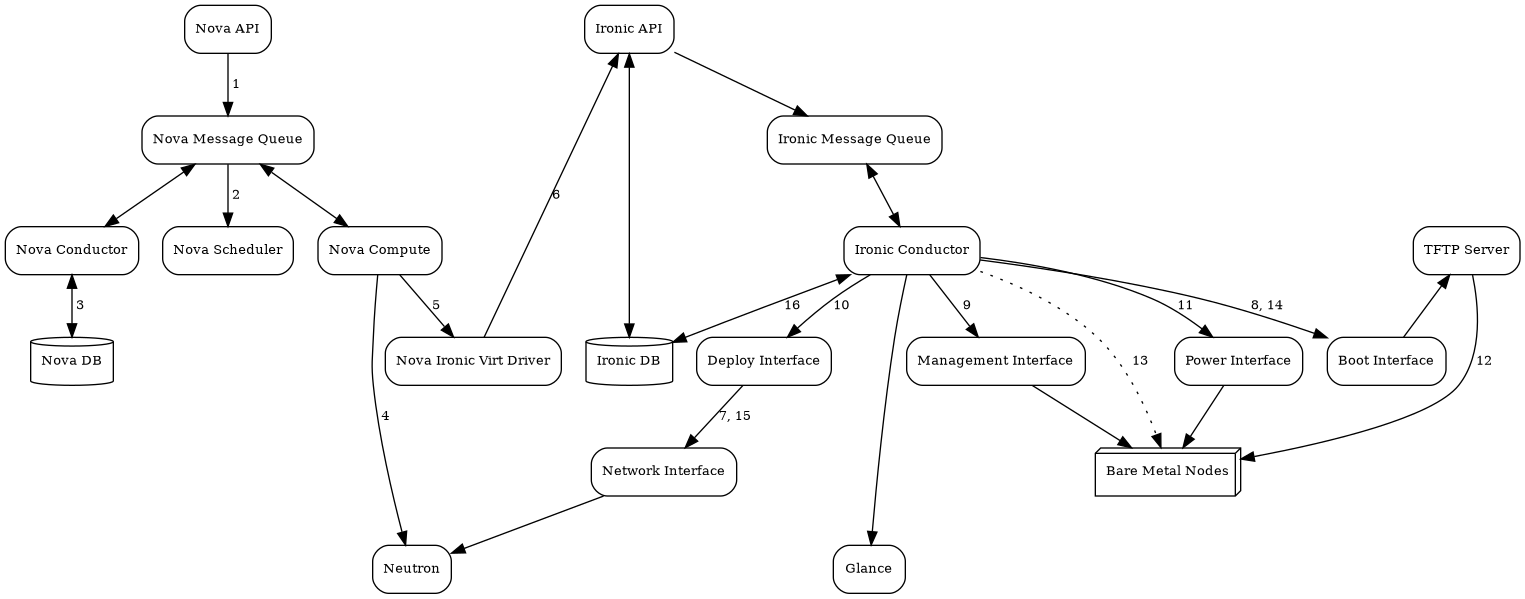
| ▲ | kortilla 2 days ago | parent | prev [-] | | This is sometimes called bare metal as a service. Ironic is an open source project in this space if people are curious what this looks like. | | |
| ▲ | latchkey 2 days ago | parent [-] | | We built our own ironic. Instead of a ton of services and configuration, we just have a single golang binary. Our source of truth is built on top of NetBox. We integrate Stripe for billing. We're adding features as customers ask for them. While it is a lot of moving parts coordination, I'm not sure I agree with the complexity... https://docs.openstack.org/ironic/latest/_images/graphviz-21... |
|
| |
| ▲ | solumunus 2 days ago | parent | prev [-] | | > seems like its focused on AI but I am gonna be honest that is a con in my book and not a pro A service you have no use for or interest in is “a con in your book”, what? |
|
|
|
| ▲ | alberth 2 days ago | parent | prev | next [-] |
| Embarrassingly dumb question: if you’re one of the few users who don’t run a dark background terminal … how well do these TUI render (in a light background)? |
| |
| ▲ | deepspace 2 days ago | parent | next [-] | | Not a dumb question at all. I grew up using actual green screen terminals, and the advent of high-resolution colour monitors and applications with dark text on a white background felt like a blessing. I truly do not understand the regression to dark mode. It's eyestrain hell for me. Unfortunately, I was unable to test in my light-background terminal, since the application crashes on startup. | | |
| ▲ | alanbernstein 2 days ago | parent | next [-] | | If I'm working in a dark room, then light mode is eye strain hell. With dark mode, the minimum brightness I can achieve is about 100x lower than with light mode. | |
| ▲ | zozbot234 2 days ago | parent | prev [-] | | OLED monitors will bring green screen terminals back in style quite soon (with occasional orange and red highlights for that Hollywood haxx0r UX effect) | | |
| ▲ | zaochen1224 2 days ago | parent [-] | | The worst is when you're in dark mode and suddenly open a website or PDF that's pure white. Instant flashbang. | | |
| ▲ | hxugufjfjf 2 days ago | parent [-] | | I thank Apple every day for adding dark mode to the native PDF viewer for this exact reason. |
|
|
| |
| ▲ | oneeyedpigeon a day ago | parent | prev [-] | | My personal experience is mixed. Half the time, I get something usable, the other half I get something that prints light yellow on slightly-darker yellow or highlights an item with a dark blue background and dark green text. I'm sure there's something I can tweak in my terminal app to fix this, but it's easier to just avoid those apps. |
|
|
| ▲ | sylens 2 days ago | parent | prev | next [-] |
| Looks great! If you have multiple AWS accounts in your org, you probably want to use something like aws-sso-util to populate your profiles so you can quickly swap between them |
|
| ▲ | ronbenton 2 days ago | parent | prev | next [-] |
| I thought the title meant the AWS UI was “terminal”, which I would be on board with |
|
| ▲ | shushpanchik 2 days ago | parent | prev | next [-] |
| > // TODO: Handle credential_source, role_arn, source_profile, sso_*, etc. So it does not support any meaningful multi-account login (SSO, org role assumption, etc), and requires AWS_ACCESS_KEY_ID/AWS_SECRET_ACCESS_KEY. That's a no-no from security POV for anything in production, so not sure what's the meaningful way to use that. |
| |
| ▲ | huseyinbabal 2 days ago | parent | next [-] | | I also care security part, but this is just beginning :) New features will be added iteratively based on community requests, and it seems there are plenty of good requirements in HN thread, thanks | |
| ▲ | zeroimpl a day ago | parent | prev | next [-] | | You or the developer could piggy back on “aws configure export-credentials --profile profile-name —-format process” to support any authentication that the CLI supports. | |
| ▲ | fosron 2 days ago | parent | prev [-] | | Yeah, without SSO support this is a no-go for me too. |
|
|
| ▲ | mrichman 2 days ago | parent | prev | next [-] |
| Crashes on first use. Not a good way to go viral. |
| |
| ▲ | huseyinbabal 2 days ago | parent [-] | | There was a resource handling problem, but it is fixed in 1.0.1 that you can try |
|
|
| ▲ | brendank310 2 days ago | parent | prev | next [-] |
| Nice! A while back I had started something similar for Azure but it never really got traction (or nearly as polished as this!). It's a rough proof of concept but maybe it'll be useful to Azure users: https://github.com/brendank310/aztui |
| |
| ▲ | NSPG911 2 days ago | parent [-] | | Seems like everyone is interested in Rust, but yours was written in Go. | | |
|
|
| ▲ | themafia 2 days ago | parent | prev | next [-] |
| I wish more TUI designers would spend some time playing with Hercules and experiencing the old "mainframe" way of arranging interfaces. Those guys really knew what they were doing. |
| |
| ▲ | jxdxbx 2 days ago | parent | next [-] | | I would like to know more about this. I love the resurgence of TUI apps but there is a samey-ness to them. | | | |
| ▲ | wilkystyle 2 days ago | parent | prev [-] | | Anything in particular you liked about them? | | |
| ▲ | actionfromafar 2 days ago | parent [-] | | They are like web forms. Fill in everything, then hit send. Fixed positions, shortcuts, tab-indexed, the order is usually smartly layed out. Zero latency. Very possible to learn how forms are organized and enter data with muscle memory. No stealing focus when you don't expect it. Optimized for power users, which is something of a lost art nowadays. GUIs were good for discoverability for a while but increasingly I think they are neither great for power users nor for novices, just annoying and yanky. | | |
| ▲ | bionsystem 2 days ago | parent | next [-] | | I remember airport hostesses when they used it to get your boarding pass from the mainframe, it took them 5 seconds and a few key-strokes like 3 letter of my name to get the job done. When they switched to web-uis some year, I vividly remember seeing them, 4 at a time on the same screen, trying to figure out what was going on. Took them 15 minutes and a phone call to get the boarding pass ready. I feel sad when I think about this. | |
| ▲ | mixmastamyk 2 days ago | parent | prev | next [-] | | Were these 3270 or ansi terminals? | | |
| ▲ | actionfromafar a day ago | parent [-] | | 3270 | | |
| ▲ | mixmastamyk a day ago | parent [-] | | Right, that makes it easier to build a form-based interface. Other terminals can simulate the style, though there might be limitations I'm not familiar with. | | |
| ▲ | actionfromafar 20 hours ago | parent [-] | | A limitation with character terminals is you need the remote end to be real-responsive at all times and that latency is a real killer. With a 3270 if the mainframe takes a second to give you the next form, that's not a UX problem at all. If your character terminal takes a second per keypress, that's very painful and l a g g y. But character terminals were much cheaper, worse is better, so it won out. |
|
|
| |
| ▲ | __MatrixMan__ 2 days ago | parent | prev [-] | | GUIs are for distracting otherwise uninterested users into doing what you want them to do. |
|
|
|
|
| ▲ | jbreckmckye 2 days ago | parent | prev | next [-] |
| Interesting, looks like k9s... but for AWS |
| |
| ▲ | jedimastert 2 days ago | parent [-] | | That was my first thought too, it looks like it was directly inspired by k9s according to the bottom of the readme. |
|
|
| ▲ | dmacvicar a day ago | parent | prev | next [-] |
| Looks very nice! Need to test if it supports AWS_ENDPOINT_URL so it works with LocalStack. |
| |
|
| ▲ | politelemon 2 days ago | parent | prev | next [-] |
| Please don't use or suggest using homebrew as a Linux installation solution. It's better to simply point at the binaries directly. |
| |
| ▲ | OptionOfT 2 days ago | parent | next [-] | | Why? Is it the best out there? No. But it does work, and it provides me with updates for my tools. Random curl scripts don't auto-update. Me downloading executables and dropping them in /bin, /sbin, /usr/bin or wherever I'm supposed to drop them [0] also isn't secure. [0] https://news.ycombinator.com/item?id=46487921 Also, I find it is usually better to follow up with something like: 'It's better to use Y instead of X BECAUSE of reasons O, P, Q, R & S' vs making a blanket statement like 'Don't use X, use this other insecure solution instead', as that way I get to learn something too. | | |
| ▲ | rodrigodlu 2 days ago | parent [-] | | I use mise to update binaries. Especially TUIs that are not on the arch repos. It supports several backends, from cargo crates to GitHub releases, to uv for python and so on. So one doesn't really need homebrew that has Linux as third class citizen (with the 2nd class empty) |
| |
| ▲ | rswail 2 days ago | parent | prev | next [-] | | Also don't use Homebrew on MacOS because it screws around in /usr/local and still hasn't worked out how root is supposed to work. Use Macports, it's tidy, installs into /opt/macports, works with Apple's frameworks and language configuration (for python, java etc), builds from upstream sources + patches, has variants to add/remove features, supports "port select" to have multiple versions installed in parallel. Just a better solution all around. | |
| ▲ | yarekt 2 days ago | parent | prev | next [-] | | Nice, download a random binary off the internet and give it your AWS credentials. Please people, inspect the source to your tools, or don't use them on production accounts. | | |
| ▲ | thejazzman 2 days ago | parent | next [-] | | How did you install homebrew? | | | |
| ▲ | viraptor 2 days ago | parent | prev [-] | | > Please people, inspect the source to your tools, or don't use them on production accounts. This is not realistic. Approximately nobody installing AWS cli has reviewed its code. | | |
| ▲ | johntash 2 days ago | parent [-] | | Official AWS cli from AWS is a bit different than "random binary off the internet"? |
|
| |
| ▲ | colesantiago 2 days ago | parent | prev | next [-] | | What's the problem with Homebrew? > It's better to simply point at the binaries directly. Binaries aren't at all signed and can be malicious and do dangerous things. Especially if it's using curl | bash to install binaries. | | |
| ▲ | yoavm 2 days ago | parent | next [-] | | Are you using Homebrew on Linux? Genuinely curious - I never met a Linux user doing that. | | | |
| ▲ | -mlv 2 days ago | parent | prev [-] | | I had some issues with brew breaking up my system and pkg-config. | | |
| ▲ | colesantiago 2 days ago | parent [-] | | It is a bit hard to know what the issue is here. But on average brew is much more safer than downloading a binary from the ether where we don't know what it does. I see more tools use the curl | bash install pattern as well, which is completely insecure and very vulnerable to machines. Looks like the best way to install these tools is to build it yourself, i.e. make install, etc. | | |
| ▲ | garblegarble 2 days ago | parent [-] | | >the best way to install these tools is to build it yourself, i.e. make install, etc. And you're fully auditing the source code before you run make, right? I don't know anyone who does, but you're handing over just as much control as with curl|bash from the developer's site, or brew install, you're just adding more steps... | | |
| ▲ | colesantiago 2 days ago | parent [-] | | > And you're fully auditing the source code before you run make. I mean you can? But that is the whole point when the source is available, it is easier to audit, rather than binaries. Even with brew, the brew maintainers have already audited the code, and it the source to install and even install using --HEAD is hosted on brew's CDN. |
|
|
|
| |
| ▲ | frenzcan 2 days ago | parent | prev | next [-] | | What’s the issue with homebrew? | | |
| ▲ | astrea 2 days ago | parent [-] | | It’s specifically a Mac workaround package manager. There’s better/cleaner ways to do it on Linux. | | |
| ▲ | bbkane 2 days ago | parent | next [-] | | I love Debian's stability, but I rely on Homebrew (instead of apt) to get more recent releases of software. Overall it works swimmingly! | |
| ▲ | dangus 2 days ago | parent | prev [-] | | Unless you have immutable Linux where Homebrew is a preferred method of CLI tool installation. https://docs.bazzite.gg/Installing_and_Managing_Software/ Linux is just a kernel, not everyone agrees on what is “better” and “cleaner” to use with it! |
|
| |
| ▲ | jbreckmckye 2 days ago | parent | prev | next [-] | | What's wrong with Brew? | | | |
| ▲ | dangus 2 days ago | parent | prev | next [-] | | As a user of immutable Linux (bazzite), I suggest speaking for yourself and not for others. On my platform, Homebrew is a preferred method for installing CLI tools. I also personally happen to like it better on Linux than Mac (it seems faster/better). https://docs.bazzite.gg/Installing_and_Managing_Software/ | |
| ▲ | purerandomness 2 days ago | parent | prev [-] | | brew is for users of non-Arch distros who want to experience what using Arch feels like. |
|
|
| ▲ | stephc_int13 2 days ago | parent | prev | next [-] |
| How much of this was made with LLM? |
| |
| ▲ | otterley 2 days ago | parent [-] | | Why does it matter? | | |
| ▲ | risyachka 2 days ago | parent | next [-] | | Because when a project is done in 10 minutes by llm - it will be abandoned in a week. When a person intentionally does it and spends a month or two - they far more likely will support it as they created this project with some intention in the first place. With llms this is not the case | | |
| ▲ | otterley a day ago | parent [-] | | Why are you entitled to ongoing support of a free tool? How long are you entitled to such support? What does “support” mean to you, exactly? If the tool works for you already, why do you need support for it? |
| |
| ▲ | greekrich92 2 days ago | parent | prev [-] | | A bug from slop could cost $10K | | |
| ▲ | otterley 2 days ago | parent | next [-] | | So could a bug introduced by a human being. What's the difference? | | |
| ▲ | hxugufjfjf 2 days ago | parent | next [-] | | Accountability is the difference. | | |
| ▲ | otterley 2 days ago | parent | next [-] | | An LLM is just an agent. The principal is held accountable. There’s nothing really all that novel here from a liability perspective. | | |
| ▲ | hxugufjfjf 2 days ago | parent [-] | | That was my point exactly. I just didn’t write it as precisely as you. | | |
| ▲ | otterley 2 days ago | parent [-] | | Then I don’t understand. My point was that it doesn’t matter whether the machine or the human actually wrote the code; liability for any injury ultimately remains with the human that put the agent to work. Similarly, if a developer at a company wrote code that injured you, and she wrote that code at the direction of the company, you don’t sue the developer, you sue the company. |
|
| |
| ▲ | h33t-l4x0r 2 days ago | parent | prev [-] | | How exactly do end users hold AWS devs / AWS LLMs accountable |
| |
| ▲ | greekrich92 a day ago | parent | prev [-] | | The human |
| |
| ▲ | rolymath 2 days ago | parent | prev [-] | | How much would a bug from a human cost? | | |
| ▲ | catlifeonmars 2 days ago | parent [-] | | I’d be willing to bet the classes of bugs introduced would be different for humans vs LLMs. You’d probably see fewer low level bugs (such as off-by-one bugs), but more cases where the business logic is incorrect or other higher concerns are incorrect. |
|
|
|
|
|
| ▲ | rbanffy a day ago | parent | prev | next [-] |
| Is there a Rust port or binding for ncurses? |
|
| ▲ | alexpadula 10 hours ago | parent | prev | next [-] |
| Very cool |
|
| ▲ | utkayd a day ago | parent | prev | next [-] |
| Great TUI app. Kudos & Ellerinize saglik |
|
| ▲ | dent9 2 days ago | parent | prev | next [-] |
| yea let me just give access to my company AWS account credentials to this program made by some random dude on the internet |
| |
| ▲ | serpix 2 days ago | parent [-] | | If you have permanent credentials then you are already in great danger. You should be using temporary credentials with something like Granted. | | |
|
|
| ▲ | petterroea 2 days ago | parent | prev | next [-] |
| wow, that looks like k9s for aws. That's awesome |
| |
|
| ▲ | bizim_oralar a day ago | parent | prev | next [-] |
| looks good. definitely will try |
|
| ▲ | tvbusy 2 days ago | parent | prev | next [-] |
| Nice idea but I won't trust a tool that first the commit is 11 hours ago. |
| |
| ▲ | bcb_1000 2 days ago | parent | next [-] | | The crazier part is a reddit post on AWS was made for someone releasing a $3 a month closed source version of this, that received a lot of traction, but a bit of flack for being closed source was made 3 hours before the first commit. This guy 100% took the idea and the open source parts and recreated it to post here. Look at the readme and compare them. It is almost a 1:1 copy of the other. This dude is hella sketch. And if this is getting traction we are cooked as developers. | | |
| ▲ | otterley 2 days ago | parent | next [-] | | That someone would be you (I saw that Reddit post: https://www.reddit.com/r/aws/comments/1q3ik9z/i_made_a_termi...). I'm not sure I would describe the collective response as having "a lot of traction"; most respondents panned both the price and the closed-source nature of the offering. What you're learning here is that there's not really a viable market for simple, easily replicable tools. People simply won't pay for them when they can spin up a Claude session, build one in a few hours (often unattended!), and post it to GitHub. Real profit lies in real value. In tooling, value lies in time or money saved, plus some sort of moat that others cannot easily cross. Lick your wounds and keep innovating! | |
| ▲ | joshribakoff 2 days ago | parent | prev | next [-] | | Please dont open source your code if you’re going to call people hella sketch for deriving from it. Did he violate your license? Attack that action, not the person doing open source. | | |
| ▲ | minimaxir 2 days ago | parent [-] | | To add since the poster is being confusing: this is the GitHub repo for their project: https://github.com/fells-code/seamless-glance-distro It is indeed not open sourced, as the repo only has a README and a download script. The "open source" they are referring to I think is the similar README convention. Which makes this comment they made on Reddit especially odd: https://www.reddit.com/r/aws/comments/1q3ik9z/comment/nxpq7t... > And the folder structure is almost an exact mirror of mine Even though Rust has patterns on how to organize source code, similar folder structure is unlikely, particularly since the original code is not public so it would have to be one hell of a coincidence. (the funniest potential explanation for this would be that both people used the same LLMs to code the TUI app) |
| |
| ▲ | LastTrain 2 days ago | parent | prev [-] | | “Someone” |
| |
| ▲ | jedimastert 2 days ago | parent | prev [-] | | It looks like the first commit was just a squash and merge, I probably would never trust a public commit history as some kind of source of truth anyways. I'm curious what your issue is? | | |
| ▲ | lafrenierejm 2 days ago | parent [-] | | > I probably would never trust a public commit history as some kind of source of truth What _would_ you trust as a source of truth for source code if not a public commit log? I agree that a squash commit’s timestamp in particular ought not be taken as authoritative for all of the changes in the commit, but commit history in general feels like the highest quality data most projects will ever have. | | |
| ▲ | thejazzman 2 days ago | parent | next [-] | | Until you realize it’s trivial for an LLM to fabricate it in about a minute | |
| ▲ | fragmede 2 days ago | parent | prev [-] | | I really hate when cryptocurrency has valid applications but in this case, you're looking for a public adversarial append only log system which is what a blockchain is. |
|
|
|
|
| ▲ | bcb_1000 2 days ago | parent | prev | next [-] |
| This guy stole this idea and basically the whole code base from another developer and ran it through an LLM to recreate it. |
| |
| ▲ | songodongo 2 days ago | parent | next [-] | | I think you’re vastly overestimating how difficult this type of application would be to an LLM. There’s no need to steal another code base…isn’t yours closed source, anyways? You could probably get 90% of the way there with a prompt that literally just says: > Create a TUI application for exploring deployed AWS resources. Write it in Rust using the most popular TUI library. | |
| ▲ | bcb_1000 2 days ago | parent | prev | next [-] | | https://www.reddit.com/r/aws/comments/1q3ik9z/i_made_a_termi... | | |
| ▲ | huseyinbabal a day ago | parent | next [-] | | I didn’t take code or reverse-engineer anything from that Reddit project, and I wasn’t aware of it when I started. I’ve been a long-term k9s user, and the motivation was simply: “I wish I had something like k9s, but for AWS.” That’s a common and reasonable source of inspiration. A terminal UI for AWS is a broad, well-explored idea. Similar concepts don’t imply copied code. In this case, even the UIs are clearly different—the interaction model and layout are not the same. The implementation, architecture, and UX decisions are my own, and the full commit history is public for anyone who wants to review how it evolved. If there’s a specific piece of code you believe was copied, I’m happy to look at it. Otherwise, it’s worth checking what someone actually built before making accusations based on surface-level assumptions. | |
| ▲ | smcnc 2 days ago | parent | prev [-] | | It’s pretty clear it was your post/project you reference, but how do you know he got inspiration from you? Did OP post on your Reddit post, confirming they were even aware of it? Creating a tool via a LLM based on a similar idea isn’t quite stealing. |
| |
| ▲ | catlifeonmars 2 days ago | parent | prev [-] | | Making those accusations while hiding the fact that the “other developer” was you is extremely disingenuous. |
|
|
| ▲ | mikert89 2 days ago | parent | prev [-] |
| claude code can do this, natively without a custom implementation |
| |
| ▲ | saintfire 2 days ago | parent [-] | | Just need to pay monthly for Claude and run software that's propped up by a VC funded bubble. Due for enshittification if not shuttering. Hardly the same. | | |
| ▲ | mikert89 a day ago | parent [-] | | only on HN do people call what is basically AGI, a vc funded bubble | | |
| ▲ | dragonwriter a day ago | parent [-] | | HN is actually more likely to call it “basically AGI” than most communities. HN is very much not particularly AI-skeptical compared to other communities. |
|
|
|