| ▲ | eqvinox 5 hours ago |
| Since I haven't seen this mentioned enough yet: The private key for all 8 "compromised" CAs is a single byte: https://mastodon.catgirl.cloud/@49016/117474217042191790 One of the private keys is literally "4". I'm putting "compromised" in quotes here, because I can't call it that without cringing and cursing. [cf. also: https://news.ycombinator.com/item?id=50169109] |
|
| ▲ | saidnooneever an hour ago | parent | next [-] |
| I BET this is an error code. they wanted to generate some key via something and it errors and put error code 4 as key and since encryption is dumb and people are people, no one looked at the key material. edit:
The reported private scalars were 4, 56, 66, 115, 155, 156, 230, 237 across the eight certificates
so its unlikely i will win my bet :'D |
| |
| ▲ | QuiEgo an hour ago | parent | next [-] | | More than that, they claim the key was in an HSM, so they likely could not look at it. | | |
| ▲ | saidnooneever 36 minutes ago | parent [-] | | i wonder how many keys they thought it had. reading them byte by byte xD 'this HSM is excellent we can litterally put _all_ our keys in it!' and thx for the context. i rly wonder now how it went down lol |
| |
| ▲ | artk42 an hour ago | parent | prev | next [-] | | That was a blasting key generation ceremony. | |
| ▲ | BonoboIO an hour ago | parent | prev [-] | | That could be wining numbers for a lottery |
|
|
| ▲ | ROllerozxa 5 hours ago | parent | prev | next [-] |
| Is this real? This seems so ridiculous it makes me wonder for how long this CA has been in circulation in systems and if it has been exploited by someone previously discovering it in that time (state level actor or not). My old phone running Android 6 does not have any certificate from EMudhra, at the very least. |
| |
| ▲ | hbcdbff 4 hours ago | parent | next [-] | | Almost certainly noticed and quietly exploited by a state actor | | |
| ▲ | radicalcentrist 17 minutes ago | parent | next [-] | | I admittedly don't know much about how CAs work but why would a state actor care about such an exploit? Wouldn't they just ask any local cert issuer and receive a "legitimate" cert? | |
| ▲ | woodruffw 4 hours ago | parent | prev | next [-] | | The Web PKI uses certificate transparency, so we’ll have a definitive answer about whether this is/was exploited soon. (But in any case, CT ensures that it can’t be “quiet.”) | | |
| ▲ | agwa 4 hours ago | parent | next [-] | | There were no certificates from the compromised intermediates logged to CT prior to remediation by the browsers. | |
| ▲ | hbcdbff 4 hours ago | parent | prev | next [-] | | CT is great for browsers. Largely irrelevant for anything being fetched outside of a browser. | | |
| ▲ | woodruffw 4 hours ago | parent [-] | | That’s why I’m talking about it purely in the context of incident response/forensics. | | |
| ▲ | hbcdbff 4 hours ago | parent [-] | | You claimed CT would “definitive”ly prove whether it has or has not been exploited, which is false. The lack of CT entries only proves that (most likely) browsers were not MITM’d. | | |
| ▲ | cortesoft 3 hours ago | parent | next [-] | | We would still know if certs were issued, though, which is the thing we want to check | | |
| ▲ | tsimionescu 2 hours ago | parent | next [-] | | How would you know it? If the CA was compromised, why would the attacker publish the fake certificates in CT? Basically no one outside the major browsers verifies CT logs, so you can still attack a lot of people even without publishing. | | |
| ▲ | bigbuppo 2 minutes ago | parent [-] | | The baddies also take a look at the CT logs and look for fresh wordpress instances that haven't yet been configured and will helpfully configure them for you within a few minutes. |
| |
| ▲ | hbcdbff 2 hours ago | parent | prev [-] | | No we wouldn’t. |
| |
| ▲ | tptacek 3 hours ago | parent | prev [-] | | I'm not following. Browser or no browser, every cert eMudhra issues has to generate an SCT. | | |
| ▲ | eqvinox 3 hours ago | parent | next [-] | | Sure, but a client that doesn't do CT wouldn't care if they don't include a SCT promise. [ed.: this said "break the SCT promise", that doesn't quite make sense] Which you'd only notice if you see the certificate somewhere else afterwards… It's all rather hypothetical and unlikely, but you could certainly try attacking something like downloads.openwrt.org¹ like that — especially if you can tell apart the TLS client in opkg from a normal browser. (¹ luckily, OpenWRT and most other package repos don't actually rely on HTTPS for package integrity and authenticity. And OpenWRT would be the most susceptible due to the "exotic" TLS client stack, if any.) | |
| ▲ | hbcdbff 2 hours ago | parent | prev | next [-] | | I’m surprised to see this username above this comment. No, the cert can be issued with no (or invalid/junk) SCT and will work fine with clients who don’t check SCT, which is most non-browser interaction. | | |
| ▲ | fc417fc802 40 minutes ago | parent [-] | | To spell it out a bit further, an attack strictly in a non-browser context that is reasonably well targeted will most likely go undetected since what the attacker is up against is the chance of inadvertently running into a paranoid user who goes out of his way to perform verification. |
| |
| ▲ | tsimionescu 2 hours ago | parent | prev | next [-] | | No, it doesn't. A certificate may or may not include CT info, or include fake CT info. Most TLS clients accept certificates without checking for CT. | |
| ▲ | 2 hours ago | parent | prev | next [-] | | [deleted] | |
| ▲ | oasisbob 3 hours ago | parent | prev [-] | | SCT enforcement falls to the client though, yeah? What's stopping someone from signing a rogue cert silently which is accepted by CT-lenient clients? | | |
| ▲ | tptacek 3 hours ago | parent [-] | | Right, but you don't have to wait for some hapless random browser to check; you can write your own monitor, and people do that. | | |
| ▲ | tux3 2 hours ago | parent [-] | | I hold eMudhra's private key. I generate a cert signed by their intermediate on my box. eMudhra didn't issue the cert, so it is not sent to any CT logs, and I have no SCT to put in the cert. Am I missing what you mean by monitor? | | |
| ▲ | tptacek 2 hours ago | parent [-] | | I think I might just be talking past you. If your point is "anyone with these broken eMudhra keys can attack users without caring about CT", that's totally true --- it's just that browser/no-browser doesn't factor into it. I'm really only on this subthread because of the notion that CT enforcement requires browsers. | | |
| ▲ | tux3 2 hours ago | parent [-] | | Right, I think I'm with you that browser/no browser shouldn't be a factor. I think I'd like to hear from Rust and Go webpki people on whether we could help the ecosystem enforce CT. My point is more that as a user of a high-level library like reqwest, I'd like to talk safer defaults when root CAs are in use | | |
| ▲ | tptacek an hour ago | parent [-] | | Right, OK, I was misunderstanding the point you were making. Thanks! |
|
|
|
|
|
|
|
|
| |
| ▲ | 2 hours ago | parent | prev | next [-] | | [deleted] | |
| ▲ | 4 hours ago | parent | prev | next [-] | | [deleted] | |
| ▲ | 0xbadcafebee 4 hours ago | parent | prev [-] | | There are plenty of ways you would never be able to tell if a fake cert had been generated and used via this attack vector (let's ignore validation attacks): 1. CT does not do anything if a state actor demands a CA in its borders generate a cert without publishing to the CT logs (or a three-letter-agency doing this illicitly). They can put SCTs in the cert, and still not publish to the logs, nobody is auditing the logs for every cert every browser sees. 2. Browsers won't check for SCTs in certs if they come from a private CA. you can MITM any domain through ZScaler all day long and nobody will notice 3. Wildcard certs make it easy to make/renew a cert that looks normal but hides requests on new/different hosts 4. Non-Browsers do not validate SCTs | | |
| ▲ | woodruffw 4 hours ago | parent | next [-] | | I feel somewhat confident in speculating that a bunch of people at large companies will, in fact, be auditing the logs following this. That’s their main value; they’re not really an online/active prophylactic. | |
| ▲ | mxey 3 hours ago | parent | prev [-] | | “They can put SCTs in the cert, and still not publish to the logs, nobody is auditing the logs for every cert every browser sees” I don’t think you can get the SCT from a log without the log publishing it? That would defeat the purpose. “Certificates that support certificate transparency must include one or more signed certificate timestamps (SCTs), which is a promise from a log operator to include the certificate in their log within a maximum merge delay (MMD).[4][3] At some point within the maximum merge delay, the log operator adds the certificate to their log.” | | |
| ▲ | teraflop 21 minutes ago | parent [-] | | > I don’t think you can get the SCT from a log without the log publishing it? Well you can, but only if the log cooperates. That is, the SCT is merely a promise to add the certificate to the log by some particular deadline. Nothing technically stops the log from disregarding that promise. But if it does fail to log the certificate, the SCT itself is proof of its misbehavior. And it's not enough to subvert a single log, because browsers require SCTs from multiple distinct operators in order to consider a certificate valid. | | |
|
|
| |
| ▲ | saidnooneever an hour ago | parent | prev | next [-] | | organized crime is generally as or more capable these days. they have bigger budgets than most nation states. | | |
| ▲ | lioeters 27 minutes ago | parent [-] | | They are not exclusive to each other. The most successful criminal organizations work with, and from within, nation states, their intelligence agencies and law enforcement. Oh hi, we see you. |
| |
| ▲ | rollulus 4 hours ago | parent | prev | next [-] | | A grumpy state actor today. | |
| ▲ | kccqzy 4 hours ago | parent | prev [-] | | Nope. You can find this from the Chrome Root Program. > Because no TLS certificates chaining to these six intermediate CAs were logged to CT prior to our CRLSet block on October 17, no fraudulent certificates issued by these CAs could have been trusted by default in Chrome or other CT-enforcing browsers. | | |
| |
| ▲ | themulticaster 4 hours ago | parent | prev | next [-] | | Apparently they've only been included in early October
https://www.mail-archive.com/dev-security-policy@mozilla.org... | | |
| ▲ | ROllerozxa 3 hours ago | parent [-] | | I'm not exactly sure which of the roots from eMudra were compromised, but the "emSign ECC Root CA - G3" which is mentioned in the OP site as one you should blacklist, is present on my phone which is running Android 12 with the last security update from three years ago. Having a better timeframe for when the impacted certificates appeared really would have been nice. | | |
| ▲ | tux3 2 hours ago | parent | next [-] | | I believe Android updates things like CA certs independently of their monthly security patch. I'm not sure Android 12 uses the same system, but on newer Android I think those are shipped via Google Play system updates, which don't require waiting for the phone vendor. | | |
| ▲ | ROllerozxa 32 minutes ago | parent [-] | | Yeah, in Android 14 they separated it out so that the CA store can be updated from Google Play. Versions below that you're reliant on the manufacturer to ship updates. |
| |
| ▲ | eqvinox 3 hours ago | parent | prev [-] | | None of the roots were compromised. (Some of) Their own sub-CAs for TLS certs, which are also cross-signed by Sectigo (since their own roots are rather recent), are affected. How you have that root cert on your phone with a 3 year old CA set I have no idea, presumably something updated your CAs in the meantime? (Also, aren't you incredibly exposed to the general onslaught of vulnerabilities from the past 3 years?) | | |
| ▲ | ROllerozxa 25 minutes ago | parent [-] | | Well that makes sense. The "emSign ECC Root CA - G3" root is listed as being originally issued on 18 February 2018, so would have been really concerning if that itself was the compromised certificate. |
|
|
| |
| ▲ | sreekanth850 3 hours ago | parent | prev | next [-] | | its well-known , we took certificates from them for our company. its due for renewal, iam pausing this for now. | |
| ▲ | sippingabonedry 4 hours ago | parent | prev | next [-] | | I believe these intermediates chained up to a third party root. | | |
| ▲ | eqvinox 4 hours ago | parent [-] | | They chain up to emSign & Comodo: https://groups.google.com/a/mozilla.org/group/dev-security-p... | | |
| ▲ | agwa 4 hours ago | parent [-] | | To be clear, emSign is another name for EMudhra, and Comodo is now known as Sectigo. (You can't just look at the organization name in a certificate subject; you have to consult the CCADB: https://www.agwa.name/blog/post/the_certificate_issuer_field...) | | |
| ▲ | eqvinox 3 hours ago | parent | next [-] | | Slightly funny about this: even Wayne (the person who reported it to Chrome & Mozilla) got confused [https://bugzilla.mozilla.org/show_bug.cgi?id=2083449]: 2026-10-17 20:18 - Full CCADB check finds the cross-signs by Sectigo are also affected
(…the "cross-signs" use the same keypair of course.) | |
| ▲ | e28eta 4 hours ago | parent | prev | next [-] | | Love this quote: Inclusion in the Chrome Root Store requires that a CA Owner continuously demonstrate the technical competence and operational rigor necessary to protect Chrome users. Due to the seriousness of this incident, the Chrome Root Program is conducting a thorough evaluation regarding the status of eMudhra’s remaining CA certificate to ensure these standards continue to be met. We will share further updates as our review progresses. from a post on https://groups.google.com/a/mozilla.org/g/dev-security-polic... | | |
| ▲ | oasisbob 3 hours ago | parent [-] | | It's been a while since there was a good CA death penalty case. Given Wayne's hints in the timeline that this issue was discovered by an agent, it might be one of the first big corporate death sentences due to AI? |
| |
| ▲ | sippingabonedry 4 hours ago | parent | prev | next [-] | | Since they are also a root CA, are they allowed to audit themselves, or do the browser root programs require third-party audits? I can't imagine one part of a business being on the up and up, and the guys down the hall running completely rogue. | | |
| ▲ | agwa 3 hours ago | parent [-] | | Third party audits from a qualified auditor are required, although the CA chooses and pays the auditor, and the auditors are basically just accountants. So it's... not a perfect system. |
| |
| ▲ | eqvinox 4 hours ago | parent | prev [-] | | Argh. Thanks for clearing that up. |
|
|
| |
| ▲ | q3k 5 hours ago | parent | prev | next [-] | | It's real. | |
| ▲ | lima 5 hours ago | parent | prev [-] | | [dead] |
|
|
| ▲ | oasisbob 4 hours ago | parent | prev | next [-] |
| More details in the now-public bugzilla issue: https://bugzilla.mozilla.org/show_bug.cgi?id=2083449 |
| |
| ▲ | eqvinox 3 hours ago | parent | next [-] | | > Keys were generated in hardware and the hardware in use was Ultimaco HSMs. The plot thickens. Broken HSM? Misconfiguration? Confusion? Straight up lie? > Excel attached. The Ultimaco devices were used to generate the ECC, RSA key pairs for the issuers. They were not used to generate any other key material. But it doesnt look like the device is at fault. > We have done some preliminary assessment, there appears to be a flaw in the KGC script that was used on that specific day to create these ECC issuers. As for these ECC keys, our review of the KGC, assessment of the code and view of HSM keys so far indicate that a) a set of original ECC keys were created onboard as expected b) an approved deviation to our usual KGC to test a wrap/unwrap was introduced as these keys were meant for export for this instance c) a flaw in the code resulted in the second pair of keys being created onboard which were weaker d) these second pair of weaker keys were used by mistake to create the csr (because the key labels were similar) and signed by our root e) the CSR from these weaker keys were also sent over to Sectigo for cross signing (we verified the files sent over to Sectigo) … | | |
| ▲ | sippingabonedry 2 hours ago | parent | next [-] | | > an approved deviation to our usual KGC to test The whole point of a key ceremony is that you're not going off-script and YOLOing random crap. | |
| ▲ | q3k 3 hours ago | parent | prev [-] | | Reading further, it seems like they say they first generated some keys on-HSM, but then used 'test keys' (that were used to test wrap/unwrap of key material) instead by accident. Fishy. | | |
| ▲ | eqvinox 3 hours ago | parent [-] | | They used the "correct" key for signing the CRLs (which of course was then an invalid signature): > The CRL's were signed with the original private keys (which were supposed to be the correct keys with appropriate entropy) but given that this resulted in incorrect signatures, they were resigned with flawed keys. And THAT is where I'm drawing the line between "honest mistake" and "gross negligence". For that to not raise giant red flags is an unacceptable failure in process and work culture. |
|
| |
| ▲ | shellcromancer 2 hours ago | parent | prev | next [-] | | What a change a month makes. Public discussion on eMudhra getting their own root CA inclusion ended and Mozilla had them slated for approval. https://bugzilla.mozilla.org/show_bug.cgi?id=1889859 | |
| ▲ | hypfer 3 hours ago | parent | prev | next [-] | | > "The CRL's were signed with the original private keys (which were supposed to be the correct keys with appropriate entropy) but given that this resulted in incorrect signatures, they were resigned with flawed keys." Ah yes. "The system says something is wrong, but it's also 4.30PM. Let's just re-sign the thing and go home." Good luck recovering from this. | |
| ▲ | sippingabonedry 3 hours ago | parent | prev [-] | | > The other two certificates are for codesigning and trusted by Microsoft That seems like a WAY bigger problem than TLS, but AFAIK Windows still validates code signing certs against CRLs before trusting them (can't remember if it soft-fails). | | |
| ▲ | msm_ 3 hours ago | parent [-] | | Why is that a way bigger problem? Windows will happily run unsigned binaries. Code signing just decreases the friction for users slightly, but is in no way required. TLS is definitely a way bigger problem. | | |
| ▲ | sippingabonedry 3 hours ago | parent [-] | | > Windows will happily run unsigned binaries This is absolutely false, it's a simple policy change to enforce code signing, any organization that is serious about security can do it. I'll give you the benefit of the doubt and assume you're another Linux guy who doesn't understand Windows security. The concern of course is with malware being signed, which is far more likely to be abused than some TLS MITM fantasy. | | |
| ▲ | throwaway7356 3 hours ago | parent | next [-] | | > The concern of course is with malware being signed, which is far more likely to be abused than some TLS MITM fantasy. You already need compromised systems to install malware, signed or not. Not a real problem. For TLS MitM you just need to use a shared network, wired or wireless. | |
| ▲ | tsimionescu 2 hours ago | parent | prev [-] | | Plenty of major programs are not signed, and thus plenty of organizations don't enforce code signing. | | |
|
|
|
|
|
| ▲ | lionkor 27 minutes ago | parent | prev | next [-] |
| Maybe somewhere in the code it says key_string = to_string(*key);
instead of key_string = to_string(key);
|
|
| ▲ | sippingabonedry 3 hours ago | parent | prev | next [-] |
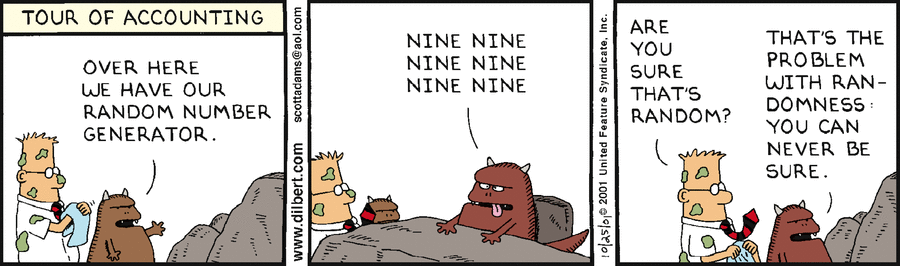
| > One of the private keys is literally "4" https://i.sstatic.net/Y3zE3.gif |
|
| ▲ | gwittel 4 hours ago | parent | prev | next [-] |
| Yikes. I’d have to wonder if this CA should even be trusted ever again? |
| |
| ▲ | AlotOfReading 4 hours ago | parent | next [-] | | Definitely not. Their CPS requires that these keys be generated by an HSM and no HSM would ever generate these, so there's little reason to believe they're following any of their other controls. | | |
| ▲ | jthoward64 4 hours ago | parent | next [-] | | According to https://bugzilla.mozilla.org/show_bug.cgi?id=2083449 they actually did use an HSM? Though some of the jargon is a bit beyond me, maybe this will finally get me to learn more PKI stuff. > The hardware used for each of the issuers is in the attached file. These HSMs are FIPS 140-2 Level 3 compliant. | | |
| ▲ | oasisbob 3 hours ago | parent | next [-] | | My vague and inexperienced read on their description boils down to "we were doing something weird and non-standard as part of our key ceremony because we intended these keys to be exported, and because of that process weirdness we blundered and gave the HSM faulty instructions." | |
| ▲ | zimmerfrei 3 hours ago | parent | prev [-] | | The most likely explanation is that they generated the weak key externally, imported it into the HSM, generated the CSR from it, and finally had Root CA sign it. A FIPS HSM does not forbid one to import keys into it. | | |
| ▲ | cstdr 2 hours ago | parent [-] | | But shouldn't such a HSM support key attestation (and the parent require such attestation)? Attestation would also track whether a key was imported or generated on the HSM, and of sufficient length. | | |
| ▲ | zimmerfrei an hour ago | parent [-] | | Attestation is not required by the compliance standard for browser CAs (WebTrust) and it is also quite vendor-specific and not very interoperable, so it is not commonly done. The Root CA must sign requests after authentication, but a "manual" approval is also accepted if done with the appropriate oversight with witnesses (clearly not the case here). | | |
| ▲ | cstdr an hour ago | parent [-] | | Of course it's not required, as we see here. The question is why not? Getting a simple code-signing cert seems to have more stringent requirements in that it either requires attestation or CA-issued hardware. |
|
|
|
| |
| ▲ | somat 3 hours ago | parent | prev [-] | | > no HSM would ever generate these You trust the magic black box far more than I do. My big fear about HSM is that they are inscrutable by design. There is no way to verify they are working as advertised. Plus side, all sorts of fancy hardware to protect your keys. Down side, all sorts of fancy hardware that obscures flaws in the implementation. | | |
| ▲ | fc417fc802 14 minutes ago | parent [-] | | I think I'd prefer open source hardware built from off the shelf components glued into a secure enclosure. That way you can destructively audit a few at random if the application matters enough to justify the cost. |
|
| |
| ▲ | wolvoleo an hour ago | parent | prev | next [-] | | Yeah IMO they should just close up shop. Just like Diginotar. They had one job, and they blew it. The system is based on trust and they've lost it. I'm going to remove their roots from all my stuff in any case. | |
| ▲ | red-iron-pine 4 hours ago | parent | prev [-] | | it should not |
|
|
| ▲ | Dragory 2 hours ago | parent | prev | next [-] |
| Anyone have a mirror for the first link? It served me a page assumedly intended for AI scrapers and then promptly blocked me when I refreshed a few times. |
|
| ▲ | kylepomykala 5 hours ago | parent | prev | next [-] |
| I am shocked that one of the private keys was literally “4”. Anyone could have broken into this. I really hope there is an industry-wide effort to stop things like this in the future.... but I doubt it. |
| |
| ▲ | eqvinox 5 hours ago | parent | next [-] | | There is a variety of projects and researchers scanning for weak keys; possibly that's how this was found (haven't seen anything on that). These certs existed for a year and a half; that's bad but could be worse still. One of the issues with sub-CAs (well, X509 certs in general) is that they can be ghosts in that there's no way you'll ever get it as a response on a TLS connection, so automated scanners on that won't find it. CT should cover this (i.e. expose the cert so you can check for weak keys), but I have no idea if/how CT works for sub-CAs. [ed.: see below, doesn't seem to be in CT] [ed.: these are technically sub-CAs, but rather cross-signed for bootstrapping a new root CA. Thanks @agwa for pointing that out.] | | |
| ▲ | tialaramex 4 hours ago | parent | next [-] | | For their own stuff, Mozilla has talked in the past about specifically just only trusting intermediates they've seen. Their modern root agreement says the CA will disclose all relevant intermediates, so arguably they have a complete list and further if that CA "forgot" about a few of them whether that's because your firm is too disorganised ("Oh, right, the one on Barry's laptop, forgot that one") or an actual attempt to sidestep this rule - then we certainly don't want to trust these undisclosed intermediates, do we ? They're either purposefully shady, or they're forgotten about and likely never have been audited. | | |
| ▲ | eqvinox 4 hours ago | parent [-] | | Y'know… let's just check… https://ctlogs.io/search?mode=fingerprint&q=42c4accd12c4f595... https://ctlogs.dev/search?q=42C4ACCD12C4F59597925E1A08A7A901... https://ctlogs.io/search?q=EBED6475C2C2D80FCB199F3FE8DD6E6B3... https://ctlogs.dev/search?q=EBED6475C2C2D80FCB199F3FE8DD6E6B... Nothing for "CN=EM DV TLS CA - G3B,O=eMudhra BV" (not sure which sha256 this uses, 2nd is the spki sha256) I should be clear here my understanding is/was these are sub-CAs. Apparently they're (trying to be?) roots themselves? The point of logging a root cert in CT is somewhat moot… though tbh I would argue anything issued by a CA should be in CT logs, even cross-signing another CA that is becoming a root itself. | | |
| ▲ | tialaramex an hour ago | parent [-] | | > I would argue anything issued by a CA should be in CT logs, even cross-signing another CA that is becoming a root itself. And it is, or at least, was. The CT logs when I last spent too long staring at them were complete indefinite logs. These days most (all? almost all?) are time limited so e.g. there'll be Clown 2026 and then Clown 2027 and a certificate is logged to the CT log corresponding to a not-after date IIRC. This way you can throw away a log of certificates expiring in 2025 a few weeks into 2026 because who cares, they've expired, and so they don't just grow forever. I no longer have a role where I care a great deal about this for my day job, and I do not know how to ask ctlogs.io for the thing I want. So probably this is still logged but I couldn't promise you without getting back into this. Maybe at the weekend. |
|
| |
| ▲ | interroboink 4 hours ago | parent | prev [-] | | > One of the issues with sub-CAs (well, X509 certs in general) is that they
> can be ghosts in that there's no way you'll ever get it as a response
> on a TLS connection, so automated scanners on that won't find it.
Could you expand on this? I don't have a full grasp of what you're saying (I'm not super knowledgeable in CA stuff).My understanding is that if something, like a browser, connects to a SSL site, they will either have or can obtain, one way or another, a complete chain all the way up to the root, so there can be no "ghost" certificate. And I would imagine a scanner could do all those same steps, and thus access all the same certs. Is this a deficiency in scanner software? You seem to indicate it is a fundamental weakness in X509; I'm just trying to understand what. Could you maybe describe a specific example of what you're describing? | | |
| ▲ | eqvinox 4 hours ago | parent | next [-] | | In the most extreme case, you can just issue a certificate and not use it anywhere. If it leaks, it's still a security issue, because it's valid. More realistically, especially with sub-CAs, they might only be used on e.g. corporate networks. TLS scanners may not be able to reach any of the hosts that uses such a cert. As the sibling post points out, clients checking for the cert in Certificate Transparency logs counters that (adding a requirement that the cert be publicly known, which TLS/X509 by itself very much does not have) — but of course this only helps if your client does CT… | | |
| ▲ | interroboink 4 hours ago | parent [-] | | Ah okay, thanks. So to be concrete, something like automation running 'curl' on an internal network might see the full chain, including the weak cert, and be vulnerable, but scanners on the wider internet won't see it. I was confused by "...there's no way you'll ever get it as a response on a TLS connection..." — I guess you just meant a _public_ TLS connection. Or it could be otherwise installed on corporate machines' local cert bundles. | | |
| ▲ | fc417fc802 20 minutes ago | parent [-] | | Or it could be provided by a MitM on the public internet opportunistically only when the connecting client matches the fingerprint of curl and the connection originates from a particular ASN. |
|
| |
| ▲ | gruez 4 hours ago | parent | prev [-] | | If you're doing a MITM attack, you can selectively intercept certain clients, and only serve the compromised certificate in those cases only. Automated scanners won't pick that up. None of this actually works though, because browsers started mandating certificate transparency. | | |
| ▲ | ranger_danger an hour ago | parent [-] | | Please be careful with your phrasing, as there are MANY other critical things on this planet that use TLS certs which are not browsers, and some are extremely difficult/impossible to update. VPNs, embedded software (IoT, automotive, aerospace, medical, industrial etc.), business systems, you name it. |
|
|
| |
| ▲ | crossroadsguy 3 hours ago | parent | prev | next [-] | | True randomness respected. | |
| ▲ | sophacles 4 hours ago | parent | prev [-] | | Of all the things... i never expected there to be an XKCD for this: https://xkcd.com/221/ |
|
|
| ▲ | rep_lodsb 4 hours ago | parent | prev | next [-] |
| chosen by fair dice roll, no doubt |
| |
|
| ▲ | rolandog 2 hours ago | parent | prev | next [-] |
| > One of the private keys is literally "4". Oh no, they reverse engineered the random number generator! [0]: https://xkcd.com/221/ |
|
| ▲ | jeffbee 4 hours ago | parent | prev | next [-] |
| 4 is as likely as any other randomly chosen number over a given range. |
| |
| ▲ | tomjakubowski 3 hours ago | parent [-] | | Well, all eight of the compromised certificates had keys which were < 256. So a really poor choice of range. | | |
| ▲ | mystifyingpoi 3 hours ago | parent [-] | | How could you prove it was not a fair random generation? It's totally possible. | | |
| ▲ | deathanatos 3 hours ago | parent | next [-] | | It's not within the realm of believability. The chance of "human screwed up" astronomically exceeds this being fairly randomly chosen, and the Firefox bug states, (I think this is supposition, not known fact, but IDK) > The original key generation was flawed - rather than any issue with the produced signatures. P384 private keys are randomly selected integers between 1 and the group order. That is within the realm of believability. | |
| ▲ | jeffbee 2 hours ago | parent | prev [-] | | When you have multiple selections you can show that the probability of selecting a set with a range much smaller than the population range is exponentially unlikely, strong evidence to reject the hypothesis that the subset was chosen at random. But when N=1 you can't conclude anything. |
|
|
|
|
| ▲ | poizan42 4 hours ago | parent | prev | next [-] |
| They used the xkcd PRNG: https://xkcd.com/221/ |
|
| ▲ | Kikawala 3 hours ago | parent | prev [-] |
| [dead] |