| ▲ | Show HN: A USB-C LTE modem that gives my computer a phone line(github.com) |
| 31 points by abijahkaj 6 hours ago | 23 comments |
| |
|
| ▲ | gruez 16 minutes ago | parent | next [-] |
| >Where 2G and 3G are switched off, calls need a module firmware with VoLTE and a carrier that allows it; ask the seller. This is a huge caveat. OP, does your setup even support VoLTE? Otherwise this might become a brick in a few years as your carrier shuts down 2G/3G, as many carriers around the world have already done |
|
| ▲ | mcculley an hour ago | parent | prev | next [-] |
| This is great. Apple needs to figure out how to fit one into a 16" MacBook Pro. |
| |
| ▲ | wlesieutre 33 minutes ago | parent [-] | | They could if they wanted to, I’m a bit surprised that they didn’t add it with this big new MBP generation. Especially now that they have their own modem and wouldn’t need to pay whatever royalties Qualcomm would demand, which I’ve read are based on the device price and would get very high on a premium laptop. | | |
|
|
| ▲ | Vaushite 2 hours ago | parent | prev | next [-] |
| Obviously AI vibed, which means the project probably has never been built and wouldn't work if you built it. |
| |
| ▲ | abijahkaj an hour ago | parent [-] | | I mentioned in the top comment that Koppar generated the board and that the first batch is about to be ordered, so no detective work needed there. I'm just as skeptical of blind AI hardware output as you are, which is why I audited every net against the datasheets and put all the flaws in REVIEW.md in the repo before ordering:
- The 0.33 mm RF trace came out to ~35 Ω instead of 50 Ω and hopped layers through vias (I included Pi-matching pads to tune it on the bench).
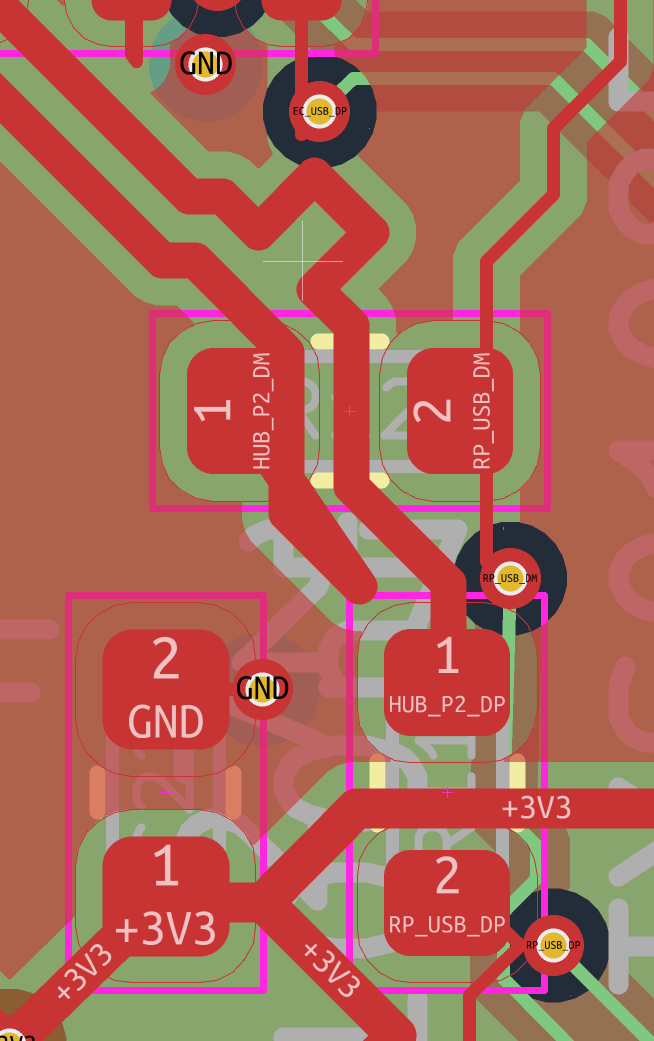
- The 3.8 V buck converter was placed too far from its inductor, and the 1.37 mm power trace is narrower than Quectel's 2 mm recommendation (~100 mV drop at 3 A). - The SIM socket (J2) is oriented inward, which is annoying mechanically. 5 bare boards + 2 PCBA units are currently being ordered at JLCPCB, and I'll order the EC25-EUX modules separately to hand-solder onto U8 since JLC was out of stock. Since the KiCad files are in the repo, if you spot a specific net or pinout error that will brick bring-up, let me know so I can bodge-wire it next week. | | |
|
|
| ▲ | efren6 30 minutes ago | parent | prev | next [-] |
| Er |
|
| ▲ | mycall 3 hours ago | parent | prev | next [-] |
| Will LTE continue to work when 6G rolls out in 3 years? |
| |
| ▲ | wolrah an hour ago | parent | next [-] | | > Will LTE continue to work when 6G rolls out in 3 years? A significant change that came with LTE is the use of OFDM as the base of the air interface, which means that cellular providers no longer need to allocate large segments of spectrum to one protocol or another. Towers that were upgraded from 4G to 5G didn't need to disable 4G or consistently split their spectrum between the two they way they did when upgrading from 2G to 3G or 3G to 4G, they can dynamically allocate subchannels in each mode based on the immediate needs of their users. It seems unlikely that whatever technologies come in the future will regress in this way, so there shouldn't be a need for a hard cutoff at any point and I'd expect LTE devices to keep working for many generations to come. | | |
| ▲ | retatop 42 minutes ago | parent | next [-] | | I don't think your conclusion is correct. 4G -> 5G will result in 5G networks completely consuming the 4G ones. T-Mobile has already been talking about shutting down LTE in a few years. The reason afaik that 4G and 5G are seemingly compatible right now is that most networks are in 5G NSA mode (non standalone) which means that LTE is actually used for negotiation and orchestration stuff, with 5G only used for the actual data pipe. I have been told that most of the benefit of 5G comes with 5G SA (standalone), but that requires not supporting the LTE stuff | | |
| ▲ | cowlevel 25 minutes ago | parent [-] | | Ironic given that LTE, literally called Long-Term Evolution, was supposed to make future backwards incompatible changes unnecessary. |
| |
| ▲ | gruez 42 minutes ago | parent | prev | next [-] | | It's not just spectrum, though. The core network is totally different than 5G SA or whatever 6G has. Maintaining all of that will eventually be considered not worth the trouble, and it'll be decommissioned. If anything decommissioning will be faster for LTE because unlike 2G/3G (which were needed because VoLTE support was flakely and had device whitelists) there isn't much point in keeping LTE around for legacy reasons. | | | |
| ▲ | OJFord 29 minutes ago | parent | prev [-] | | > they can dynamically allocate subchannels in each mode based on the immediate needs of their users. Right, so if I'm still rocking 4G only while 'everyone' else in the area is using 6G with some other stragglers on 5G, ... | | |
| ▲ | cowlevel 27 minutes ago | parent [-] | | They're (mostly) the same channels shared by all of them. It's not like an ethernet address (where everyone on the network speaks the same protocol and just ignores packets not for it), it's a radio frequency timeslice that's allocated to you, and you and your nearby tower can speak any radio modulation they want in that timeslice, even ones that other phones or other towers don't support. However new technologies sometimes also bring new spectrum blocks like mmwave 5G. |
|
| |
| ▲ | j45 2 hours ago | parent | prev [-] | | Probably for a while - lots of IoT uses it, especially with the push away from 3G. |
|
|
| ▲ | abijahkaj 6 hours ago | parent | prev [-] |
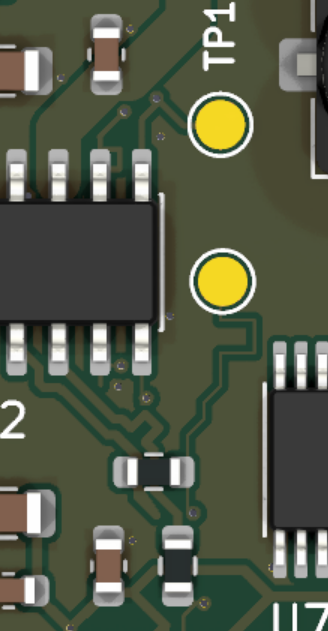
| I wanted a real phone line on my computer: calls and texts on a physical SIM, answered through my headset at my desk, or by a script or an AI agent when I'm away. Cloud numbers get treated as VoIP, and old Android phones give you no clean way to get call audio in and out over USB. So this is a 4-layer USB-C board around a Quectel EC25-EUX. Behind a USB hub, the computer sees an LTE network adapter, the modem's AT serial ports (caller ID, SMS, answer), and an RP2040 acting as a USB sound card. The RP2040 bridges the modem's 1.8 V PCM audio through a level shifter. There's a 3.8 V buck sized for the 2 A GSM bursts, and no battery. I wrote the spec as one page of text, and Koppar, the tool I'm building, generated the schematic and the board. Then I reviewed it against the datasheets. The review found a 35 Ω antenna feed that hopped layers, a buck 60 mm from its inductor, and a SIM socket facing into the board. The parts matching would have bought an 18 µH inductor for a 4.7 µH slot. REVIEW.md in the repo has all of it with the numbers. Status: the boards aren't built yet. The repo is the design as I'm ordering it: KiCad 10 project, Gerbers, JLCPCB BOM and placement files. Bring-up and the sound-card firmware come next. Happy to answer anything about the audio path or the power design, and I'd like to hear what you'd change before the first bring-up. |
| |
| ▲ | j45 2 hours ago | parent [-] | | I believe there are VOIP phones that are sim card based. Imagine a country that doesn't have land lines but folks want a home phone. | | |
| ▲ | wolrah an hour ago | parent [-] | | There are SIP to cellular gateways which have historically been very popular in regions where landline to mobile calls cost money but mobile to mobile do not, but they mostly don't exist in the US market other than high-density devices mostly used by SMS spammers. The only actual VoIP phone with a SIM card I'm aware of is the Yealink T74LTE which for a long time was exclusive to Verizon's business phone service but has recently become available for general purchase, those can support both SIM over LTE data and VoLTE (which is also basically SIP but over a prioritized channel). | | |
| ▲ | Scoundreller 19 minutes ago | parent [-] | | I'd like this kind of setup because my VoIP provider charges a couple bucks a month for 9-1-1 while sending 9-1-1 over cellular would be free |
|
|
|