| |
| ▲ | kulahan a day ago | parent | next [-] | | Both figuratively and literally, this experience was the tip of the iceberg. Terrifying. People might think I'm crazy, but I'm choosing my retirement location 100% based on resistance to climate change. Local water, too much humidity for massive fires, too cold for insane heatwaves... you get it. | | |
| ▲ | UncleOxidant a day ago | parent | next [-] | | I've seen recommendations for locations near the Great Lakes. Upper peninsula of MI, for example. Plenty of water. A warming climate should actually make the winters there somewhat less harsh. | | |
| ▲ | AngryData a day ago | parent | next [-] | | Depends on how much warming. Some areas of the UP are colder temperature wise, but because it stays below freezing most of the winter the humidity stays low and it doesn't feel so bad. Where as some lower areas in Michigan now regularly break the freezing line in winter and everything is always a sopping mess with cold high humidity and no snow to act as insulation for buildings. | |
| ▲ | abrowne a day ago | parent | prev [-] | | Wildfire smoke will be the big question there. It's started to be bad for a week or two a year in Minneapolis, and is only worse the closer you are to the boreal forest. | | |
| ▲ | SoftTalker a day ago | parent | next [-] | | Wildfires only a problem until the overgrowth is burned off. When there's not enough to sustain a large spreading fire, they will stop happening. | | |
| ▲ | __MatrixMan__ a day ago | parent | next [-] | | Then come the floods because the roots were holding all the soil in place and the soil was managing water movement. What used to be an all year trickle becomes an occasional deatructive deluge. | |
| ▲ | electricEmu a day ago | parent | prev | next [-] | | Climate change is defined by both wet and dry extremes. Excess rainfall creates an explosion of brush that during the now annual drought turns to tinder. | |
| ▲ | 8note a day ago | parent | prev | next [-] | | canada's forest is growing, not shrinking. the overgrowth will keep growing year over year | |
| ▲ | lazide 20 hours ago | parent | prev | next [-] | | There is a LOT of overgrowth. Expect a decade+ of fires, or an apocalyptic firestorm which burns everything to cinders. Neither is awesome. | |
| ▲ | 1attice a day ago | parent | prev [-] | | True, but disingenuous, as "over" growth implies a normative cap, but climate change just is moving the cap lower. The ceiling is falling: more and more growth, in every biome, counts as overgrowth. Eventually only desert remains viable, and everything above it, including arability, is locked away forever. |
| |
| ▲ | testing22321 a day ago | parent | prev [-] | | And the failure of basic services like water and power. Given it took FEMA ten days to get power restored to the super dome, how long will responses be when there are many simultaneous disasters of that size or bigger? With the current admin the answer could be “indefinite” |
|
| |
| ▲ | ferguess_k a day ago | parent | prev | next [-] | | Which places have you found? I'm in Canada and figured most of the places are going to suffer more rain falling in the next decades. | | |
| ▲ | ifwinterco 19 hours ago | parent | next [-] | | Cities in the tropics at high altitude far from the sea like Bogotá, Medellín, maybe even Mexico City. Maybe some moderately increased risk of extreme rainfall causing localised flooding, mudslides etc, but Bogotá in particular has an incredibly mild climate year round, and you're at 2600m so you aren't too worried about sea level risk. As far as I'm aware basically no risk from hurricanes, tornados or anything like that. Biggest risk is earthquakes which is nothing to do with climate change and can be mitigated. In fact Bogotá is a bit chilly so might be nice if it was slightly warmer. For some reason people assume that climate change means you need to move closer to the poles, but moving to higher elevation is much better | |
| ▲ | stackskipton a day ago | parent | prev | next [-] | | Great Lakes area is probably well positioned. | | |
| ▲ | nostrademons a day ago | parent | next [-] | | Everybody is saying that the Great Lakes region is a climate haven, but it's intensely vulnerable to both polar vortex events coming down from Canada and wet-bulb heat waves coming up from the Gulf of Mexico. The middle of America is flat; there is no natural barrier to stop a frigid or sweltering airmass from moving in. This has already happened multiple times within just the last few years. In terms of death toll, a power outage during a severe deep freeze (with subzero temperatures and -50 wind chills) or a wet bulb event has a far greater lethality potential than wildfires. The most deadly wildfire in California history was the Camp fire that leveled the town of Paradise; it caused 85 deaths. The Oakland Hills firestorm of 1989, immortalized in SimCity and several made-for-TV movies, only caused 25 deaths. By contrast, the 1995 Chicago heat wave caused 740 fatalities, and even the 2024 polar vortex event that barely made headlines killed more people (90) than the Camp Fire. (Also note the low absolute numbers of even very severe, headline-grabbing natural disasters in developed countries. And that good construction can mitigate almost all of them. You are probably better off, in strict actuarial terms, by settling in a place where you can make a lot of money and then using it to prepare your home for disaster than by settling in a place that is cheaper but where you can't afford the latest building technology.) | |
| ▲ | ferguess_k 15 hours ago | parent | prev [-] | | I think they have their fair share of snow storms during the winter because of the vortex coming from the West. The vortex goes down from Alaska because the mountains block it, and then it turns east and goes straight to the lake area. I live in Montreal, but sometimes I see bitter weathers in Toronto during the winter. Ofc we have our share of pain, but I'm fine with snow -- raining is a huge problem in recent years -- I'm installing a French Drain right now, and hopefully it offers enough protection. However, my house is sitting on top of clay, so that could be a big issue. | | |
| ▲ | dredmorbius 14 hours ago | parent [-] | | Snow can be annoying but is rarely catastrophic. Somewhat more concerning is that tornado frequency is increasing at a ferocious rate, though most are relatively minor (EF-0 / EF-1). The total for 2026 to date is 207 ground tracks (as of 27 Aug 2026). The previous full year record was 142, and the historical average (again full-year) is closer to 50. This has knock-on effects to insurance as well as raising home and landscaping repair (downed trees, etc.). <https://chicago.suntimes.com/environment/2026/08/27/200-torn...> Flash-flooding is also an increasing concern, though unlike Nepal, water channels tend to be largely flat. Urban creeks, local rivers, retention ponds, and low-lying locations (underpasses, local low spots) may experience flooding, though generally flow strength is low. Basement flooding is the most likely risk. |
|
| |
| ▲ | kulahan a day ago | parent | prev | next [-] | | Personally, I'm aiming for Pittsburgh. | |
| ▲ | debo_ a day ago | parent | prev | next [-] | | I have spoken to quite a few real estate agents in Sudbury who mentioned folks are buying property there as a hedge against climate change. | |
| ▲ | 1attice a day ago | parent | prev [-] | | Not unexpectedly, follow real estate prices. The average value of homes in safe parts of Canada has risen significantly. E.g. Vancouver is devastatingly expensive, while nearby Abbotsford and Richmond are floodplains and reclaimed marsh, respectively, and are cheap. Sometimes uninsurable, but cheap. The market will price us all out of the safest places and indeed arguably already has. Expect housing values to continue to diverge. A dry hovel is superior to the mightiest of flooded manses, but a home in a dry, safe metropolis, with enough water for all? Literally invaluable. It will be priced accordingly. |
| |
| ▲ | cryptonector 15 hours ago | parent | prev | next [-] | | Sea levels haven't changed at Martha's Vineyard. I'd recommend that. Obama moved there in his retirement. | |
| ▲ | blondie9x a day ago | parent | prev | next [-] | | Honestly there is no safe haven while humans over-consume continue to waste in the chase of excess. We have seen in the last few years all the supposed climate safe areas get hit hard. https://www.npr.org/2024/10/09/nx-s1-5137024/climate-haven-h... | | |
| ▲ | IG_Semmelweiss a day ago | parent [-] | | birth rates are falling off the cliff in all developed nations, most are below replacement rate already | | |
| |
| ▲ | hodgesrm a day ago | parent | prev [-] | | Pro tip for people moving north; don't buy land in the valleys around Mt. Rainier. This type of flood (also known as a lahar) has occurred there many times. The mudflows reached the harbor of Tacoma in the past. [0] I expect we'll see at least one new one in our lifetime, as the glaciers have been greatly affected by rising temperatures. [0] https://www.usgs.gov/media/images/mt-rainier-lahar-hazard-ma... | | |
| ▲ | rezaprima 20 hours ago | parent | next [-] | | A bit off topic about the word "lahar", we Indonesians use that word to mean "lava", and we use "lahar dingin" (lit: cold lava) to mean volcanic mudflow. | |
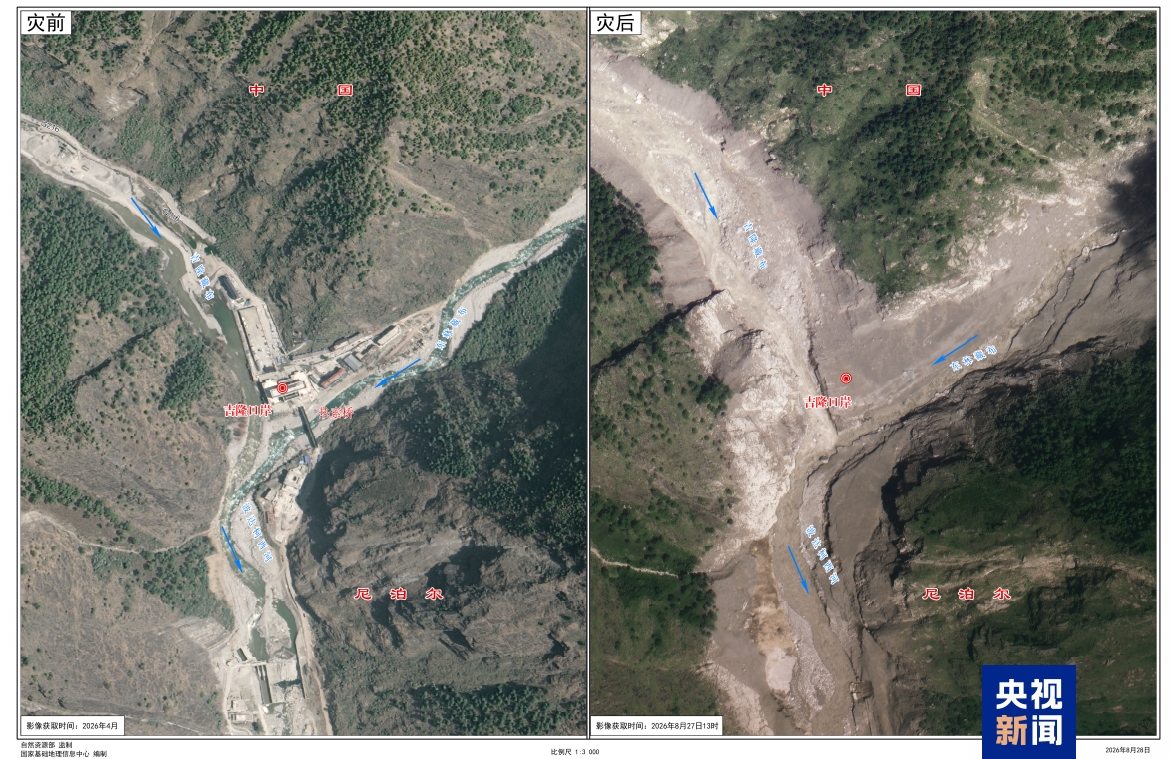
| ▲ | pcthrowaway a day ago | parent | prev [-] | | Do you have a source about the Nepalese flood being a Lahar? I've only read that it was caused due to the glacier collapse, which seems like a different thing | | |
| ▲ | hodgesrm 15 hours ago | parent | next [-] | | Thanks, I see that Lahars are technically associated with volcanoes as another comment noted. They have a variety of causes of which glacial collapse is one. [0] The term jökulhlaup describes a flood originating from a glacier, for example draining of a glacial lake. [1] It now seems the Nepali flood was triggered by a landslide onto a glacier. As a practical matter the effects are pretty similar. Rainier has had lahars and jökulhlaups in the past. [0] https://en.wikipedia.org/wiki/Lahar [1] https://en.wikipedia.org/wiki/J%C3%B6kulhlaup | |
| ▲ | waste_monk a day ago | parent | prev [-] | | I can't access the OP article at the moment, but there's a diagram of the the chain of events that caused the disaster here [1]. I believe Lahars are specifically volcanic, this would be better described as a combination flood and landslide at the same time. [1] https://www.bbc.com/news/live/c6y8mjmnpxv0t?post=asset%3Ac6b... |
|
|
| |
| ▲ | 1attice 12 hours ago | parent | prev | next [-] | | OP here. This post went from +6 yesterday to -3 overnight. The implicit HN Forbidden Topics List is beginning to look a lot like an impartial description of a Tuesday. | |
| ▲ | rayiner a day ago | parent | prev | next [-] | | Deaths from. atrial disasters are the lowest in history: https://www.vox.com/future-perfect/422084/climate-change-nat... | | |
| ▲ | dredmorbius 14 hours ago | parent [-] | | The same argument could have been made about wildfire deaths and damage through the early 2000s in the US. It turns out that improved forecasting, warning systems, and well-established emergency response, rescue, and recovery systems, can all tamp down risk. Looking at your article, the subhead reveals a split narrative: "Natural disasters may cost more money, but they claim far fewer lives than in decades past." What's begun to occur with wildfires is that events are now exceeding the capability of even advanced modern technological societies to address them. Wildfires now regularly enter the urban core, not merely the urban fringe. That's something unheard of in the US from roughly the 1920s, and there wasn't a notable large-scale urban fire until the Oakland Hills firestorm of 1991. Even that was arguably at the wildland-urban interface (WUI). Contrast the Tea Fire (2008, Montecito & Santa Barbara, CA), the Tubbs Fire (2017, Santa Rosa and Sonoma, CA), Camp Fire (2018, Paradise, CA), Carr Fire (2018, Redding, CA), the August 2020 California lightning fires (2020, multiple locations, 3,500+ structures destroyed), the Marshall fire (2021, Marshall, Superior, and Louisvill, CO), the Mountain Fire (2024, Ventura, CA), the Hawaii wildfires (2023, Lahaina, HI), the 2025 Los Angeles wildfires (2025, Pasadena and Altadena CA amongst other locations), and the 2026 Spokane complex (2025, Spokane, WA, ~850 structures). That's just within the US (an advanced modern technological society), omits wildfires not significantly impacting urban regions, and probably skips a few. There've also been unprecedented urban fires in Canada, Europe, and Australia within the past few decades after nearly a century of no such instances. (Europe is an exception: for some reason there were numerous urban conflagrations in the period 1939--1945, e.g., Dresden and Hamburg, though climate doesn't seem directly implicated as I recall. Tokyo, Hiroshima, Nagasaki and other Japanese cities had a similar experience at the time.) As more facts come out about the Nepal-Tibet glacial flood event of 2026, it's pretty clear that many casualties and damage were unavoidable at all once the event itself was triggered. Avoiding casualties would have required extensive evacuations of a nearly 100km stretch of the Trishuli River, possibly for weeks, with an affected population of over 1 million souls. I've addressed this in a few recent HN comments: <https://news.ycombinator.com/item?id=49473419> <https://news.ycombinator.com/item?id=49473201> <https://news.ycombinator.com/item?id=49460081> |
| |
| ▲ | HDBaseT a day ago | parent | prev | next [-] | | This event has nothing to do with climate change and is pure fear mongering. This is the same adage used by the Governments with the "think about the children" campaigns, its a distraction. A cop out. | | |
| ▲ | kulahan a day ago | parent | next [-] | | Yeah, the event primarily marked by receding glaciers probably has nothing to do with this glacier that weakened to the point of destroying a village. This glacier probably melted many times in the past, especially in such a sudden and violent manner. I'm sure this is in no way anomalous, nor is it something that could predictably result at some point from a warming planet. | | |
| ▲ | mlhpdx a day ago | parent | next [-] | | The Missoula Floods. This kind of thing has been happening for a good long time. That doesn’t diminish the tragedy in any way, this event was shocking and brutal. But it wasn’t the first and won’t be the last. | | |
| ▲ | kulahan a day ago | parent [-] | | “Guys this isn’t global climate change, this happened once before at the end of the ice age!” I have no clue what point you’re trying to make, but I don’t think you got it across here. |
| |
| ▲ | dredmorbius 14 hours ago | parent | prev [-] | | </sarcasm> (For the detection-impaired.) |
| |
| ▲ | wahern a day ago | parent | prev | next [-] | | I sympathize with the reaction to the hyperbole, but it's not a binary thing. Better to think in terms of marginal increases in occurrence rate, or in a single case marginal increase in progression of an impending event (glaciers were all gonna be gone in a few thousand years anyhow). Still plenty of room to debate numbers. | |
| ▲ | a day ago | parent | prev [-] | | [deleted] |
| |
| ▲ | sandeepkd a day ago | parent | prev [-] | | I do not know if I would consider stopping the climate change as a solution for all such events. Watching the video makes you realize how small you are in front of the nature. It feels painful to even watch it but its an eyeopener at the same time. Its a misconception to think that the climate would always remain same, nature is an constantly moving/changing entity. What might be perceived as destruction is also the mechanism how creation of life or life like conditions happened in the first place. Just makes me feel like appreciating the day even more. | | |
| ▲ | FireBeyond a day ago | parent [-] | | Mt St Helens erupted in 1980. The landslide alone was 3.3 billion cubic yards, that traveled 15mi at speeds of up to 155mph, and buried 23 square miles to an average depth of 150ft, and up to 600ft, within 10 minutes. The blast flattened 230 sq mi of forest in minutes. 540 million tons of ash fell in 9 hours, affecting 22,000 sq mi. The mudflow (lahar) was this debris mixing with 170 million cubic yards of glacial ice and snow, moving at 80 mph. People liked to make smart ass comments about people who took photos "and would soon be dead" - "they were miles away, they could have left". For a lot of them? No. The sheer magnitude of these events is truly unimaginable, even if you "were there" (nearby). And MSH was barely a 5 on the VEI 0-8 (roughly) logarithmic scale, though you can't map to death toll easily. Pinatubo in 1991 was a high 6. Krakatoa too. Tambora is the largest we know, in 1815, VEI 7, and is estimated at eighty times more output than MSH, and triggered the "Year Without a Summer" globally (https://en.wikipedia.org/wiki/Year_Without_a_Summer) that pulled down average -global- temperatures by a full degree over the course of a year. It completely disrupted the monsoon season throughout Asia, leading to flash flooding events like this becoming a very regular occurrence. I think some of these types of stats are the closest terrestrial things we have at the limits of human comprehensibility (probably only eclipsed by "interstellar distances"). | | |
|
|