| ▲ | spwa4 3 hours ago | |||||||||||||
[flagged] | ||||||||||||||
| ▲ | Y-bar 3 hours ago | parent | next [-] | |||||||||||||
When you say that the Greens provide subsidies to coal, but this can be found on a quick search… > The next fight is already brewing, over a Green push to accelerate the phase-out of coal-fired power generation in eastern Germany. In a draft resolution, seen by POLITICO, the party wants to bring the coal exit forward from 2038 to 2030, as is already the case for mining regions in the west of the country. https://www.politico.eu/article/german-government-coalition-... … Are you sure you are talking about the Greens and not CDU or CSU which they occasionality form government coalitions with? | ||||||||||||||
| ▲ | eigenspace 3 hours ago | parent | prev | next [-] | |||||||||||||
Crazy the sorts of lies people make up here. | ||||||||||||||
| ▲ | fsh 3 hours ago | parent | prev | next [-] | |||||||||||||
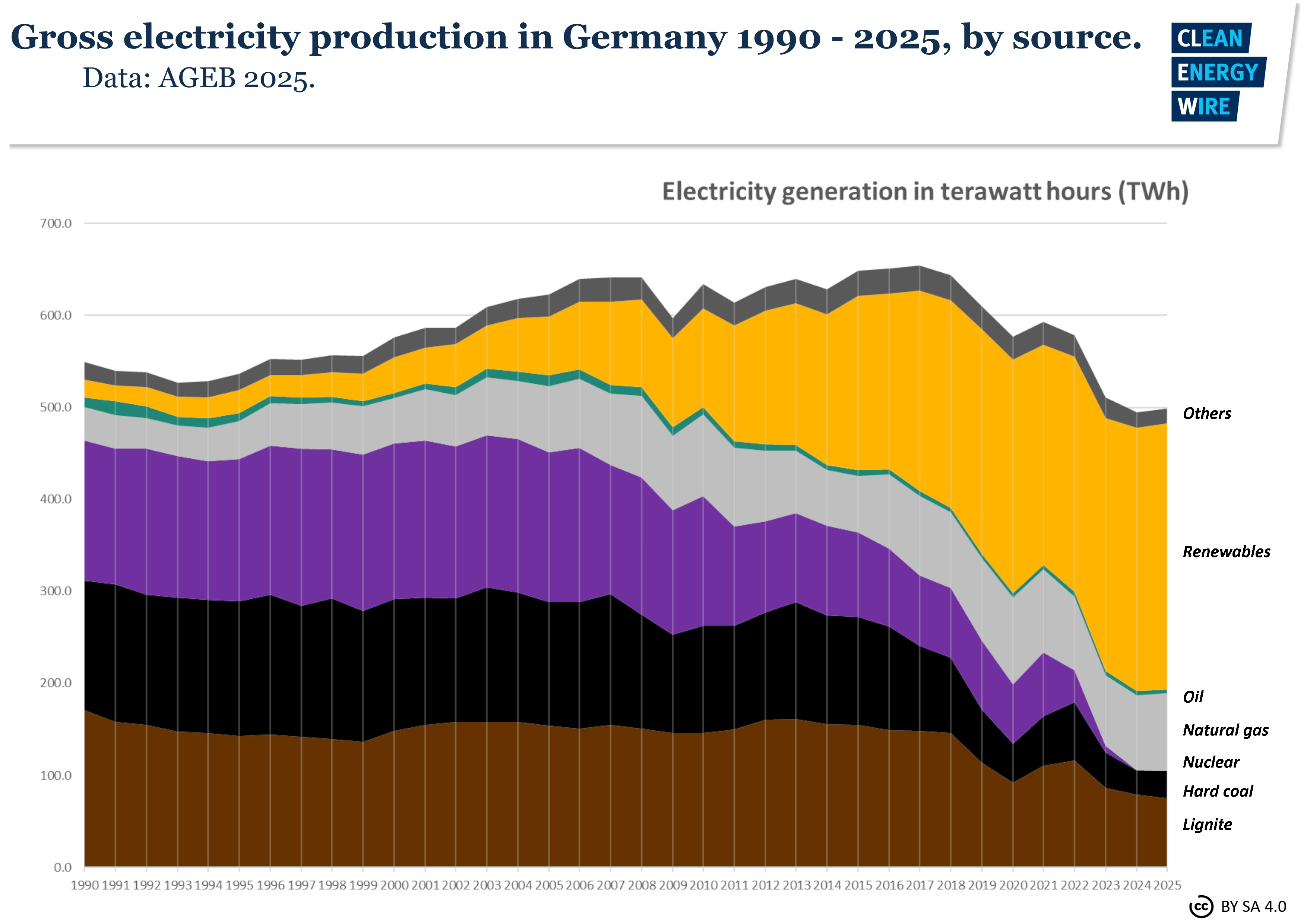
This is blatantly untrue: https://www.cleanenergywire.org/sites/default/files/Fig2_Gro... | ||||||||||||||
| ||||||||||||||
| ▲ | atoav 3 hours ago | parent | prev | next [-] | |||||||||||||
This mixes several different things into one causal puddle. Yes, keeping the remaining nuclear plants running would have reduced emissions and electricity prices somewhat. A 2024 Energy Policy study estimates the 2022/23 extension lowered German wholesale prices by about €9/MWh. That's a real effect, but nowhere remotely close to "the nuclear phase-out doubled electricity prices." The huge price spike was primarily the European gas crisis. You know, the one for which LNG terminals had been built. Nor did Germany replace nuclear with coal. Coal generation subsequently fell to levels not seen in decades, while renewables grew substantially, so German emissions fell as well. Attributing the nuclear exit simply to "the Greens" is rather selective history. The original exit was SPD/Greens, but after reversing it in 2010, Merkel's CDU/FDP government legislated essentially the final phase-out schedule again in 2011. So basically: every party that was at the levers of power. You could make a perfectly reasonable argument that shutting existing nuclear before coal was bad climate policy in hindsight, because of the gas crisis. But I don't think you need to resort to the rather dubious claim that it doubled electricity prices as a singular cause. | ||||||||||||||
| ▲ | fundatus 3 hours ago | parent | prev [-] | |||||||||||||
Seems like you read some misinformation there. Share of coal in the German electricity mix: 2021 30.2% 2022 33.3% (the year that nuclear was shut off) 2023 26.0% 2024 21.2% 2025 22.4% Complete phase out is scheduled for the 2030s. | ||||||||||||||
| ||||||||||||||