| ▲ | hannesfur 4 hours ago |
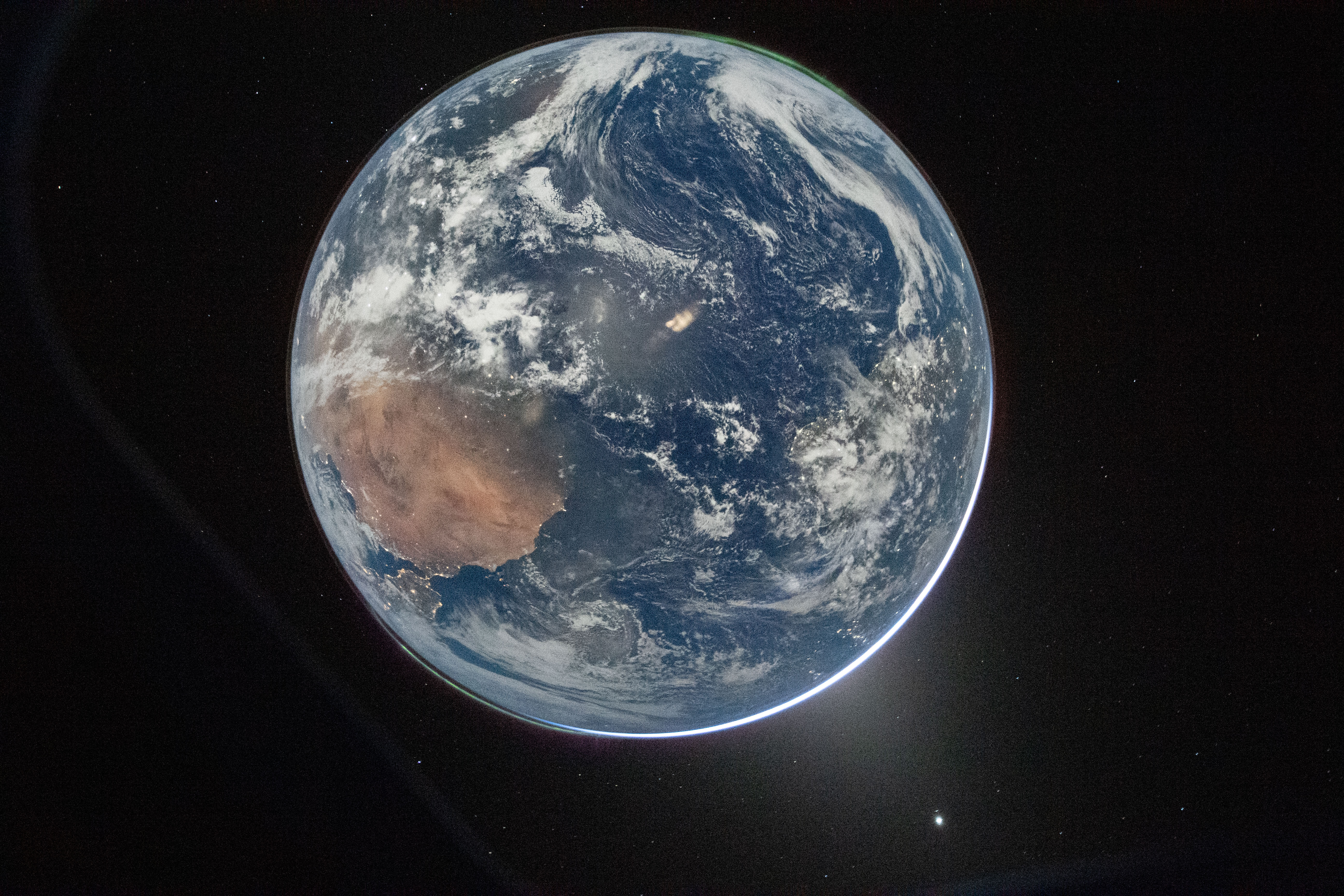
| Looking at the EXIF (with exiftool) for the image uploaded by NASA (https://www.nasa.gov/wp-content/uploads/2026/04/art002e00019...), apparently this was taken by a Nikon D5 with an AF-S Zoom-Nikkor 14-24mm f/2.8G ED and developed with Lightroom. It also seems like very little was done in Lightroom. Amazing...
I dumped the whole EXIF here: https://gist.github.com/umgefahren/a6f555e6588a98adb74eed79d... |
|
| ▲ | throw0101d 3 hours ago | parent | next [-] |
| Yes, the D5s are the 'official' Handheld Universal Lunar Cameras (HULCs), but (a?) Z9 also got on-board at the 'last minute' (which means two years ago): * https://petapixel.com/2026/04/02/a-nikon-z9-made-it-aboard-t... They have a thermal blanket for exterior work: * https://petapixel.com/2026/02/24/artemis-ii-astronauts-will-... * https://petapixel.com/2025/01/10/the-custom-nikon-z9-and-the... * Various stories with the "Artemis" tag: https://petapixel.com/tag/artemis/ The D5 has been used on the ISS, including EVAs, since 2017, so they're a known quantity: * https://en.wikipedia.org/wiki/List_of_cameras_on_the_Interna... The Mercury and Apollo missions used Hasselblad 500-series-based cameras (modified): * https://www.hasselblad.com/about/history/hasselblad-in-space... |
|
| ▲ | layer8 4 hours ago | parent | prev | next [-] |
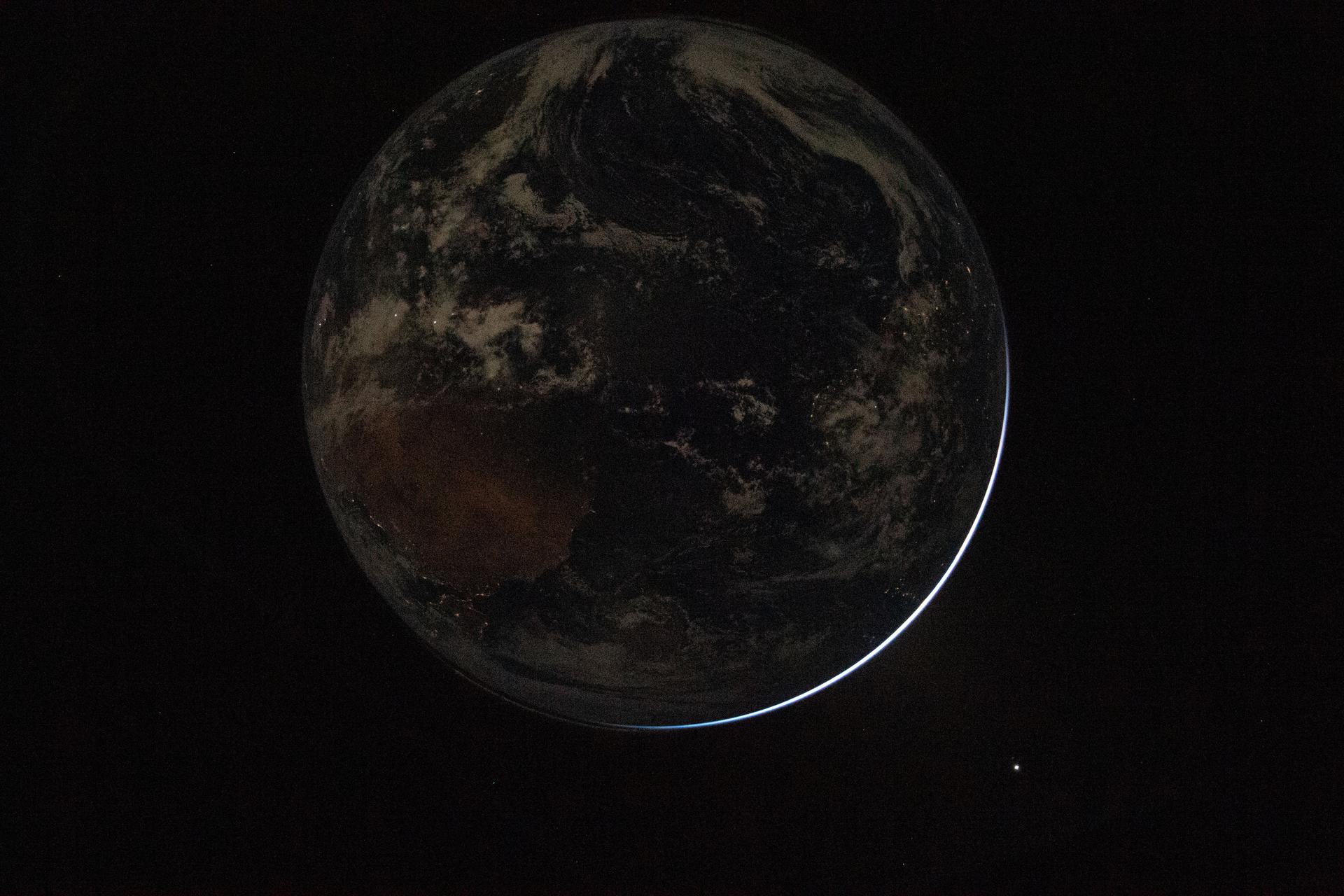
| Before Lightroom it might have looked closer to this: https://images-assets.nasa.gov/image/art002e000193/art002e00... |
| |
| ▲ | hannesfur 4 hours ago | parent | next [-] | | From the EXIF we can infer that every setting was left at the default. No exposure comp, no contrast, no HSL, no lens correction and a linear tone curve. Just the default Adobe Color profile at 5400K. | |
| ▲ | dotancohen an hour ago | parent | prev | next [-] | | On which NASA website are these raw images posted? | |
| ▲ | divbzero 3 hours ago | parent | prev | next [-] | | The photograph appears to show nightime on Earth with just a sliver of daytime. Beyond cities in Iberia and along the coast of Africa, most of what we can see would be reflected light from the Moon? We are just past full moon on April 1. | | |
| ▲ | hparadiz 3 hours ago | parent | next [-] | | 1/4 exposure time so 250 ms of light. the light is coming from all the light sources in the universe, plus the moon, plus the sun's rays refracting through the atmosphere which happens even at night. The natural blue light is coming from the oxygen in the atmosphere but it's so overwhelming in that spot that it turns the light pure white. The red/orangish is coming from particulates and the green/red from aurora. My favorite part I think is the very bottom where you can see the blue light taper off and not overwhelm the camera sensor and you can see the aurora with it. I love this photo so much. Probably my favorite photo ever now. | | |
| ▲ | pdonis 9 minutes ago | parent [-] | | > the light is coming from all the light sources in the universe, plus the moon And all the others are negligible by many orders of magnitude compared to the moon. So it's really just the moon as far as this photo is concerned (except for the small sliver that's still illuminated by sunlight, including refracted sunlight). |
| |
| ▲ | pdonis 10 minutes ago | parent | prev | next [-] | | > Beyond cities in Iberia and along the coast of Africa, most of what we can see would be reflected light from the Moon? Yes, exactly. | |
| ▲ | tayo42 3 hours ago | parent | prev [-] | | That's what the caption the article above says |
| |
| ▲ | deepsun 3 hours ago | parent | prev | next [-] | | But that one (art002e000193~large.jpg) is only 287kB. The Lightroom-processed one is 6.2MB. I would expect original to be heavier. | | |
| ▲ | porphyra 3 hours ago | parent | next [-] | | The Lightroom one was processed from raw. Also, by brightening it a lot, the noisy high-ISO grain becomes more apparent. Noise is famously incompressible, so it leads to a much larger file size. | | |
| ▲ | thfuran 3 hours ago | parent [-] | | Brightening the image may make the iso noise easier to see, but it doesn't create it. | | |
| ▲ | miduil 2 hours ago | parent | next [-] | | But lossy-codecs job is to utilize psychovisual tricks to discard as much high-frequency information as possible, whilst remaining similar visual effects. If you increase the brightness in RAW and then re-encode the JPEG - more noise is being pulled up in the visual spectrum, therefor less of that information (filesize) is discarded. For example, if you render Gaussian noise in photopea and export as JPEG 100% quality, it has 9.2MB. If you reduce the exposure by -2 it goes down to 7.8MB. That's partially because more parts of the noise are effectively black pixels, but also I believe because of the earlier mentioned effect. | |
| ▲ | godelski 16 minutes ago | parent | prev | next [-] | | It's not lossless | |
| ▲ | porphyra 2 hours ago | parent | prev [-] | | Noise that's easier to see will not be compressed away by the JPEG compression. JPEG is basically just DCT + thresholding. Any higher amplitude noise is going to stay and increase the final file size. Also, pulling more data from your 14 bit or 16 bit raws results in more noise in the end compared to the straight-out-of-camera 8 bit JPEGs. |
|
| |
| ▲ | saint_yossarian 2 hours ago | parent | prev [-] | | The resolutions are different, 1920x1280 vs. 5568x3712. Also possibly different JPEG quality settings. | | |
| |
| ▲ | consumer451 4 hours ago | parent | prev | next [-] | | Might I ask, what was your path to finding this image? | | | |
| ▲ | ranie93 3 hours ago | parent | prev [-] | | Maybe it’s because I (like many) have experienced taking pictures at night and seeing the grainy result that _this_ image struck me as incredibly realistic. Almost like I ran the grainy-to-real conversion in my mind and I felt like I was imagining seeing this in person. Beautiful image! |
|
|
| ▲ | porphyra 3 hours ago | parent | prev | next [-] |
| I'd have probably shot it wide open at f/2.8 rather than cranking the ISO up to 51200. Incredibly impressed at the steady hands for a sharp image at 1/4 s shutter speed though! Maybe they just let the camera float in space with the mirror up, triggering it remotely. |
| |
| ▲ | throw0101d 2 hours ago | parent | next [-] | | > I'd have probably shot it wide open at f/2.8 rather than cranking the ISO up to 51200. One of the reasons the D5 supposedly was chosen was because of its high dynamic and good low light performance. It can go up to ISO 3,280,000: * https://en.wikipedia.org/wiki/Nikon_D5 The D5 has been used on the ISS, including EVAs, since 2017, so is a known quantity: * https://en.wikipedia.org/wiki/List_of_cameras_on_the_Interna... | | |
| ▲ | porphyra 2 hours ago | parent [-] | | The good low light performance was amazing for its time (10 years ago), and it still holds up decently today. But let's not kid ourselves -- it has been clearly surpassed by modern backside illuminated CMOS sensors like the one on the Z9. EDIT: sorry, it seems I'm wrong. I just checked https://www.photonstophotos.net/Charts/PDR.htm and while the Z9 has the clear edge with 2 more stops of dynamic range at low ISO, the D5 actually pulls ahead at high ISO. Perhaps the technological improvements haven't been that much for the shot-noise dominated regime. |
| |
| ▲ | ourmandave 2 hours ago | parent | prev | next [-] | | You can get a D5 on amazon.com. It would be amazing if one of the astronauts did a review explaining how it performs in space. | | |
| ▲ | adamm255 an hour ago | parent [-] | | Oh man. "Rolled with the D5 on my recent trip around the moon, decent performance, very light and easy to hold in zero gravity". |
| |
| ▲ | narmiouh 3 hours ago | parent | prev | next [-] | | I would imagine since they are not circling the earth, that there will be pull of gravity and the camera would start to move relative to the spacecraft. But may not fast enough for a short exposure | | |
| ▲ | dotancohen an hour ago | parent [-] | | The gravity of the Earth (and moon, and everything else) is uniform (i.e. no gradient) on the scale of things the size of that capsule at the distance that capsule is from them, on the order of time of the exposure of that photograph. So the gravity (from any source) will pull on the spacecraft and on the camera in the same fashion. To fully answer the question, the moon's gravitational gradient does pull on the Earth, the ocean closest to the moon, and the ocean furthest from the moon differently. But those are objects separated by thousands of kilometers, having hours of gravitational influence acting upon them. |
| |
| ▲ | treis 3 hours ago | parent | prev [-] | | They're in space so they only sort of need to hold the camera. | | |
| ▲ | sdenton4 3 hours ago | parent [-] | | Or maybe press the timer and let it float... | | |
| ▲ | plaguuuuuu 39 minutes ago | parent [-] | | or sticky-tape it to the window. d5 has an actual shutter yeah? not mirrorless? I think the shutter moving will spin the camera. |
|
|
|
|
| ▲ | atentaten 4 hours ago | parent | prev | next [-] |
| Nice. It would've been cool to see what the location information in the EXIF looked like, if it were there. |
| |
| ▲ | Kye 3 hours ago | parent [-] | | The D5 doesn't have built in GPS, and adding it requires an attachment. I don't know if the smartphone app works on that model, but it is from the same year as my D5600 which does support it. The app provides GPS but also drains the battery fast. I turned airplane mode on after the first dead battery. GPS might work out there though: https://www.nasa.gov/directorates/somd/space-communications-... |
|
|
| ▲ | g-mork 3 hours ago | parent | prev | next [-] |
| 250 ms f/4 ISO 512000 in case anyone was wondering. I wonder if they applied any denoise, it looks great for such high ISO |
|
| ▲ | pants2 4 hours ago | parent | prev | next [-] |
| While the D5 is a great camera it's ~10 years old. Wonder why they didn't go for the Z9 which is its modern mirrorless equivalent. |
| |
| ▲ | jimbosis 4 hours ago | parent | next [-] | | "The Nikon D5 remains the camera of choice for the Artemis II mission and will be assigned primary photographic duties. It is a proven, highly-tested camera that the Artemis II team knows will excel in the high-radiation environment of space. However, as Artemis II Commander Reid Wiseman explained ahead of yesterday’s launch, he successfully fought to have a single Nikon Z9 added to Artemis II’s manifest." https://petapixel.com/2026/04/02/a-nikon-z9-made-it-aboard-t... There are more interesting details in the PetaPixel article, such as: "'That’s the camera that they’ll be using, the crew will be using on Artemis III plus, so we were fighting really hard to get that on the vehicle to test out in a high-radiation environment in deep space,' Wiseman said." H/t to "SiliconEagle73" who linked to that PetaPixel article in the thread linked below. https://old.reddit.com/r/nasa/comments/1sbfevm/new_high_reso... | |
| ▲ | zimpenfish 4 hours ago | parent | prev | next [-] | | > Wonder why they didn't go for the Z9 which is its modern mirrorless equivalent. From [0], "The D5 was chosen for its radiation resistance, extreme ISO range (up to 3,280,000), and proven reliability in space." ( [0] https://www.photoworkout.com/artemis-ii-nikon-d5-moon/ | |
| ▲ | porphyra 3 hours ago | parent | prev | next [-] | | They did bring the Z9: https://petapixel.com/2026/04/02/a-nikon-z9-made-it-aboard-t... But yeah the grainy photo of the Earth with the D5 at ISO 51200 shows the shortcomings of the ancient DSLR. Still, great shot. | | |
| ▲ | hypercube33 2 hours ago | parent [-] | | I'd argue the D4s and D5 may be some of the best high ISO cameras I'm aware of maybe surpassed by that one canon video camera that can seemingly see in the dark (sorry I'm mobile) and the D3s. I think the lower numbers produce nicer looking max ISO noise but that's all preference. Sony has the A7s as well but as with some of these the overall resolution isn't extreme. |
| |
| ▲ | loloquwowndueo 4 hours ago | parent | prev | next [-] | | Zero point in measuring camera sizes (or other sizes haha) when JWST is floating there. | |
| ▲ | reactordev 4 hours ago | parent | prev [-] | | Government budgets man… |
|
|
| ▲ | to11mtm 4 hours ago | parent | prev | next [-] |
| ... My only curiosity, and yeah I know orders of significance etc... Buuuuut I wonder why they didn't consider a Z5[0][1] and the Z mount 14-24, or the Z5 with an adapter for the F mount 14-24.... There's at least a pound of weight savings on the table. Specifically, I wonder if it's a fun reason? i.e. it would be interesting if there was a technical reason like 'IBIS fails miserbly' or 'increased sensor resolution adds too much noise' (even at that ISO you gave from the EXIF...) [0] I'm really more of a Sony person but am thus keenly aware about importance of UX feel, so I tried to keep the question apples to apples here. Edited to add: [1] Per [0] I may be stupid in thinking the Z5 is a 'at least minimal' substitute so happy to learn something here. |
| |
| ▲ | geerlingguy 3 hours ago | parent | next [-] | | They have a Z9 on board for radiation testing, but the D5 is the primary body for imaging on this mission IIRC | | | |
| ▲ | rafram 3 hours ago | parent | prev [-] | | When you're riding a rocket that weighs 3.5 million pounds... | | |
| ▲ | to11mtm 3 hours ago | parent [-] | | Is that the Rocket or the Craft+Mission payload? My understanding is it's on the order of 5-10 pounds of rocket juice to get one pound of something to LEO, thus the question. |
|
|
|
| ▲ | hypercube33 2 hours ago | parent | prev | next [-] |
| Wild. I saw a quick glance and assumed the Z9 but the D5 is near the peak of the DSLR world so I guess. |
|
| ▲ | didgetmaster 38 minutes ago | parent | prev | next [-] |
| The EXIF data says that the picture was taken with the flash off! How did they get the Earth to light up when it is obviously dark outside? Is this fake? |
|
| ▲ | brudgers 2 hours ago | parent | prev | next [-] |
| It also seems like very little was done in Lightroom. This is consistent with good photographic technique that prioritizes "getting it right in the camera." |
|
| ▲ | HPsquared 3 hours ago | parent | prev | next [-] |
| Any GPS data? I wonder if it would pick anything up. Altitude reading would be interesting! |
|
| ▲ | SMAAART 4 hours ago | parent | prev | next [-] |
| https://exifinfo.org/detail/RjJtDLtCfS5kpq0fM2e7yA |
|
| ▲ | 3 hours ago | parent | prev | next [-] |
| [deleted] |
|
| ▲ | consumer451 4 hours ago | parent | prev [-] |
| Thanks! This was my first question. |