| |
| ▲ | somenameforme 4 hours ago | parent | next [-] | | You're omitting the context provided by the article. This wasn't just a random scenario. Not only was this by an elementary school, but during school drop off hours, with both children and doubled parked cars in the vicinity. If somebody doesn't know what double parking is - it's when cars parallel park beside one another, implicitly on the road, making it difficult to see what's beyond them. So you are around young children with visibility significantly impaired because of double parking. I'd love to see video of the incident because driving 17mph (27kph for metric types) in this context is reckless and not something human would typically do, because a kid popping out from behind one of those cars is not only unsurprising but completely expected. Another reason you also slow way down in this scenario is one of those cars suddenly swinging open their door which, again, would not be particularly surprising in this sort of context. | | |
| ▲ | rdtsc 4 hours ago | parent | next [-] | | That's my thinking as well. Taken in some abstract scenario, all those steps seems very reasonable, and in that abstract scenario we can even say it would do better than an average human would. But that is missing the overall context that this was an elementary school during drop-off hours. That's when you crawl at 3 mph expecting kids to jump behind any car, and not going at 17mph. | |
| ▲ | Jean-Papoulos an hour ago | parent | prev | next [-] | | >driving 17mph (27kph for metric types) in this context is reckless and not something human would typically do Unfortunately, a vast overestimation of human danger recognition. Or empathy, unsure | |
| ▲ | davorak 3 hours ago | parent | prev | next [-] | | Driving is based so much off of feel so my numbers may be off, but in the scenario you are talking about 5mph seems reasonable, 10mph already seems like to much. | | |
| ▲ | mjevans 3 hours ago | parent [-] | | The want to be E but really armchair engineer in me for this context says there's far too little Engineering safety of the situation. That school should not be on a busy roadway at all, it should also not have a child dropoff area anywhere near one but instead, ideally, a slow loop where the parents do drop off children, and then proceed forward in a safe direction away from the school in a flow. | | |
| ▲ | well_ackshually an hour ago | parent [-] | | It's funny because now you're sounding like you're blaming the school/the city for the situation. Things are what they are. Driving situations are never perfect and that's why we adapt. The Waymo was speeding in a school zone. Did a dangerously fast overtake of a double parked car. It's engineering safety failure over engineering safety failure from Waymo's part, on nobody else. |
|
| |
| ▲ | 4 hours ago | parent | prev [-] | | [deleted] |
| |
| ▲ | belorn 9 hours ago | parent | prev | next [-] | | If you drive in Sweden you will occasionally come up to a form of speed reduction strategy that may seem counterintuitive. They all add to make driving harder and feel more dangerous in order to force attention and lower speed. One is to merge opposite directional roads into a single lane, forcing drivers to cooperate and take turn to pass it, one car at a time. For a combined car and pedestrian road (max speed of 7km/h) near where I live, they intentionally added large obfuscating objects on the road that limited visibility and harder to navigate. This forces drivers to drive very slow, even when alone on the road, as they can't see if a car or person may be behind the next object. In an other road they added several tight S curves in a row, where if you drive anything faster than 20km/h you will fail the turns and drive onto the artificial constructed curbs. In other roads they put a sign in the middle of two way roads while at the same time drastically limiting the width to the curb, forcing drivers to slow down in order to center the car in the lane and squeeze through. In each of those is that a human driver with human fear of crashing will cause drivers to pay extra attention and slow down. | | |
| ▲ | Habgdnv 8 hours ago | parent | next [-] | | In Bulgaria we have a similar speed reduction strategy but we are a bit ahead of Sweden:
We use medium-radius but very deep potholes. If you lose attention for even a split second, you are forced to a full stop to change a tire.
Near schools it gets more "advanced": they put parked cars on both sides of the road, and the holes positioned so you can't bypass them. For example, two tire-sized holes on both sides of the road right next to the parked cars. You have to come to a complete stop, then slowly descend into the hole with the front wheels, climb back out, and repeat the process for the rear wheels. Occasionally, even though we (technically) have sidewalks, they are covered in mud or grass or bushes, so pedestrians are forced to walk in the middle of the road. This further reduces driving speed to walking pace and increases safety in our cities. Road markings are missing almost everywhere and they put contradicting road signs so drivers are not only forced to cooperate but also to read each other minds. | | |
| ▲ | hnlmorg an hour ago | parent | next [-] | | That’s genius but one has to ask: how much does it cost to maintain these speed restricting features? In the UK, the cost of owning a car is high yet our potholes, while frequent, are small enough to survive. Thus being more of an annoyance rather than a speed restriction. | |
| ▲ | throwaway7783 7 hours ago | parent | prev [-] | | Same in India! We go one better, we let people drive in the opposite lane as well! |
| |
| ▲ | 2 hours ago | parent | prev | next [-] | | [deleted] | |
| ▲ | dkarbayev 9 hours ago | parent | prev | next [-] | | It's fairly common at least in the Netherlands, Germany, and Switzerland too. In Switzerland they also place street parking spots on alternating sides on narrow streets, which also makes you more attentive and lower your speed. | |
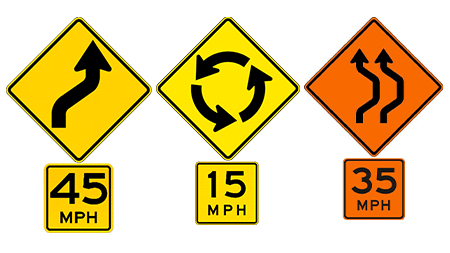
| ▲ | tombert 9 hours ago | parent | prev | next [-] | | I've heard that that is why roundabouts are safer than their alternatives: counterintuitively, they're safer because they're less safe, forcing the user to pay more attention as a result. | | |
| ▲ | reddalo 9 hours ago | parent | next [-] | | >they're safer because they're less safe Roundabouts are safer. They're safer because they prevent everybody from speeding through the intersection. And, even in case of an accident, no head-on collisions happen in a roundabout. | | |
| ▲ | mikepurvis 9 hours ago | parent [-] | | They're safer specifically for vehicles, as they convert many conflicts that would be t-bones (worst for passengers) into getting rear-ended (maximum crumple zone on both vehicles). Roundabouts are worse for land use though, which impacts walkability, and the safety story for pedestrians and bike users with them is decidedly not great as well. | | |
| ▲ | Twirrim 8 hours ago | parent [-] | | >Roundabouts are worse for land use though, which impacts walkability, and the safety story for pedestrians and bike users with them is decidedly not great as well. They're much safer for pedestrians than intersections. You're only crossing and dealing with traffic coming from one direction, stopping at a median, and then crossing further over. Unlike trying to navigate a crosswalk where you have to play guessing games as to which direction some vehicle is going to come at you from while ignoring the lights (people do the stupidest things, and roundabouts are a physical barrier that prevents a bunch of that) | | |
| ▲ | mikepurvis 6 hours ago | parent | next [-] | | In Waterloo Region I used to cycle through multiple intersections that were "upgraded" some years ago from conventional stoplights to roundabouts and imo it was a huge downgrade to my sense of safety. I went from having a clear right of way (hand signal, cross in the crosswalk) to feeling completely invisible to cars, essentially dashing across the road in the gaps in traffic as if I was jaywalking. I could handle it as an adult just walking my bike but it would be a nightmare for someone pushing a stroller or dependent on a mobility device. | |
| ▲ | kortilla 7 hours ago | parent | prev [-] | | >from one direction, stopping at a median, and then crossing further over. This assumes a median, which is not present at most smaller roundabouts in the US. |
|
|
| |
| ▲ | supernova87a an hour ago | parent | prev | next [-] | | I thought that the idea of roundabouts was that they lead to slightly more accidents than before, but they are of much lower severity than before (the 90 degree intersections they replace). | |
| ▲ | ndr42 7 hours ago | parent | prev | next [-] | | One-lane-roundabouts are very safe. I lived in Hannover (Germany) in the 80s and 90s, they had 2 or 3 lanes in the roundabouts. There were large signs that counted the accidents (200+/year) to raise awareness and during the trade fairs (anybody remembers Cebit?) the number of accidents peaked. Today they are all a lot safer because of a lot of traffic lights. | |
| ▲ | darepublic 8 hours ago | parent | prev [-] | | Same with driving in the winter. Anecdotally I always observe more accidents when the roads are clear. |
| |
| ▲ | expressadmin 5 hours ago | parent | prev | next [-] | | I recently visited a friend that lives in Sweden (couple hours south of Stockholm). Something he said while I visited stuck with me: "Sweden hates cars." There must be a happy medium somewhere in between. | | |
| ▲ | TulliusCicero 3 hours ago | parent [-] | | It's true, Sweden isn't quite bike and pedestrian friendly enough yet, but they'll get that balance someday! |
| |
| ▲ | Noumenon72 9 hours ago | parent | prev | next [-] | | It's a runaway process of prioritizing safety over convenience -- and it's wrecking their road base just before self-driving cars would allow them to have both. | | |
| ▲ | consumer451 6 hours ago | parent | next [-] | | I was wondering how much convenience is worth one kid's life. This thread reminded me of some interesting terms like "value of statistical life." It appears that all those annoying low speed limits and purposeful obstructions in residential areas really do save lives. > An evaluation of 20 mph zones in the UK demonstrated that the zones were effective both in reducing traffic speed and in reducing RTIs. In particular child pedestrian injuries were reduced by 70 per cent from 1.24 per year in each area before to 0.37 per year after the zones were introduced https://www.rospa.com/siteassets/images/road-safety/road-saf... The "Vision Zero" program was started in Sweden, and is becoming more widely adopted. https://en.wikipedia.org/wiki/Vision_Zero | | |
| ▲ | Dylan16807 4 hours ago | parent [-] | | 20mph residential is pretty close to standard. Note the Waymo car was going slower than that. That's far from the 5mph GP was reacting too, or the super tight curves. |
| |
| ▲ | audunw an hour ago | parent | prev | next [-] | | “Just before” … this would mean all cars would be required to be self driving and that they’re forced to adhere to the set speed limits. You think this is just around the corner? In a country like Sweden with a lot of snow? Let’s talk about that this when we’re actually close to hitting 100% of self driving cars on the road. And it’s not “runaway”, it’s exactly the right prioritisation. I’d encourage you to spend some time on Not Just Bikes and the say whether you’d like to live in a Nordic or an American neighbourhood. The Nordic style is also about convenience because car centric infrastructure makes a lot of things less accessible and convenient. | |
| ▲ | datsci_est_2015 6 hours ago | parent | prev | next [-] | | What an American framing. My convenience at the cost of your eventual safety. I guess this is why we also have toddler death machines with 5-foot grills that we call “full size” vehicles. | | |
| ▲ | missinglugnut 5 hours ago | parent [-] | | If you've ever driven more than 5 miles an hour, you risked hurting someone for your convenience. Acknowledging life has risk tradeoffs doesn't make you an American, but denying it can make you a self-righteous jerk. | | |
| ▲ | baq an hour ago | parent [-] | | You’re egocentric instead of system-centric. Life has risks, but risk is to be managed, not accepted blindly with disregard of available options. A systemic approach to minimizing risk of injury on roads looks exactly like inconvenience to the individual. |
|
| |
| ▲ | stouset 6 hours ago | parent | prev | next [-] | | Gosh, no, the self-driving cars will be forced to drive at safe speeds in pedestrian corridors as opposed to voluntarily driving at safe speeds in pedestrian corridors. How awful. | |
| ▲ | pastel8739 6 hours ago | parent | prev | next [-] | | > prioritizing safety over convenience this sounds like exactly the right tradeoff, especially since these decisions actually increase convenience for those not in cars | | |
| ▲ | Dylan16807 4 hours ago | parent [-] | | Of course it sound right, because you cut off the word "runaway". It is possible to go too far in either direction. |
| |
| ▲ | mcintyre1994 2 hours ago | parent | prev | next [-] | | Those things all sound easy to remove in some hypothetical future where there are enough and safe enough self driving cars to have both. Makes sense to design for human driven cars for now though. | |
| ▲ | causalscience 8 hours ago | parent | prev [-] | | If they're actually self-driving they should be able to drive around the obstacles just as well or better than human. |
| |
| ▲ | mattlondon 8 hours ago | parent | prev | next [-] | | Does it actually work though? Many roads in London have parked cars on either side so only one can get through - instead of people cooperating you have people fighting, speeding as fast as they can to get through before someone else appears, or race on-coming cars to a gap in the parked cars etc. So when they should be doing 30mph, they are more likely doing 40-45. Especially with EVs you have near-instant power to quickly accelerate to get to a gap first etc. And putting obstacles in the road so you cant see if someone is there? That sounds really dangerous and exactly the sort of thing that caused the accident in the story here. Madness. | | |
| ▲ | lmm 8 hours ago | parent [-] | | > Does it actually work though? Yes. They have made steady progress over the previous decades to the point where they can now have years with zero road fatalities. > And putting obstacles in the road so you cant see if someone is there? That sounds really dangerous and exactly the sort of thing that caused the accident in the story here. Counterintuitive perhaps, but it's what works. Humans adjust their behaviour to the level of perceived risk, the single most important thing is to make driving feel as dangerous as it is. | | |
| ▲ | mattlondon 8 hours ago | parent [-] | | I think the humans in London at least do not adjust their behaviour for the perceived risk! From experience they will adjust their behaviour to reduce their total travel time as much as possible (i.e. speed to "make up" for lost time waiting etc) and/or "win" against other drivers. I guess it is a cultural thing. But I cannot agree that making it harder to see people in the road is going to make anything safer. Even a robot fucking taxi with lidar and instant reaction times hit a kid because they were obscured by something. | | |
| ▲ | lmm 7 hours ago | parent | next [-] | | > I think the humans in London at least do not adjust their behaviour for the perceived risk! The evidence is that they do though. E.g. the Exhibition Road remodelling (removing curbs/signs/etc.) has been a great success and effectively reduced vehicle speeds, e.g. https://www.rbkc.gov.uk/sites/default/files/media/documents/... | |
| ▲ | stouset 6 hours ago | parent | prev [-] | | There are always going to be outlier events. If for every one person who still manages to get hit—at slow, easily-survivable speeds—you prevent five others from being killed, it’s a pretty obvious choice. |
|
|
| |
| ▲ | jasonfarnon 8 hours ago | parent | prev [-] | | why not just put in speedbumps if all you're trying to do is slow people down? Are you sure this was the purpose of these designs? sounds a little too freakonomics to me. | | |
| ▲ | pfg_ 3 hours ago | parent [-] | | Speed bumps suck for both the driver and passangers of the car and generate road noise. | | |
| ▲ | jononor 28 minutes ago | parent [-] | | They also are rather expensive to maintain, because the leading ledge gets many repeated stresses. And in nordic climates like Sweden there is a snow plow in the winter to remove snow - those occasionally snag on the speed bump - which tends to chip of big chunk, triggering rapid wear. |
|
|
| |
| ▲ | jjav 14 hours ago | parent | prev | next [-] | | > It's likely that a fully-attentive human driver would have done worse. We'd have to see video of the full scene to have a better judgement, but I wouldn't call it likely. The car reacted quickly once it saw the child. Is that enough? But most humans would have been aware of the big picture scenario much earlier. Are there muliple kids milling around on the sidewalk? Near a school? Is there a big truck/SUV parked there? If that's the scenario, there is a real probability that a child might appear, so I'm going to be over-slowing way down pre-emptively even thought I haven't seen anyone, just in case. The car only slows down after seeing someone. The car can react faster that I can after seeing someone, but as a human I can pre-react much earlier based on the big picture, which is much better. | | |
| ▲ | oakesm9 14 hours ago | parent | next [-] | | As someone who lives on a residential street right by a primary school in the UK, the majority of drivers are going over 20mph even at the peak time when there are children everywhere. While in theory human drivers should be situationally aware of the higher risks of children being around, the reality is that the majority will be in their own bubble of being late to drop their kid off and searching for the first free spot they can find. | | |
| ▲ | trhway 12 hours ago | parent | next [-] | | the human driver would usually drive more closely to the centerline of such a residential road. If the road is clear ahead i'd drive almost over the centerline of the road having enough clearance between my path and the parked cars for any such "jumper" to be visible long enough for me to react. If there is an opposite traffic i get back strictly into my lane and slow down much more if the parked cars are close and they block sidewalk view, etc. The autonomous cars have really got more aggressive recently as i mentioned before: https://news.ycombinator.com/item?id=46199294 Also Waymo handling road visibility issue: https://news.ycombinator.com/item?id=39298290 | | |
| ▲ | nostrademons 11 hours ago | parent | next [-] | | I'd really like to see the video of the incident. I have a similar school drop-off, and can confirm that the cars are typically going around 17-20mph around the school when they're moving. Also that yes, human drivers usually do stay much closer to the centerline. However, Waymo was recently cleared to operate in my city, and I actually saw one in the drop-off line about a week ago. I pulled out right in front of it after dropping my kid off. And it was following the line of cars near the centerline of the road. Honestly its behavior was basically indistinguishable from a human other than being slightly more polite and letting me pull out after I put my blinker on. | |
| ▲ | stouset 6 hours ago | parent | prev [-] | | > the human driver would usually drive more closely to the centerline of such a residential road I certainly do this. But asserting that most humans would usually do this? Have you ever actually seen humans drive cars? This is absolutely not what they do. On top of that, they run stop signs, routinely miss pedestrians in blind spots, respond to texts on their phone, or scroll around on their display to find the next song they want to put on. |
| |
| ▲ | cardiffspaceman 13 hours ago | parent | prev [-] | | I vividly recall a shot within a commercial, in which a driver was shown in slow motion, chucking his coffee into the passenger foot well in order to have two hands on the wheel for an emergency. I don’t remember what was about to happen to the car or the world around it. I’m pretty sure that a collision occurred. |
| |
| ▲ | mattlondon 8 hours ago | parent | prev | next [-] | | Have you been in a waymo? It knows when there are pedestrians around (it can often see over the top of parked cars) and it is very cautious when there are people near the road and it frequently slows down. I have no idea what happened here but in my experience of taking waymos in SF, they are very cautious and I'd struggle to imagine them speeding through an area with lots of pedestrians milling around. The fact that it was going 17mph at the time makes me think it was already in "caution mode". Sounds like this was something of a "worst case" scenario and another meter or 2 and it would have stopped in time. I think with humans, even if the driver is 100% paying attention and eyes were looking in exactly the right place where the child emerged at the right time, there is still reaction times - both in cognition but also physically moving the leg to press the pedal. I suspect that a waymo will out-react a human basically 100% of the time, and apply full braking force within a few 10s of milliseconds and well before a human has even begun to move their leg. | | |
| ▲ | throw__away7391 7 hours ago | parent [-] | | You can watch the screen and see what it can detect, and it is impressive. On a dark road at night in Santa Monica it was able to identify that there were two pedestrians at the end of the next block on the sidewalk obscured by a row of parked cars and covered by a canopy of overgrown vegetation. There is absolutely no way any human would have been able to spot them at this distance in these conditions. You really can "feel" it paying 100% attention at all times in all directions. |
| |
| ▲ | loeg 10 hours ago | parent | prev | next [-] | | Your opinion of "most humans" is vastly overinflated. The median human driver would be going 5 over the speed limit, on their cell phone, and paying fuck all attention. Humans never drive as slow as 17 mph, even in the context of being directly in front of schools with visible children. | | |
| ▲ | elzbardico 9 hours ago | parent [-] | | You're describing the median driver in America or India. This is not universal. | | |
| ▲ | eszed 9 hours ago | parent | next [-] | | True, but it seems fair to evaluate Waymo against the median American driver. If they expand to whatever other countries you're thinking of, then it will be fair recalibrate accordingly. | |
| ▲ | loeg 8 hours ago | parent | prev | next [-] | | For context, Santa Monica is in America or India. | |
| ▲ | Bud 7 hours ago | parent | prev [-] | | [dead] |
|
| |
| ▲ | jobs_throwaway 13 hours ago | parent | prev | next [-] | | > But most humans would have been aware of the big picture scenario much earlier. I wouldn't call it likely. Sure, there are definitely human drivers who are better than Waymo, but IME they're few and far between. Much more common to be distracted or careless. | | |
| ▲ | wat10000 6 hours ago | parent | next [-] | | When walking along a busy street facing traffic, I like to play a game of "who's using a phone?" I sometimes score in excess of 50% of drivers texting or otherwise manipulating a phone instead of actually driving. It's amazing how much nonsense we let slide with human drivers, and then get uptight about with anything else. You see the same attitude with bicycles. Cars run stop signs and red lights all day long and nobody bats an eye, but a cyclist does it and suddenly they're a menace. | |
| ▲ | almosthere 13 hours ago | parent | prev [-] | | I don't think it makes sense to lump some drivers better than waymo and worse than waymo. A human brain automatically thinks of all the scenarios, where Waymo has pre-programmed ones (and some NN based ones). So it's scenarios by scenario. Consider this scenario: 5 kids are walking on the sidewalk while you're driving past them. But suddenly a large dumpster is blocking your view of them just as you pass. You saw them before the dumpster, but not after your car and the dumpster completely blocks the view. Does a human brain carry some worry that they suddenly decide to run and try to cross the street after the dumpster?
Does Waymo carry that worry or just continue to drive at the exact same speed. Again, it's not like every driver will think about this, but many drivers will (even the bad ones). | | |
| ▲ | jobs_throwaway 13 hours ago | parent | next [-] | | > A human brain automatically thinks of all the scenarios I don't think this is true. There are infinitely many scenarios in a complex situation like a road with traffic, cars parked, pedestrians about, weather, etc. My brain might be able to quickly assess a handful, but certainly not all. | | |
| ▲ | xorbax 10 hours ago | parent | next [-] | | > like a road with traffic, cars parked, pedestrians about, weather Not all of those need to be done "quickly". That's where LLMs fail You note the weather when you leave. You understand the traffic five minutes ahead. You recognize pedestrians far ahead of time. Computers can process a lot in fractions of a second. Humans can recognize context over many minutes. The Waymo may have done better in the fraction of a second, but humans can avoid being in that situation to begin with. | | |
| ▲ | jobs_throwaway 8 hours ago | parent [-] | | Computers can take all of those things into account as well | | |
| ▲ | SirMaster 3 hours ago | parent [-] | | Can, but don't. It doesn't seem like self driving cars take into account the icy conditions of roads for one simple example. |
|
| |
| ▲ | jjav 11 hours ago | parent | prev | next [-] | | There aren't infinitely many scenarios to consider, but even if that's a figure of speech, there aren't thousands or even hundreds. If there's ten kids nearby, that's basically ten path scenarios, and that might be reduced if you have great visibility into some of them. > My brain might be able to quickly assess a handful, but certainly not all. What would you do if you can't assess all of them? Just keep driving same speed? If the situation is too overwhelming you'll almost certainly back off, I know I would. If I'm approaching that school block and there's like 50 small kids running around in all directions, I have no idea what's going on and who is going where, so I'm going to just stop entirely until I can make some sense of it. | | |
| ▲ | robotresearcher 6 hours ago | parent | next [-] | | > here aren't infinitely many scenarios to consider, but even if that's a figure of speech, there aren't thousands or even hundreds. There are a very, very large number of scenarios. Every single possible different state the robot can perceive, and every possible near future they can be projected to. Ten kids is not 10 path scenarios. Every kid could do a vast number of different things, and each additional kid raises the number of joint states to another power. This is trivially true. The game that makes driving possible for humans and robots is that all these scenarios are not equally likely. But even with that insight, it’s not easy. Consider a simple case of three cars about to arrive at an all-way stop. Tiny differences in their acceleration - potentially smaller differences than the robot can measure - will result in a different ordering of cars taking turns through the intersection. It’s a really interesting problem. | |
| ▲ | lillecarl 10 hours ago | parent | prev | next [-] | | It should be trivial for Waymo to implement a "drive carefully near schools" feature, and if really spicy "drive REALLY carefully near schools at these times" feature. Safe driving starts with speed, lowering speed and informing the passengers seems like a no-brainer. | | | |
| ▲ | jobs_throwaway 8 hours ago | parent | prev [-] | | It was a figure of speech, but I think you're undercounting. When you consider interactions between all the things, even with just a handful of variables (and I think there are many more than a handful) you get a huge number of scenarios. |
| |
| ▲ | robotresearcher 6 hours ago | parent | prev | next [-] | | This is the classical ‘Frame Problem” of AI. How do you consider, even if only to reject, infinite scenarios in finite time? Humans and other animals don’t seem to suffer from it. | |
| ▲ | almosthere 12 hours ago | parent | prev [-] | | God I wish I re-read my statement, I was more focused on Humans think of an unlimited number of scenarios - not necessarily all. A computer will only think of pre-programmed ones. | | |
| ▲ | estearum 10 hours ago | parent [-] | | The computer isn't pre-programmed though. These computers are trained similar to how human brains are (though obviously brains are still vastly, vastly, vastly superior to computers for tasks like this). |
|
| |
| ▲ | dmd 12 hours ago | parent | prev | next [-] | | You are vastly overestimating most drivers. Most drivers aren't even looking out the window the majority of their time driving. | |
| ▲ | IAmBroom 12 hours ago | parent | prev | next [-] | | > A human brain automatically thinks of all the scenarios, ... Patently, obviously false. A human brain will automatically think of SOME scenarios. For instance, if a collision seems imminent, and the driver is holding a cup of coffee, these ideas are likely to occur to the driver: IF I GRAB THE STEERING WHEEL AND BRAKE HARD, I MIGHT NOT HIT THAT PEDESTRIAN IN FRONT OF ME. IF I DON'T CONTINUE HOLDING THE COFFEE CAREFULLY, I MIGHT GET SCALDED. THIS SONG ON MY RADIO IS REALLY ROCKING! IF I YANK MY WHEEL TO THE LEFT, I MIGHT HIT A CAR INSTEAD OF A HUMAN. IF I BRAKE HARD OR SWERVE AT ANY TIME IN TRAFFIC, I CAN CAUSE AN ACCIDENT. Experiments with callosal patients (who have damaged the connective bridge between the halves of their brains) demonstrate that this is a realistic picture of how the brain makes decisions. It offers up a set of possible actions, and attempts to choose the optimal one and discard all others. A computer program would do likewise, EXCEPT it won't care about the coffee cup nor the radio (remove two bad choices from consideration). It still has one bad choice (do nothing), but the SNR is much improved. I'm not being hyperbolic; self-preservation (focusing on keeping that coffee in my hand) is a vital factor in decision-making for a human. > ...where Waymo has pre-programmed ones (and some NN based ones). Yes. And as time goes on, more and better-refined scenarios will be added to its programming. Eventually, it's reasonable to believe the car software will constantly reassess how many humans are within HUMAN_RUN_DISTANCE + CAR_TRAVEL_DISTANCE in the next block, and begin tracking any that in an unsafe margin. No human on Earth does that, continually, without fail. > Does a human brain carry some worry that they suddenly decide to run and try to cross the street after the dumpster? Does Waymo carry that worry or just continue to drive at the exact same speed. You continue to imply that Waymo cannot ever improve on its current programming. Does it currently consider this situation? Probably not. Will it? Probably. | | |
| ▲ | almosthere 12 hours ago | parent [-] | | God I wish I re-read my statement, I was more focused on Humans think of an unlimited number of scenarios - not necessarily all. A computer will only think of pre-programmed ones. |
| |
| ▲ | shadowgovt 12 hours ago | parent | prev [-] | | For what it's worth, that kind of lumping of drivers is more-or-less one of the metrics Waymo is using to self-evaluate. Perfect safety when multi-ton vehicles share space with sub-300-pound humans is impossible. But they ultimately seek to do better than humans in all contexts. |
|
| |
| ▲ | 2b3o4o 14 hours ago | parent | prev | next [-] | | According to the article the car was traveling at 17 miles an hour before it began braking. Presumably this was in a 25 mph school zone, so it seems the Waymo was already doing exactly what you describe - slowing down preemptively. | | |
| ▲ | recursive 14 hours ago | parent | next [-] | | This is close to a particular peeve I have. Occasionally I see signs on the street that say "Slow Down". I'm not talking about the electronic ones connected to radar detectors. Just metal and paint. Here's my problem. If you follow the instructions on the sign, it still says to slow down. There's no threshold for slow enough. No matter how slow you're going, the sign says "Slow Down". So once you become ensnared in the visual cone of this sign, you'll be forced to sit stationary for all eternity. But maybe there's a loop-hole. It doesn't say how fast you must decelerate. So if you come into the zone going fast enough, and decelerate slowly enough, you can make it past the sign with some remaining non-zero momentum. You know, I've never been diagnosed on the spectrum, but I have some of the tendencies. lol. | | |
| ▲ | GenerocUsername 13 hours ago | parent | next [-] | | Obviously a static sign is not aware of your current state, so it's message can only be interpreted as relevant to your likely state... i.e. the posted speed limit. | | |
| ▲ | recursive 12 hours ago | parent [-] | | If you should slow down relative to the posted speed limit why not change the speed limit to reflect that directly? | | |
| ▲ | estearum 10 hours ago | parent [-] | | Usually the reason is the "slow down" portion is very small, and it's confusing to shift down the actual speed limit for a 200 foot stretch of road then increase it again. | | |
| ▲ | Dylan16807 8 hours ago | parent | next [-] | | There are signs for that. Advisory speeds that don't change the actual limit. https://wisconsindot.gov/PublishingImages/doing-bus/local-go... Much better to be specific than a vague "slow down". There's a road near me with two tight turns a couple blocks apart. One advises 25mph and the other advises 10mph. | |
| ▲ | recursive 10 hours ago | parent | prev | next [-] | | FWIW, it seems less confusing to me than longer speed limits, but with "Slow Down". | |
| ▲ | alistairSH 10 hours ago | parent | prev [-] | | Except we do that all the time in school zones... normally 35+, but from 7am-9am and again from 2pm-4pm the limit drops to 25mph (which is still to fast if the kids are actually crossing the street or walking alongside en masse). |
|
|
| |
| ▲ | Nition 12 hours ago | parent | prev | next [-] | | A lot of clickbait headlines have the same problem. "You're using too much washing powder!" Everyone's replying to you as if you truly don't understand the sign's intention but I'm sure you do. It's just annoying to be doing everything right and the signs and headlines are still telling you you're wrong. There was a driving safety safety ad campaign here: "Drive to the conditions. If they change, reduce your speed." You can imagine how slow we'd all be going if the weather kept changing. We might have OCPD. | | |
| ▲ | recursive 12 hours ago | parent | next [-] | | Yes. You have understood precisely the spirit in which I intended it. In advertising: "Treat yourself. You deserve it!" Me: What if someone who didn't deserve it heard this message. How can you possibly know what I deserve? Do all people deserve to treat themselves? Is the notion of deserving or treating really so vacuous? Normies: jfc | | |
| ▲ | Nition 11 hours ago | parent | next [-] | | There's a mental health awareness campaign going on around here at the moment with all the generic messages like that. "You're doing great" is completely devalued by the sign giving the same message to everyone, and the best one says something like "Don't push yourself too hard. If you want to rest, rest." Wondering if I can tell my boss the sign told me it's okay not to get any work done. | |
| ▲ | 12 hours ago | parent | prev [-] | | [deleted] |
| |
| ▲ | elzbardico 9 hours ago | parent | prev [-] | | Humans are supposed to deal with this kind of ambiguity. Actually, that's one of our nicest abilities. I hate when people pretend to be smarter than everyone else by pointing this kind of utterance and insisting that someone, somehow, will parse those statements in the most literal and stupid manner. Then there are the ignorant misanthropes that can't waste a chance to repeat their reductionist speculations about human cognition. Just like the idiot Elon Musk that wasted billions in irrecoverably fucked self-driving system based on computer-version because he underestimated the human visual cortex. Fucking annoying midwits. | | |
| ▲ | recursive 7 hours ago | parent [-] | | Sorry I made you mad. I wasn't trying to seem smarter than everyone. Maybe dumber. | | |
| ▲ | shwaj 3 hours ago | parent [-] | | A very kind response to such a grating lack of self-awareness. |
|
|
| |
| ▲ | throwway120385 13 hours ago | parent | prev | next [-] | | Think of it like they're saying "my children play on this street and my neighbors walk here. Please think about that when you decide how fast to go here." | |
| ▲ | aembleton 9 hours ago | parent | prev | next [-] | | You learn how to put those signs into context during your driving lessons, and fail your test if you don't apply that correctly. | | |
| ▲ | thfuran 7 hours ago | parent | next [-] | | My driving test was so thorough that I had to parallel park between two entirely fictional cars. There was certainly no consideration of eccentric signage. | |
| ▲ | recursive 8 hours ago | parent | prev [-] | | I apologize if I gave the impression that I did not understand how to put them into context. Although I don't think my driving lessons ever mentioned it. This is idle XKCD-style musing. |
| |
| ▲ | soulofmischief 13 hours ago | parent | prev [-] | | Think of the sign as a flag, not an instruction. |
| |
| ▲ | jacquesm an hour ago | parent | prev | next [-] | | 25 mph is an upper limit, not a minimum. | |
| ▲ | sandworm101 13 hours ago | parent | prev [-] | | A 25mph school zone? That seems fast. 15mph would be more the norm, which is in line with the 17mph the car believed itself to be traveling. FYI, unless you are a commerical truck, a cop, or a racer, your speedometer will read slightly fast, sometimes as much as 5 to 10%. This is normal practice for cars as it limits manufacturer liability. You can check this using independant gps, ie not an in-dash unit. (Just imagine the court cases if a speedo read slower than the actual speed and you can understand why this started.) | | |
| ▲ | lkbm 13 hours ago | parent | next [-] | | I mostly see 25 mph for school zones, though I'm in NC. Checking California, it sounds like 25 is standard there as well.[0] Some will drop to 15, but 25 is the norm as far as I can find. [0] https://www.dmv.ca.gov/portal/handbook/california-driver-han... | | | |
| ▲ | tastyfreeze 13 hours ago | parent | prev | next [-] | | Also, a different wheel diameter than the speedometer was calibrated with and you will have a larger difference between actual velocity and speedometer reading. The odometer will also not record actual distance traveled. | | |
| ▲ | sandworm101 10 hours ago | parent [-] | | It depends. I had a honda motorcycle where the speedo was 10ish % fast (not unussual on bikes due to tire shape) but the odo was accutrate. Same sensor, but the computer just counted wheel rotations slightly differently for each use. | | |
| ▲ | TylerE 9 hours ago | parent [-] | | Virtually all speedos read fast. The federal standards have a fairly high margin for being allowed to read high, and a zero margin for reading low. Thus speedos are more or less universally calibrated to read at least 5% high. |
|
| |
| ▲ | loeg 10 hours ago | parent | prev | next [-] | | It does seem fast to me -- school zones are 20 mph in Seattle, at least when children are present. But Google suggests 25 is the norm in Santa Monica, where the incident occurred. | |
| ▲ | cardiffspaceman 13 hours ago | parent | prev [-] | | In Encinitas, California, that sign would have no more than 20 MPH. In adjacent Carlsbad, I believe 25 is normal. |
|
| |
| ▲ | dekhn 12 hours ago | parent | prev | next [-] | | In this situation, the car was already driving under the legal speed required for a school zone (25mph when children are present) [edit: some comments in the post suggest there is a 15mph sign, which is sometimes posted; to me, driving 17mph in a 15mph zone is acceptable). I think any fair evaluation of this (once the data was available) would conclude that Waymo was taking reasonable precautions. | | |
| ▲ | jjav 11 hours ago | parent [-] | | > was already driving under the legal speed That's exactly part of the problem. If it is programmed to be over-cautious and go 17 in a 25 zone, that feels like it is safe. Is it? It takes human judgment of the entire big picture to say meaningfully whether that is too slow or too fast. Taking the speed limit literally is too rigid, something a computer would do. Need to take into account the flow of the kids (all walking in line vs. milling around going in all directions), their age (younger ones are a lot more likely to randomly run off in an unsafe direction), what are they doing (e.g. just walking, vs. maybe holding a ball that might bounce and make them run off after it), their clustering and so on. Driving past a high school with groups of kids chatting on the sidewalk, sure 20mph is safe enough. Driving past an elementary school with a mass of kids with toys moving in different directions on the same sidewalk, 17mph is too fast. And if I'm watching some smaller kids disappear behind a visual obstruction that makes me nervous they might pop up ahead of it on the street, I slow down to a crawl until I can clearly see that won't happen. None of this context is encoded in the "25mph when children are present" sign, but for most humans it is quite normal context to consider. But would be great to see video of the Waymo scene to see if any of these factors was present. |
| |
| ▲ | Aloisius 14 hours ago | parent | prev | next [-] | | It was going 17 mph. That is rather slow. To put it another way. If an autonomous vehicle has a reaction time of 0.3 seconds, the stopping distance from 17 mph is about the same as a fully alert human driver (1 second reaction time) driving 10.33 mph. | | |
| ▲ | linsomniac 10 hours ago | parent [-] | | >It was going 17 mph. That is rather slow. There's a case to be made that it wasn't slow enough. | | |
| ▲ | supern0va 9 hours ago | parent | next [-] | | I have a hard time believing that a human driver would be as slow as this Waymo, or even slower. I drive my kid to school where it's posted 20mph and there are cameras (with plenty of warnings about the presence of said cameras) and witness a constant string of flashes from the camera nailing people for speeding through there. | |
| ▲ | cortesoft 10 hours ago | parent | prev | next [-] | | A small child jumped out in front of it, which is about the worst case scenario you can have... and the kid was fine. So it sounds like it was slow enough? | |
| ▲ | Sohcahtoa82 8 hours ago | parent | prev | next [-] | | Considering the car hit the child at only 6 mph and the kid just got up and brushed themselves off, it was plenty slow enough. Nobody was injured. | |
| ▲ | loeg 10 hours ago | parent | prev [-] | | Maybe. That level of safetyism seems pretty unreasonable when humans are 100x worse and still allowed on the road. |
|
| |
| ▲ | netsharc 12 hours ago | parent | prev | next [-] | | Curiously enough Google could have access to how fast humans usually drive through that street.. if they record people's Google Maps trips, they can show the court that "Look, 80% of Google Maps users drive through here at 30 mph!". | | |
| ▲ | Aloisius 11 hours ago | parent | next [-] | | Waymo itself has this as well. They record their drives after all which means they know the speed of the vehicles around them. They even wrote a blog post about it: https://waymo.com/blog/2023/07/past-the-limit-studying-how-o... | |
| ▲ | jerlam 12 hours ago | parent | prev [-] | | Google might even know how many drivers aren't obeying the speed limit or slow-rolling through stop signs. I wonder if they already have partnerships with law enforcement to detect areas where the traffic law is more ignored than others. |
| |
| ▲ | eszed 9 hours ago | parent | prev | next [-] | | Two things: I've read studies saying that most drivers don't brake at max effort, even to avoid a collision. This may be at least one of the reasons that Waymo predicted that an attentive human would likely have been going faster than their car at the moment of impact. I've got a good idea of my fun-car's braking performance, because I drive it hard sometimes, but after reading that I started practicing a bit with my wife's car on the school run, and... Yeah: it's got a lot more braking power than I realized. (Don't worry, I brake hard on a long straight exit ramp, when no one's behind me, a fast slow-down is perfectly safe, and the kiddo loves it.) I've now got an intuitive feel for where the ABS will kick in, and exactly what kind of stopping distance I have to work with, which makes me feel like a safer driver. Second, going off my experience of hundreds and hundreds of ride-share rides, and maybe thirty Waymo journeys, I'd call the best 10-15% of humans better drivers than Waymo. Like, they're looking further up the road to predict which lane to be in, based on, say, that bus two blocks away. They also drive faster than Waymos do, without a perceptual decrease in safety. (I realize "perceptual" is doing some work in that sentence!) That's the type of defensive and anticipatory urban driver I try to be, so I notice when it's done well. Waymo, though, is flat-out better, in every way, than the vast majority of the ride-share drivers I see. I'm at the point where I'll choose a Waymo any time it'll go where I'm headed. This story reinforces that choice for me. | | |
| ▲ | jjav 5 hours ago | parent | next [-] | | > I've read studies saying that most drivers don't brake at max effort, even to avoid a collision. Ha! It is unbelievable how difficult it is to make someone brake hard. You'd think it's the easiest thing possible in the age of ABS - just press hard as you can. I have a lot of experience on this, I used to teach car control both to teens and adults. One of the frequent exercises was seemingly very simple: Drive at Xmph until this spot, then brake at maximum power. The vast majority of people can't do it on the first or second try, they'll just meekly press on the brake like they're coasting to a stop. After more coaching that hard means hard, they start to get it, but it takes many many tries. | | | |
| ▲ | tialaramex 6 hours ago | parent | prev [-] | | The reason attentive humans don't equal the Waymo here is reaction time. When a thing happens the human takes a moment to process what it means, and choose a reaction. It's not, by our standards, a long time but it's way longer than it takes the Waymo. Going early means you slow early, which means you also take longer to reach the child, but you're braking for all of that extra time, so you're slowing down even more. |
| |
| ▲ | bee_rider 7 hours ago | parent | prev | next [-] | | It would be nice to see the video (although maybe there are some privacy issues, it is at a school after all). Anyway, from the article, > According to the NHTSA, the accident occurred “within two blocks” of the elementary school “during normal school drop off hours.” The safety regulator said “there were other children, a crossing guard, and several double-parked vehicles in the vicinity.” So I mean, it is hard to speculate. Probably Waymo was being reasonably prudent. But we should note that this description isn’t incompatible with being literally in an area where the kids are leaving their parents’ cars (the presence of “several double parked cars brings this to mind). If that’s the case, it might make sense to consider an even-safer mode for active student unloading areas. This seems like the sort of social context that humans might have and cars might be missing. But things speculation. It would be good to see a video. | |
| ▲ | superfrank 9 hours ago | parent | prev | next [-] | | > But most humans would have been aware of the big picture scenario much earlier. Are there muliple kids milling around on the sidewalk? Near a school? Is there a big truck/SUV parked there? Waymos do this and have for years. They know where the people are around them and will take precautionary action based on that. Here's a video from 2019 of one understanding that a car in the bike lane means the cyclists may dart out into the lane it's in and taking action based on that. https://waymo.com/blog/2019/05/safety-at-waymo-self-driving-... That video is nearly 7 years old at this point and they've gotten much, much better since then. If you think a fully-attentive human driver would have done better, I think you're kidding yourself. I know you didn't make this point, but if anyone think the average LA driver would have done better than this I've got a bridge to sell you and that's really what matters more. (I say that as someone who used to live like half a mile from where this happened) | |
| ▲ | tim333 9 hours ago | parent | prev | next [-] | | I live in an area where there are pedestrians stepping into the street without looking, all over the place, and you can drive / cycle without hitting them but have to slow down appropriately if you have to go near something that you can't see behind. Like you say it would be interesting to see the video. | |
| ▲ | stouset 6 hours ago | parent | prev | next [-] | | The car was driving 17mph before braking. I don’t think I’ve ever seen a human drive at 17mph in a school zone or other area children congregate. | | |
| ▲ | no-name-here 4 hours ago | parent [-] | | Meaning you’ve never seen a human drive that slowly in such an area, or you've never seen a human exceed the speed limit in a school zone? | | |
| ▲ | stouset 3 hours ago | parent [-] | | Drive that slowly. I’m exaggerating obviously but the norm is to speed. |
|
| |
| ▲ | robotresearcher 6 hours ago | parent | prev | next [-] | | > The car only slows down after seeing someone. How do you know that? The article says it slowed from 17 mph. That’s cautious progress speed, not cruising speed. | |
| ▲ | Sparkle-san 14 hours ago | parent | prev | next [-] | | There's a bus stop right behind my house. I routinely hear the driver honking and yelling at people who ignore when the stop sign is extended (which is a misdemeanor in my state). So forgive me for not assuming a human would have done better. | |
| ▲ | tialaramex 12 hours ago | parent | prev | next [-] | | In principle, attentive drivers, who have either somehow come independently to the appropriate understanding or have been trained in how to react to hazards ahead... https://www.gov.uk/theory-test/hazard-perception-test ... could in some circumstances know that there's a likelihood that a child will emerge suddenly and reduce their speed in anticipation where circumstances allow. Note that: If you cut speed but other drivers can't see why they may overtake, even unsafely, because you are a nuisance to them. Slowing in anticipation that a child will run out from behind the SUV, only for a car behind you to accelerate around you and smack straight into the child at even higher speed, is not the desired outcome even though you didn't hurt anybody... And yes, we'd need to see the video to know. It's like that Sully scenario. In a prepared test skilled pilots were indeed able to divert and land, but Sully wasn't prepared for a test. You're trained to expect engine failure in an aeroplane - it will happen sometimes so you must assume that, but for a jet liner you don't anticipate losing both engines, that doesn't happen. There's "Obviously that child is going in the road" and "Where the fuck did they come from?" and a lot in between and we're unlikely to ever know for sure. | |
| ▲ | kcrwfrd_ 13 hours ago | parent | prev | next [-] | | I drive like this too, but I think we’re a small minority. Especially here in LA. | |
| ▲ | estimator7292 11 hours ago | parent | prev | next [-] | | It was already moving slowly. 17MPH is pretty conservative. Most human drivers going past my local school are doing at least 30. | |
| ▲ | Natsu 12 hours ago | parent | prev | next [-] | | > But most humans would have been aware of the big picture scenario much earlier. Are there muliple kids milling around on the sidewalk? Near a school? Is there a big truck/SUV parked there? Waymos constantly track pedestrians nearby, you can see it on the status screen if you ride in one. So it would be both better able to find pedestrians and react as soon as one was on a collision course. They have a bit more visibility than humans do due to the sensor placement, so they also can see things that aren't that visible to a person inside the car, not to mention being constantly aware of all 360 degrees. While I suppose that in theory, a sufficiently paranoid human might outdo the robot, it looks to me like it's already well above the median here. | | |
| ▲ | bee_rider 7 hours ago | parent [-] | | Do they speculate about things like “we’re near a school zone, kids are unloading, there might be a kid I’ve never seen behind that SUV?” (I’m legitimately asking I’ve never been in a Waymo). | | |
| ▲ | dekhn 6 hours ago | parent [-] | | It's not particularly meaningful to ponder the subjective experience of the waymo driving computer. Instead, focus on its externally visible behavior. | | |
| ▲ | Dylan16807 3 hours ago | parent | next [-] | | Asking whether an entity has modeled and evaluated a specific situation, using that evaluation to inform its decisions, is not about subjective experience. | | |
| ▲ | dekhn 3 hours ago | parent [-] | | If you're asking whether their training data includes situations like this, and whether their trained model/other pieces of runtime that drive the car include that feature as part of their model, the answer is yes. But not in the way a normal human driver would think about it; many of the details of its decision making process are based on large statistical collections, rather than "I'm in a school zone and need to anticipate children may be obscured and run out into traffic." There are many places where the car needs to take caution without knowing specifically it's within 50 feet of a school zone. While the deep details are not public, Waymo has shared a fair amount of description of their system, from which you can glean some ideas about the world model it creates and the actions it takes in specific situations:
https://waymo.com/blog/2024/10/ai-and-ml-at-waymo
https://waymo.com/blog/2025/12/demonstrably-safe-ai-for-auto...
https://waymo.com/blog/2024/10/introducing-emma |
| |
| ▲ | bee_rider 5 hours ago | parent | prev [-] | | I was being informal with “speculate,” sorry. They could identify that sort of situation as a high-risk area in some way. |
|
|
| |
| ▲ | apitman 13 hours ago | parent | prev | next [-] | | Are they not using a ton of ML to take exactly this sort of context into account? | |
| ▲ | trhway 9 hours ago | parent | prev | next [-] | | >The car can react faster that I can after seeing someone and that can potentially allow internal planning algorithm to choose more risky and aggressive trajectories/behavior, etc. say to reach target destination faster and thus deliver higher satisfaction to the passengers. | |
| ▲ | smohare 12 hours ago | parent | prev | next [-] | | Anecdote, but I live next to an elementary school and also on a route frequented by Waymos. Human drivers routinely cruise down the 25mph roads at 40+ and blow stop signs, even during school intake and release. Waymo vehicles always seem a lot more cautious. When thinking about these things you have to factor in the prior probability that a driver is fully attentive, not just assume they are. If you’ve ever been in a Waymo you quickly realize their field of view is pretty good. You often see the vehicle sensing small pets and children that are occluded to a passenger or driver. For this reason and my experience with humans near aforementioned school, I doubt a human would out perform the Waymo in this particular incident and it’s debatable they even have more context to inform their decisions. All that said, despite having many hours in a Waymo, it’s not at all clear to me how they factor in sidewalk context. You get the sense that pedestrians movement vectors are accounted for near intersections, but I can’t say I’ve experienced something like a slow down when throngs of people are about. | |
| ▲ | usefulposter 14 hours ago | parent | prev [-] | | Precisely. Environmental context is not considered in Waymo's "peer-reviewed model" (I encourage reflexive commenters to first read it: https://waymo.com/safety/collision-avoidance-benchmarking), only basic driver behavior and traffic signal timings. Note the weaselly "immediately detected the individual as soon as they began to emerge" in the puff piece from Waymo Comms. No indication that they intend to account for environmental context going forward. If they already do this, why isn't it factored in the model? | | |
| ▲ | jefftk 14 hours ago | parent [-] | | How is "immediately detected the individual as soon as they began to emerge" worded weaselly? | | |
| ▲ | jjav 11 hours ago | parent [-] | | Not OP but I interpret that as they are focusing exclusively on what happened after the car saw the kid. And I completely agree that from that instant forward, the car did everything correctly. But if I was the accident investigator for this, I would be far more interested in what happened in the 30 seconds before the car saw the kid. Was the kid visible earlier and then disappear behind an obstruction? Or did the kid arrive from the side and was never earlier visible? These are the more important questions. |
|
|
| |
| ▲ | chaboud 17 hours ago | parent | prev | next [-] | | Possibly, but Waymos have recently been much more aggressive about blowing through situations where human drivers can (and generally do) slow down. As a motorcyclist, I've had some close calls with Waymos driving on the wrong side of the road recently, and I had a Waymo cut in front of my car at a one-way stop (t intersection) recently when it had been tangled up with a Rivian trying to turn into the narrow street it was coming out of. I had to ABS brake to avoid an accident. Most human drivers (not all) know to nose out carefully rather than to gun it in that situation. So, while I'm very supportive of where Waymo is trying to go for transport, we should be constructively critical and not just assume that humans would have been in the same situation if driving defensively. | | |
| ▲ | jobs_throwaway 17 hours ago | parent | next [-] | | Certainly, I'm not against constructive criticism of Waymo. I just think it's important to consider the counterfactual. You're right too that an especially prudent human driver may have avoided the scenario altogether, and Waymo should strive to be that defensive. | | |
| ▲ | themafia 13 hours ago | parent [-] | | > I'm not against constructive criticism of Waymo. I feel like you have to say this out loud because many people in these discussions don't share this view. Billion dollar corporate experiments conducted in public are sacrosanct for some reason. > I just think it's important to consider the counterfactual More than 50% of roadway fatalities involve drugs or alcohol. If you want to spend your efforts improving safety _anywhere_ it's right here. Self driving cars do not stand a chance of improving outcomes as much as sensible policy does. Europe leads the US here by a wide margin. | | |
| ▲ | jobs_throwaway 13 hours ago | parent | next [-] | | > I feel like you have to say this out loud because many people in these discussions don't share this view. Billion dollar corporate experiments conducted in public are sacrosanct for some reason. Yes, and I find it annoying that some people do seem to think Waymo should never be criticized. That said, we already have an astounding amount of data, and that data clearly shows that the experiment is successful in reducing crashes. Waymos are absolutely, without question already making streets safer than if humans were driving those cars. > If you want to spend your efforts improving safety _anywhere_ it's right here. We can and should do both. And as your comment seems to imply but does not explicitly state, we should also improve road design to be safer, which Europe absolutely kicks America's ass on. | | |
| ▲ | johnnyanmac 5 hours ago | parent | next [-] | | >data clearly shows that the experiment is successful in reducing crashes. That's fine. But crashes are relatively rare and what matters is accountability. Will Waymo be accountable for hitting this kid the way a human would? Or will they fight in court to somehow blame the pedestrian? Those are my big concerns when it comes to self driving vehicles, and history with tech suggests that they love playing hot potato instead of being held accountable. And yes, better walkable infrastructure is a win for all. The minor concern I have is the notion that self driving is perfect and we end up creating even more car centric infrastructure. I'm not sure who to blame on that one. | | |
| ▲ | BurningFrog 4 hours ago | parent [-] | | Waymo is driving the car and should be held accountable like any other driver. I assume that's how it works already. | | |
| ▲ | johnnyanmac 4 hours ago | parent [-] | | I hope so too. I'll be keeping a close eye on how they handle this, though. My benefit of the doubt for tech was already long drained, and is especially critical for safety critical industries. |
|
| |
| ▲ | themafia 13 hours ago | parent | prev [-] | | > and that data clearly shows that the experiment is successful in reducing crashes I disagree. You need way more data, like orders of magnitude more. There are trillions of miles driven in the US every year. Those miles often include driving in inclement weather which is something Waymo hasn't even scraped the surface of yet. > without question There are _tons_ of questions. This is not even a simple problem. I cannot understand this prerogative. It's far too eager or hopeful. > We can and should do both Well Google is operating Waymo and "we" control road policy. One of these things we can act on today and the other relies on huge amounts of investments paying off in scenarios that haven't even been tested successfully yet. I see an environment forming where we ignore the hard problems and pray these corporate overlords solve the problem on their own. It's madness. | | |
| ▲ | jobs_throwaway 11 hours ago | parent | next [-] | | > You need way more data, like orders of magnitude more. There are trillions of miles driven in the US every year. Absurd, reductive, and non-empirical. Waymos crash and cause injury/fatality far less frequently than human drivers, full stop. You are simply out of your mind if you believe otherwise, and you should re-evaluate the data. > Those miles often include driving in inclement weather which is something Waymo hasn't even scraped the surface of yet. Yes. No one is claiming that Waymos are better drivers than humans in inclement weather, because they don't operate in those conditions. That does not mean Waymos are not able to outperform human drivers in the conditions in which they do operate. > I see an environment forming where we ignore the hard problems and pray these corporate overlords solve the problem on their own. It's madness. What's madness is your attitude that Waymos' track record does not show they are effective are reducing crashes. And again, working on policy does not prevent us from also improving technology as you seem to believe it does. | |
| ▲ | decimalenough 12 hours ago | parent | prev [-] | | You're moving the goalposts. The claim is that Waymos are safer than human drivers in the areas and under the conditions where they currently operate. Yeah, I'm sure Waymos would struggle in a blizzard in Duluth, but a) so would a human and b) Waymos aren't driving there. (Yet.) | | |
| ▲ | themafia 12 hours ago | parent [-] | | > You're moving the goalposts No. I'm not. I'm being realistic about the technology. You're artificially limiting the scope. > so would a human This is goalpost moving 101. The question isn't would a human driver also struggle but _would it be better_? You have zero data. | | |
| ▲ | jobs_throwaway 11 hours ago | parent [-] | | > This is goalpost moving 101. The question isn't would a human driver also struggle but _would it be better_? You have zero data. It is not moving the goalpost to say "so would a human". Comparison to human drivers is exactly the stated goalpost (and it should be). > You have zero data. Outrageously uninformed take. We have mountains of data that show Waymos in aggregate are safer drivers than humans. |
|
|
|
| |
| ▲ | ufmace 12 hours ago | parent | prev [-] | | > More than 50% of roadway fatalities involve drugs or alcohol. If you want to spend your efforts improving safety _anywhere_ it's right here. Self driving cars do not stand a chance of improving outcomes as much as sensible policy does. Europe leads the US here by a wide margin. Could you spell out exactly what "sensible" policy changes you were thinking of? Driving under the influence of drugs and/or alcohol is already illegal in every state. Are you advocating for drastically more severe enforcement, regardless of which race the person driving is, or what it does to the national prison population? Or perhaps for "improved transit access", which is a nice idea, but will take many decades to make a real difference? | | |
| ▲ | bragr 12 hours ago | parent [-] | | >Driving under the influence of drugs and/or alcohol is already illegal in every state. FWIW, your first OWI in Wisconsin, with no aggravating factors, is a civil offense, not a crime, and in most states it is rare to do any time or completely lose your license for the first offense. I'm not sure exactly what OP is getting at, but DUI/OWI limits and enforcement are pretty lax in the US compared to other countries. Our standard .08 BAC limit is a lot higher than many other countries. | | |
| ▲ | ufmace 10 hours ago | parent [-] | | That's true, but note that getting much more severe on enforcement and punishment for DUI/OWI will result in an even higher prison population, more serious life consequences for poor and minorities, etc, when the US is constantly getting trashed for how bad those things are already. To be a bit snarkier, and not directed at you, but I wish these supposedly superior Europeans would tell us what they actually want us to do. Should we enforce OWI laws more strictly, or lower the prison population? We can't do both! | | |
| ▲ | Marsymars 6 hours ago | parent [-] | | I suspect you could step up enforcement in ways that don’t involve prison time simply by taking away people’s licenses, and then having a fast feedback loop to catch people driving without a license. | | |
| ▲ | Dylan16807 3 hours ago | parent [-] | | Taking away licenses is a bad way to enforce driving rules because so many people have to be able to drive or their life collapses. The problems of aggressive license revocation are similar to the problems of aggressive prison time. | | |
| ▲ | Marsymars 3 hours ago | parent [-] | | I get where you're coming from, but it's pretty hard to be sympathetic given the crimes we're talking about and the impact they have on others. Like that would sound nuts if we applied it to other things - e.g. "take away the professional license of a mid-career pilot/surgeon/schoolteacher/engineer because he was drinking on the job and his life collapses". Various people can't drive because of e.g. visual impairments, age, poverty, etc. - I find it an ugly juxtaposition to be asserting that we must allow people with DUIs to drive because otherwise their lives would "collapse" to the same point as those other people who can't drive. | | |
| ▲ | Dylan16807 2 hours ago | parent [-] | | > Like that would sound nuts if we applied it to other things - e.g. "take away the professional license of a mid-career pilot/surgeon/schoolteacher/engineer because he was drinking on the job and his life collapses". The analogy is closer to "take away their ability to get any job" and then it sounds even more harsh. > Various people can't drive because of e.g. visual impairments, age, poverty, etc. - I find it an ugly juxtaposition to be asserting that we must allow people with DUIs to drive because otherwise their lives would "collapse" to the same point as those other people who can't drive. If you can't see well enough to drive, then life was unfair to you, and you can often get help with transportation that isn't available to someone that violated the law. For age, if you're young then your parents are supposed to care for you, if you're too old to drive you're supposed to have figured out your retirement by now. For poverty, you kinda still need a car no matter what, that's just how the US is set up in most areas. And it's not ugly to make the comparison to extreme poverty, to say that kicking someone down to that level is a very severe punishment. > must allow I wasn't saying what we should do, just that turning up the aggressiveness has serious unwanted consequences. |
|
|
|
|
|
|
|
| |
| ▲ | veltas 17 hours ago | parent | prev [-] | | Absolutely, I can tell you right now that many human drivers are probably safer than the Waymo, because they would have slowed down even more and/or stayed further from the parked cars outside a school; they might have even seen the kid earlier in e.g. a reflection than the Waymo could see. | | |
| ▲ | mlyle 16 hours ago | parent | next [-] | | It seems it was driving pretty slow (17MPH) and they do tend to put in a pretty big gap to the right side when they can. There are kinds of human sensing that are better when humans are maximally attentive (seeing through windows/reflections). But there's also the seeing-in-all-directions, radar, superhuman reaction time, etc, on the side of the Waymo. | | |
| ▲ | davorak 3 hours ago | parent | next [-] | | 17MPH is way to fast, depending on the details. I do not think the article gives the details to know if it was a reasonable speed to be going or not, enough details to know it might be to fast, like proximity to a school and children present, yes. | |
| ▲ | jobs_throwaway 13 hours ago | parent | prev [-] | | And the fact that Waymo is never drunk/high/tired/texting, which an astounding portion of human drivers are. |
| |
| ▲ | onetokeoverthe 17 hours ago | parent | prev [-] | | [dead] |
|
| |
| ▲ | JKCalhoun 15 hours ago | parent | prev | next [-] | | I think my problem is that it reacted after seeing the child step out from behind the SUV. An excellent driver would have already seen that possible scenario and would have already slowed to 10 MPH or less to begin with. (It's how I taught my daughter's to drive "defensively"—look for "red flags" and be prepared for the worst-case scenario. SUV near a school and I cannot see behind it? Red flag—slow the fuck down.) | | |
| ▲ | coryrc 15 hours ago | parent | next [-] | | First, it's still the automobile's fault. At least it was already slowed down to 17 mph to start. Remember that viral video of some Australian in a pickup ragdolling a girl across the road? Most every comment is "well he was going the speed limit no fault for him!" No asshole, you hit someone. It's your fault. He got zero charges and the girl was seriously injured. | | |
| ▲ | WheatMillington 14 hours ago | parent | next [-] | | You seem to be implying that there are no circumstances in which a vehicle can hit a pedestrian and the driver not be at fault... which is absurd. | | |
| ▲ | coryrc 10 hours ago | parent | next [-] | | Just about absolute. Fall off bridge onto car, I guess not. Olympic sprinter dashes out from car intentionally trying to be hit? Guess not either. Clothed mostly in black on a rainy night on a freeway? Not either. But you hit a kid in daytime? It's your fault. Period. | | |
| ▲ | Dylan16807 8 hours ago | parent | next [-] | | A kid can dash out from a car about as fast as an olympic sprinter can. And with unlucky timing their intent doesn't matter. | |
| ▲ | lurking_swe 10 hours ago | parent | prev [-] | | sorry but that doesn’t make sense. It’s possible a driver turns a corner (not wearing sunglasses) and suddenly the sun briefly blinds them, while a kid darts into the street. I’ve seen kids (and ADULTS!) walk on the side of the street at night in all black or very very dark clothing. It’s extra amusing when they happen to be black (are they trying to get themselves killed?) It’s not the drivers fault if they genuinely can’t see a camouflaged person. I’ve had numerous close calls like this on rural and suburban roads and I think i’m a cautious driver. Make sure you are visible at night. Or if a kid is riding a bicycle down a hill and flies into the middle of an intersection (dumb? brakes failed? etc). very possible to accidentally mow down the child. HOWEVER, i do agree that 95% of the time it’s the drivers fault if they hit a kid. Poor awareness and speed are the biggest factors. It is certainly not 100% of the time the drivers fault though. That’s absurd. You really misunderstand how dumb some pedestrians (and parents) are. But….it’s all besides the point. A child that doesn’t understand the importance of cross walks and looking both ways is too young to be walking alone, period. Yes even if they’re “right”. Being right isn’t helpful if you’re dead. |
| |
| ▲ | lelanthran 11 hours ago | parent | prev | next [-] | | > You seem to be implying that there are no circumstances in which a vehicle can hit a pedestrian and the driver not be at fault... which is absurd. It is absurd, but that doesn't mean that the attitude can't be useful! In teaching my teenager to drive, I drilled into him the fact that, in every accident, regardless of who is "at fault", there is almost always something that the other party could have done to mitigate it. I gave him plenty of situations as examples... You're going down a street that has kids on the sidewalk? You better be prepared to have one of those kids come out in front of the car while rough-housing, playing, whatever. You had right of way? Maybe you did, but did you even look at the opposing traffic to see if it was safe to proceed or did you just look at the traffic light? I've driven, thus far in my life, roughly 600000km (maybe more) with 2x non-trivial accidents, both ruled not my fault. In hindsight, I could have avoided both of them (I was young and not so self-aware). I'm paranoid when driving, and my stats are much much better than Waymo's (have never injured anyone - even my 2x accidents only had me injured), even though I drive in all sorts of conditions, and on all sorts of roads (many rural, some without markings). Most people don't drive like this though (although their accident rate is still better than Waymo's). | |
| ▲ | throwway120385 13 hours ago | parent | prev [-] | | No it's not. The same principle applies to rules of right of way on the water. Technically the 32 foot sailboat has right of way over a triple-E because the triple-E uses mechanical propulsion. You have a responsibility to be cautious in heavy equipment no matter what the signage on the road says, and that includes keeping a speed at which you can stop safely if a person suddenly steps onto the road in situations where people are around. If you are driving past a busy bar in downtown, a drunk person might step out and you have a responsibility to assume that might happen. If you have to go slower sometimes, tough. | | |
| ▲ | Aloisius 12 hours ago | parent | next [-] | | I don't think that's a great analogy since a sailboat's right-of-way isn't unlimited and it can certainly be found at fault for a collision with a triple-E container ship - especially given maritime law uses the comparative fault system where fault is shared between parties. For instance, a sailboat must alter course if a collision can't be avoided by the give-way vessel alone: Rule 17(b): > When, from any cause, the vessel required to keep her course and speed finds herself so close that collision cannot be avoided by the action of the give-way vessel alone, she shall take such action as will best aid to
avoid collision. So if you sail your boat into a container ship and it tries to give way, but doesn't have the ability to do so quickly enough to prevent a collision, you're violating the rules if you don't also alter course as well. Plus, if we're going to connect this to a pedestrian, if a sailboat suddenly cut in front of a container ship with zero concern for its limited maneuverability/ability to stop, the sailboat would also violate Rule 2 by neglecting precaution required by seamen and failing to consider the limitations of the vessels involved. | |
| ▲ | khat 13 hours ago | parent | prev | next [-] | | And if a pedestrian jumps from a bridge to land right in front of you? or how about a passenger jumps of out the car next to you? still going to stand on your absolute? | |
| ▲ | cardiffspaceman 13 hours ago | parent | prev [-] | | As an aside, because it would not be germane to automotive safety… In the Coast Guard Auxiliary “Sailing and Seamanship” class that I attended, targeting would-be sailboat skippers, we were told the USS Ranger nuclear-powered aircraft carrier had the right-of-way. |
|
| |
| ▲ | fennecbutt 14 hours ago | parent | prev | next [-] | | You mean the Aussie one where the guy was going an appropriate speed for the area and when the cops arrived the parents and their neighbors LIED TO THE POLICE and said he was hooning down the road at excess speed and hit the kid? And that he was only saved from prison by having a dash cam that proved the lies to be lies? That one? That logic is utter bs, if someone jumps out when you're travelling at an appropriate speed and you do your best to stop then that's all that can be done. Otherwise by your logic the only safe speed is 0. | | | |
| ▲ | dilyevsky 13 hours ago | parent | prev | next [-] | | That’s not how fault works | |
| ▲ | foxglacier 10 hours ago | parent | prev [-] | | It's not the drivers fault when they hit a kid who darts out in front of them and they had no time to react and weren't doing anything illegal like speeding. | | |
| ▲ | aembleton 9 hours ago | parent [-] | | They could have driven with more care and attention if they're passing large vehicles that block their view of any children. |
|
| |
| ▲ | jakewins 14 hours ago | parent | prev | next [-] | | Aye, and to always look for feet under and by the front wheel of vehicles like that. Stopped buses similarly, people get off the bus, whip around the front of them and straight into the streets, so many times I’ve spotted someone’s feet under the front before they come around and into the street. Not to take away from Waymo here, agree with thread sentiment that they seem to have acted exemplary | | |
| ▲ | fennecbutt 14 hours ago | parent [-] | | You can spot someone's feet under the width of a bus when they're on the opposite side of the bus and you're sitting in a vehicle at a much higher position on the opposite side that the bus is on? That's physically impossible. | | |
| ▲ | spockz 13 hours ago | parent | next [-] | | In normal (traditional?) European city cars, yes, I look for feet or shadows or other signs that there is a person in the other side. In SUVs this is largely impossible but then sometimes you can see heads or backpacks. Or you look for reflections in the cars parked around it. This is what I was taught as “defensive“ driving. | |
| ▲ | WheatMillington 14 hours ago | parent | prev [-] | | I think you're missing something though, which I've observed from reading these comments - HN commenters aren't ordinary humans, they're super-humans with cosmic powers of awareness, visibility, reactions and judgement. | | |
| ▲ | anthonyrstevens 8 hours ago | parent [-] | | Or they hate cars/waymo/etc and will come up with any chain of reasoning that puts those things in a bad light. |
|
|
| |
| ▲ | yibg 14 hours ago | parent | prev | next [-] | | I don't see how that's feasible without introducing a lot of friction. Near my house, almost the entire trip from the freeway to my house is via a single lane with parked cars on the side. I would have to drive 10 MPH the entire way (speed limit is 25, so 2.5x as long). | | |
| ▲ | coryrc 10 hours ago | parent | next [-] | | Why can't we add friction to save lives? Automobiles are the single leading cause of death for children in the USA! We're not talking about something uncommon. Remove the free parking if that's making the road unsafe. Or drive 10 mph. Done. | |
| ▲ | jjav 10 hours ago | parent | prev | next [-] | | But you most likely don't have that entire road be full of little kids in the sidewalk all the way. If you did, then yes probably 10mph or less would be wise. | |
| ▲ | rsch 9 hours ago | parent | prev | next [-] | | Yes. - Parked cars on the street.
- Drive somewhat fast.
- Avoid killing people. Pick two. | |
| ▲ | hombre_fatal 14 hours ago | parent | prev | next [-] | | It's hard to consider it "lots of friction" in a vehicle where you press a button to go faster and another button to slow down. A single lane residential street with zero visibility seems like an obvious time to slow down. And that's what the Waymo did. | | |
| ▲ | yibg 13 hours ago | parent [-] | | That's why the speed limit is 25 (lower when children are present in some areas) and not 35 or 40 etc. It's not reasonable to expect people to drive at 40% of the posted speed limit the entire way. We're also not talking about zero visibility (e.g. heavy fog). We're talking about blind spots behind parked cars, which in dense areas of a city is a large part of the city. If we think as a society in those situations the safe speed is 10 mph, then the speed limit should be 10mph. | | |
| ▲ | thewebguyd 10 hours ago | parent [-] | | It absolutely is reasonable to expect people to drive below the limit. Speed limits are just that, maximum upper bounds of how fast you legally can go, not "recommended" speeds or minimum speeds, nor are they necessarily "safe" speeds. It's just a legal upper bounds. It is a drivers responsibility to drive for the conditions. If conditions are calling for driving 40% slower, then that's what you do and suck it up. If too many roads have conditions that require that, take that up with your municipality to fix the situation. Or, even better, advocate for better public transit and trains, and designing cities to move people, not move cars. | | |
| ▲ | Dylan16807 3 hours ago | parent [-] | | Driving for the conditions mostly means weather. If there's cars parked on the side constantly, and that's supposed to slow you down significantly, it should be baked into the speed limit. From what I'm aware of, you're not actually expected to slow down drastically from parked cars. |
|
|
| |
| ▲ | jeffbee 14 hours ago | parent | prev [-] | | I mean, you are putting your finger right on the answer: the whole car thing doesn't work or make sense, and trying to make autonomous vehicles solve the unsolvable is never going to succeed. | | |
| ▲ | thewebguyd 10 hours ago | parent [-] | | Agreed. Car culture in the US is toxic, and a lot of accidents and fatalities are a result of how poorly designed our infrastructure is. We design for cars, not for people (just one more lane bro, will totally fix traffic. Nevermind that a train can move double the capacity of that entire line of traffic). Cars are the wrong solution, particularly in urban areas. A self driving car is still a car, and comes along with all the same problems that cars cause. |
|
| |
| ▲ | fennecbutt 14 hours ago | parent | prev | next [-] | | >reacted after seeing the child step out from behind the SUV. Lmao most drivers I see on the roads aren't even capable of slowing down for a pedestrian crossing when the view of the second half of the crossing is blocked by traffic (ie they cannot see if someone is about to step out, especially a child). Humans are utterly terrible drivers. | | |
| ▲ | lesostep an hour ago | parent | next [-] | | >> Humans are utterly terrible drivers Duh, driver is, essentially, a type of specialized profession. It's kinda unreasonable to think that everyone could learn to do it well Good thing we have public transport! :D | |
| ▲ | Sparkle-san 14 hours ago | parent | prev [-] | | They don't even stop when it's a crosswalk with a flashing light system installed and there are no obstructions. |
| |
| ▲ | kakacik 15 hours ago | parent | prev | next [-] | | Yes and no. Tons of situations where this is simply not possible, whole traffic goes full allowed speed next to row of parked cars. If somebody unexpectedly pops up distracted, its a tragedy guaranteed regardless of driver's skills and experience. In low traffic of course it can be different. But its unrealistic to expect anybody to drive in expectation that behind every single car passed there may be a child jumping right in front of the car. That can be easily thousands of cars, every day, whole life. Impossible. We don't read about 99.9% of the cases where even semi decent driver can handle it safely, but rare cases make the news. | | |
| ▲ | jsrozner 14 hours ago | parent | next [-] | | I slow down considerably near parked cars. And I try to slow down much earlier approaching intersections where there are parked cars blocking my view of cross walk entries. I need to be able to come to full stop earlier than intersection if there happens to be a pedestrian there. | |
| ▲ | JKCalhoun 15 hours ago | parent | prev [-] | | I kind of drive that way. I slow down, move as far away in my lane from the parked cars as possible. It's certainly what I would expect from a machine that would claim to be as good as the best human driver. | | |
| ▲ | jobs_throwaway 13 hours ago | parent [-] | | > a machine that would claim to be as good as the best human driver. Does Waymo claim that? If so I haven't seen it. That should of course be the goal, but "better than the average human driver" should be the bar. | | |
| ▲ | JKCalhoun 11 hours ago | parent [-] | | If they don't clim that, why would I be interested in their tech? | | |
| ▲ | aembleton 9 hours ago | parent | next [-] | | Because I'm only an average driver. Definitely not the best and have done no advanced driver training. | |
| ▲ | jobs_throwaway 8 hours ago | parent | prev | next [-] | | Because we can reduce crashes and fatalities without Waymo being Max Verstappen | |
| ▲ | Aloisius 10 hours ago | parent | prev [-] | | Because replacing average drivers with a better than average one would save lives. | | |
| ▲ | JKCalhoun 7 hours ago | parent [-] | | Ha ha, you should suggest that to them: "Waymo: better than average driving!" | | |
| ▲ | shawnz 5 hours ago | parent [-] | | What's the joke here? If they are better than average drivers, that's a huge win which improves road safety for everyone |
|
|
|
|
|
| |
| ▲ | insane_dreamer 13 hours ago | parent | prev | next [-] | | This is generally the problem with self-driving cars, at least in my experience (Tesla FSD). They don't look far enough ahead to anticipate what might happen and already put themselves in a position to prepare for that possibility. I'm not sure they benefit from accumulated knowledge? (Maybe Waymo does, that's an interesting question.) I.e., I know that my son's elementary school is around the corner so as I turn I'm already anticipating the school zone (that starts a block away) rather than only detecting it once I've made the turn. | | |
| ▲ | loeg 9 hours ago | parent [-] | | Tesla FSD is leagues behind Waymo; generalizing based on your Tesla experience doesn't make sense. | | |
| ▲ | tmostak 8 hours ago | parent | next [-] | | Evidence of this? I own a Tesla (HW4, latest FSD) as well as have taken many Waymo rides, and have found both to react well to unpredictable situations (i.e. a car unexpectedly turning in front of you), far more quickly than I would expect most human drivers to react. This certainly may have been true of older Teslas with HW3 and older FSD builds (I had one, and yes you couldn't trust it). | |
| ▲ | ajross 6 hours ago | parent | prev | next [-] | | So... the thing is it's really not. They're behind on schedule, having just launched in public. But FSD has been showing capabilities in regular use (highway navigation, unprotected left turns in traffic, non-geofenced operation areas based solely on road markings) that Waymo hasn't even tried to deploy yet. It's much more of a competition than I suspect a lot of people realize. | |
| ▲ | dzhiurgis 2 hours ago | parent | prev [-] | | Intellectually this doesn't even compute. Waymo is tele-oped in like 5 cities and FSD works in 5 countries. It's not even close. |
|
| |
| ▲ | mattlondon 8 hours ago | parent | prev [-] | | Yes I agree, but why 10mph? Why not 5mph? or 2mph? You'll still hit them if they step out right in front of you and you don't have time to react. Obviously the distances are different at that speed, but if the person steps out so close that you cannot react in time, you're fucked at any speed. 10mph will do serious damage still, so please for the sake of the children please slow yourself and your daughter's driving down to 0.5mph where there are pedestrians or parked cars. But seriously I think you'd be more safe to both slow down and also to put more space between the parked cars and your car so that you are not scooting along with a 30cm of clearance - move out and leave lots of space so there is more space for sight-lines for both you and pedestrians. |
| |
| ▲ | hn_user82179 12 hours ago | parent | prev | next [-] | | multiple children in my area have died due to being hit by distracted drivers driving near schools. One incident resulted in 2 children being dragged 60 yards. Here's a snippet from an article about the death I was referencing: > The woman told police she was “eating yogurt” before she turned onto the road and that she was late for an appointment. She said she handed her phone to her son and asked him to make a call “but could not remember if she had held it so face recognition could … open the phone,” according to the probable cause statement. > The police investigation found that she was traveling 50 mph in a 40 mph zone when she hit the boys. She told police she didn’t realize she had hit anything until she saw the boys in her rearview mirror. The Waymo report is being generous in comparing to a fully-attentive driver. I'm a bit annoyed at the headline choice here (from OP and the original journalist) as it is fully burying the lede. | |
| ▲ | torginus 17 hours ago | parent | prev | next [-] | | I usually take extra care when going through a school zone, especially when I see some obstruction ('behind a tall SUV', was the waymo overtaking?), and overtaking is something I would probably never do (and should be banned in school zones by road signs). This is a context that humans automatically have and consider. I'm sure Waymo engineers can mark spots on the map where the car needs to drive very conservatively. | | |
| ▲ | mikkupikku 15 hours ago | parent | next [-] | | > especially when I see some obstruction ('behind a tall SUV', was the waymo overtaking?) Yep. Driving safe isn't just about paying attention to what you can see, but also paying attention to what you can't see. Being always vigilant and aware of things like "I can't see behind that truck." Honestly I don't think sensor-first approaches are cut out to tackle this; it probably requires something more akin to AGI, to allow inferring possible risks from incomplete or absent data. | |
| ▲ | ndsipa_pomu 15 hours ago | parent | prev [-] | | I appreciate your sensible driving, but here in the UK, roads outside schools are complete mayhem at dropping off/picking up times. Speeding, overtaking, wild manoeuvres to turn round etc. When reading the article, my first thought was that only going at 17mph was due to it being a robotaxi whereas UK drivers tend to be strongly opposed to 20mph speed limits outside schools. | | |
| ▲ | zdragnar 15 hours ago | parent | next [-] | | Most US states cap speed limits around schools at 15mph when children are present. There may also be blinking lights above these signs during times that will be likely. I'm not sure how much of that Waymo's cars take into account, as the law technically takes into account line of sight things that a person could see but Waymo's sensors might not, such as children present on a sidewalk. | | |
| ▲ | jefftk 14 hours ago | parent | next [-] | | > Most US states cap speed limits around schools at 15mph when children are present. Are you sure? The ones I've seen have usually been 20 or 25mph. Looking on Image Search (https://www.google.com/search?q=school+zone+speed+limit+sign) and limiting just to the ones that are photos of real signs by the side of the road, the first 10 are: 25, 30, 25, 20, 35, 15, 20, 55, 20, 20. So only one of these was 15. | | | |
| ▲ | jobs_throwaway 13 hours ago | parent | prev [-] | | I don't think this is accurate, 20mph is more common |
| |
| ▲ | cucumber3732842 14 hours ago | parent | prev [-] | | School pick up and drop off traffic is just about the worst drivers anywhere. Like visibly worse than a bunch of "probably a little drunk" people leaving a sports stadium. It's like everyone reverts to "sixteen year old on first day behind the wheel" behavior. It's baffling. And there's always one token dad picking up his kid on a motorcycle or in a box truck or something that they all clutch their pearls at. |
|
| |
| ▲ | SirMaster 3 hours ago | parent | prev | next [-] | | If I was a human driver in that contextual situation I wouldn't even be going 14mph in the first place... | |
| ▲ | Fire-Dragon-DoL 3 hours ago | parent | prev | next [-] | | I don't fail to believe that, a child running from behind an suv is really scary | |
| ▲ | 5 hours ago | parent | prev | next [-] | | [deleted] | |
| ▲ | accidc 12 hours ago | parent | prev | next [-] | | It depends. A driver may have seen a child dart behind a car and expect them to emerge on the other side. Does Waymo have the same object permanence and trajectory prediction (combined) to that of a human? Once the video evidence it out, it might become evident. Generally Waymo seems to be a responsible actor so maybe that is the case and this can help demonstrate potential benefits of autonomous vehicles. Alternatively, if even they can't get this right then it may cast doubts about the maturity of the entire ecosystem | | |
| ▲ | minimaltom 6 hours ago | parent | next [-] | | > Does Waymo have the same object permanence and trajectory prediction (combined) to that of a human? On this note specifically ive actually been impressed, ie when driving down Oak st in SF (fast road, tightly parked cars) I've often observed it slow if someone on a scooter on the sidewalk turns to look toward oncoming traffic (as if to start riding), or to slow passing parked box trucks (which block vision of potential pedestrians) | |
| ▲ | kyleee 12 hours ago | parent | prev [-] | | “Does Waymo have the same object permanence and trajectory prediction (combined) to that of a human?” Good technical question |
| |
| ▲ | linsomniac 10 hours ago | parent | prev | next [-] | | >It's likely that a fully-attentive human driver would have done worse. Maybe. Depends on the position of the sun and shadows, I'm teaching my kids how to drive now and showing them that shadows can reveal human activity that is otherwise hidden by vehicles. I wonder if Waymo or other self-driving picks up on that. | |
| ▲ | rpdillon 12 hours ago | parent | prev | next [-] | | This exact scenario happened with my dad 50 years ago when a little girl ran out to the street from between some parked cars. It's an extremely difficult scenario to avoid an accident in. | |
| ▲ | drunner 14 hours ago | parent | prev | next [-] | | A human driver in a school zone during morning drop off would be scanning the sidewalks and paying attention to children that disappear behind a double parked suv or car in the first place, no? As described by the nhtsa brief: "within two blocks of a Santa Monica, CA elementary school during normal school drop off hours; that there were other children, a crossing guard, and several double-parked vehicles in the vicinity" The "that there were other children, a crossing guard, and several double-parked vehicles in the vicinity" means that waymo is driving recklessly by obeying the speed limit here (assuming it was 20mph) in a way that many humans would not. | | |
| ▲ | Rebelgecko 13 hours ago | parent | next [-] | | I live near a school zone in LA and most drivers do not obey school zone speed limits. You will get honked at by aggro drivers if you slow down to the school zone speed limit of 25mph. Most cars go 40ish. And ofc a decent chunk of those drivers are on tiktok, tinder, Instagram, etc | |
| ▲ | jobs_throwaway 13 hours ago | parent | prev [-] | | Some human drivers? Yes, certainly. Your median human driver? Sadly, I think not. Most would be rushing, or distracted, or careless. > waymo is driving recklessly by obeying the speed limit here (assuming it was 20mph) in a way that many humans would not. I don't think we can say at all that the Waymo was driving recklessly with the data we currently have |
| |
| ▲ | 17 hours ago | parent | prev | next [-] | | [deleted] | |
| ▲ | tintor 14 hours ago | parent | prev | next [-] | | "fully attentive human driver ..." is Waymo's claim, and it could be biased in their favor. | | |
| ▲ | jobs_throwaway 13 hours ago | parent [-] | | Could be! In aggregate though, Waymos have shown to be safer than human drivers, so my prior is that that holds here. |
| |
| ▲ | mmooss 9 hours ago | parent | prev | next [-] | | > It's likely that a fully-attentive human driver would have done worse. Why is it likely? Are we taking the vendor's claims in a blog post as truth? | |
| ▲ | GuinansEyebrows 13 hours ago | parent | prev | next [-] | | who benefits from a statement like this? | | | |
| ▲ | micromacrofoot 17 hours ago | parent | prev | next [-] | | It's possible, but likely is a heavy assertion. It's also possible a human driver would have been more aware of children being present on the sidewalk and would have approached more cautiously given obstructed views. Please please remember that any data from Waymo will inherently support their position and can not be taken at face value. They have significant investment in making this look more favorable for them. They have billions of dollars riding on the appearance of being safe. | |
| ▲ | almosthere 13 hours ago | parent | prev | next [-] | | I remember someone using similar language when Uber self driving killed someone - and when the video was released, it was laughable. It is also crazy that this happened 6 days ago at this point and video was NOT part of the press releases. LOL | | | |
| ▲ | Bud 7 hours ago | parent | prev | next [-] | | [dead] | |
| ▲ | IncreasePosts 15 hours ago | parent | prev | next [-] | | I wonder if that is a "fully attentive human drive who drove exactly the same as the Waymo up until the point the child appeared"? Personally, I slow down and get extra cautious when I know I am near a place where lots of kids are and sight lines are poor. Even if the area is signed for 20 I might only be doing 14 to begin with, and also driving more towards the center of the road if possible with traffic. | | |
| ▲ | jobs_throwaway 13 hours ago | parent [-] | | I do the same, and try to actively anticipate and avoid situations like this. Sadly, in my experience most drivers instead fixate on getting to their destination as fast as possible. |
| |
| ▲ | shaky-carrousel 14 hours ago | parent | prev | next [-] | | A fully attentive human would've known he was near a school and wouldn't have been driving at 17 mph to begin with. | | |
| ▲ | jobs_throwaway 13 hours ago | parent | next [-] | | Doubt | |
| ▲ | ahahahahah 14 hours ago | parent | prev [-] | | You clearly don't spend much time around a school measuring the speed of cars. Head on down and see for yourself how often or not a human driver goes >17mph in such a situation. |
| |
| ▲ | themafia 13 hours ago | parent | prev | next [-] | | > It's likely that a fully-attentive human driver would have done worse. > a huge portion of human drivers What are you basing any of these blind assertions off of? They are not at all born out by the massive amounts of data we have surrounding driving in the US. Of course Waymo is going to sell you a self-serving line but here on Hacker News you should absolutely challenge that. In particular because it's very far out of line with real world data provided by the government. | | |
| ▲ | jobs_throwaway 13 hours ago | parent [-] | | If you have contradicting data I'd be glad to see it >It's likely that a fully-attentive human driver would have done worse. Is based off the source I gave in my comment, the peer-reviewed model > a huge portion of human drivers Is based on my experience and bits of data like 30% of fatal accidents involving alcohol Like I said, if you have better data I'm glad to see it | | |
| ▲ | themafia 13 hours ago | parent [-] | | > based on my experience The data completely disagrees with you. > Like I said, if you have better data I'm glad to see it We all have better data. It's been here the entire time: https://www.nhtsa.gov/research-data/fatality-analysis-report... | | |
| ▲ | jobs_throwaway 11 hours ago | parent | next [-] | | Your data that shows 30% of fatal crashes involve alcohol, not to mention any of the other factors I named? Seems like your data supports my conclusion! Again, I welcome you to point to data that contradicts my claims, but it seems you are unable | |
| ▲ | yesfitz 11 hours ago | parent | prev [-] | | What data completely disagrees with them and what does it disagree with them about? The "Persons Killed, by Highest Driver Blood Alcohol Concentration (BAC) in the Crash"[1] report shows that in 2023, 30% of fatal crashes involved at least one driver with a BAC > 0.08 (the legal limit), and 36% involved a BAC > 0.01. Interesting that "Non-motorist" fatalities have dropped dramatically for everyone under the age of 21, but increased for everyone between 21 and 74.[2] Those are raw numbers, so it'd be even more interesting to display them as a ratio of the group's size. Are less children being killed by drivers because there are less children generally? Changes in parents' habits? Backup cameras? 1: https://www-fars.nhtsa.dot.gov/Trends/TrendsAlcohol.aspx
2: https://www-fars.nhtsa.dot.gov/Trends/TrendsNonMotorist.aspx |
|
|
| |
| ▲ | drewda 13 hours ago | parent | prev [-] | | Waymo is intentionally leaving out the following details: - Their "peer-reviewed model" compares Waymo vehicles against only "Level 0" vehicles. However even my decade-old vehicle is considered "Level 1" because it has an automated emergency braking system. No doubt my Subaru's camera-based EBS performs worse than Waymo's, still it's not being included in their "peer-reviewed model." That comparison is intentionally comparing Waymo performance against the oldest vehicles on the road -- not the majority of cars sold currently. - This incident happened during school dropoff. There was a double-parked SUV that occluded the view of the student. This crash was the fault of that double-parked driver. But why was the uncrewed Waymo driving at 17 mph to begin with? Do they not have enough situational awareness to slow the f*ck down around dropoff time immediately near an elementary school? Automotive sensor/control packages are very useful and will be even more useful over time -- but Waymo is intentionally making their current offering look comparatively better than it actually is. | | |
| ▲ | ajross 6 hours ago | parent [-] | | Emergency braking in non-camera/non-LIDAR cars requires a significant radar signal which you're only going to get from another vehicle (and even then it's noisy and tends to produce frustrating false positives, leading to later-than-you-want stops). It very likely won't detect a child or a dog, I'm not aware of a single instance of an EBS claiming to have done so in practice (and kids and dogs get hit every day!). |
|
|