| ▲ | retrac 3 days ago |
| Here in Ontario, residentially we pay about 0.09 USD per kWh at night and 0.18 USD with demand peak pricing on weekday afternoons. Or if you have flat rate it's about 0.13 USD per kWh. This is considered very expensive by Canadian standards and it's due to our nuclear power program where about 55% of electricity is from nuclear, the rest from a mix of wind/hydro/solar/biofuel and gas. The increased price during the day is due to the need to burn a bit of gas at peak demand. The grid is otherwise nearly carbon neutral, and the long-term plan is to phase out the gas with a mix of wind, nuclear and pumped storage. We pay less in practice than the rates given above for power, because the government also subsidizes it. But even without that I understand such rates would be relatively cheap in most European countries. |
|
| ▲ | ViewTrick1002 3 days ago | parent | next [-] |
| Existing nuclear power is something to keep around as long as it is safe and needed. The problem is that new built western nuclear power requires ~18 cents/kWh (Vogtle, FV3, HPC etc.) when running at 100% 24/7 all year around, excluding backup, transmission costs and taxes. Now try sell that electricity to a home owner with solar PV and maybe a battery and you will get laughed out of the room almost the entire year. A firming new built nuclear plant with ruinously high CAPEX and acceptable OPEX is economic lunacy. This does not even take into account that new built nuclear power requires ~15-20 years from political decision to working plants. As soon as new built nuclear power’s costs and timelines are confronted with reality it just does not work out. |
| |
| ▲ | 0x457 3 days ago | parent | next [-] | | > Now try sell that electricity to a home owner with solar PV and maybe a battery and you will get laughed out of the room. In EU, the split between flats (apartments) and houses is roughly 50/50, depending on how densely populated the country is. In the US, it about 1/3 in apartments. Canada is roughly 50/50, with a slight detached-house bias. Not that it doesn't mean houseowner vs renter. Landlords have next to zero incentive to install solar PV because renters pay for electricity. In the US about 7% of homes have solar, I don't know about EU and Canada. Solar can't provide baseline and even in sunny SoCal, you will go back to the grid often enough that being off-the-grid isn't reasonable for the typical household. Anyway, we still need new nuclear power plants. | | |
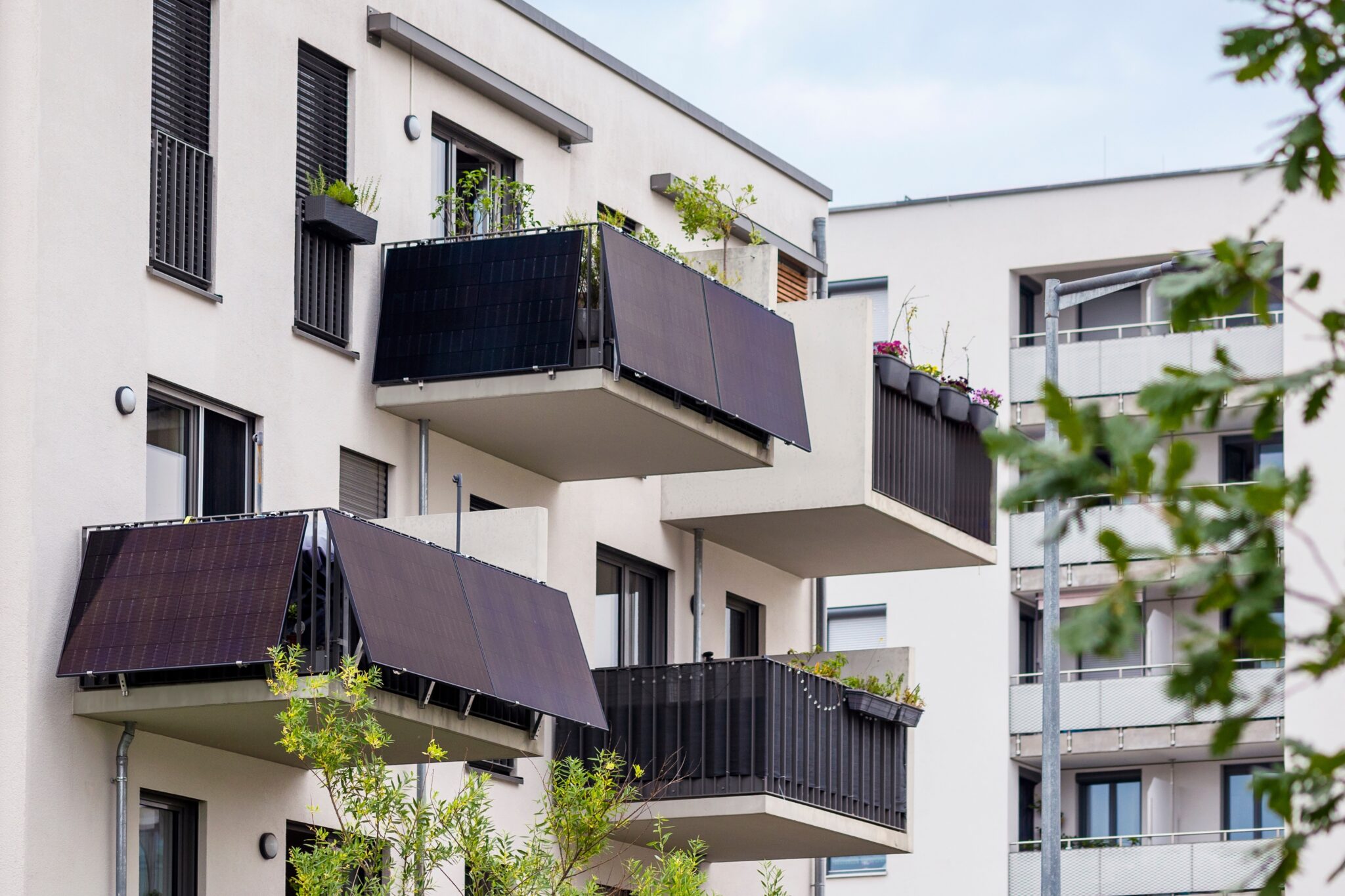
| ▲ | adrianN 10 hours ago | parent | next [-] | | I have 1kW of solar on my balcony with some storage. That's enough to satisfy a large part of my demand. On sunny days I produce 4-6kWh, depending on the season. | |
| ▲ | ViewTrick1002 3 days ago | parent | prev [-] | | Have you heard of balcony solar? Stick some storage with it? https://en.wikipedia.org/wiki/Balcony_solar_power So you want a peaking nuclear plant for firming? Vogtle costs 18 cents/kWh when running at 100% 24/7 all year around. A typical gas peaker runs at 15-25% of the time. Running a peaking Vogtle now costs somewhere like 60-90 cents/kWh. As soon as new built nuclear power with ruinously expensive CAPEX and acceptable OPEX hits the raw physical incentive systems of the our energy system it just becomes stupid. | | |
| ▲ | 0x457 4 hours ago | parent [-] | | > Have you heard of balcony solar? Stick some storage with it? Sure, let me throw away everything I grow on my balcony so I can get some storage and panels. Still not going to work for me because my balcony is west facing. I have a bunch of solar-powered devices on my balcony, and metrics tell me realistically I get 2 hours of sunlight that matters a day. | | |
| ▲ | ViewTrick1002 an hour ago | parent [-] | | Are you growing things on the outside of your balcony railing? [1] West facing is perfect, means you get to take advantage of everyone else producing cheap power during the day and optimize your own delivery for when you are home in the late afternoon/evening. I find it curious that the entire thought of balcony solar seems to upset you? [1]: https://solarmuseum.org/wp-content/uploads/2025/01/shutterst... |
|
|
| |
| ▲ | mpweiher 3 days ago | parent | prev | next [-] | | Where are you getting 18 cents/kWh? Lazard? Anyway, even if that were correct numbers, it would misleading on several fronts, as the only new western reactors were unrepresentative FOAK builds, and also troubled beyond just regular FOAK status. Furthermore, the costs tend to be calculated for the period while they are repaying the loans, so it's mostly capital costs. Once the plant is paid off, the price drops dramatically. The average build time is currently 6.5 years, median slightly less, trend downwards. | | |
| ▲ | ViewTrick1002 3 days ago | parent [-] | | The currently proposed handout from tax money for the French EPR2 fleet is 11 cents/kWh and interest free loans. Sum freely. That is with the first reactor coming online 2038 with a perfectly executed project. I suggest you stop referencing unsourced statistics when the topic at hand is new built european nuclear power. Edit - toned it down | | |
| ▲ | mpweiher 3 days ago | parent | next [-] | | I asked you where you were getting the 18 cents/kWh hour from. Which you did not answer. And then you accuse me of referencing unsourced statistics and lying. Hmm... The 6.5 years figure is from here: https://www.sustainabilitybynumbers.com/p/nuclear-constructi... "Current european nuclear" is completely atypical and unrepresentative. The numbers are too low to be statistically significant anyhow, but on top of that they were all FOAK builds, all of a single (base) design that has been deemed too difficult to build by its manufacturer and thus discontinued, and mostly built in countries with little recent nuclear experience. The HPC build, for example, was very explicitly intended to build up the UK nuclear industry, which was a significant part of the cost. | | |
| ▲ | ViewTrick1002 3 days ago | parent [-] | | I think this response embodies the problem with new built nuclear power. 1. Start with ignoring the EPR2 costs. 2. Cherry-pick data that does not represent western timelines. Of course ignoring the best case for the first EPR2 reactor is 12 years if they start today. 3. Blame everything on ”FOAK”. Despite Hinkley point C being reactor 5 and 6 in the EPR series. But that is of course ”FOAK”. 4. Allude that the next UK reactor will be cheaper. Despite the projected cost for Sizewell C is £38B before even starting compared to the current projection at £42-48B for Hinkley Point C. Sizewell C truly shows the state of new built European nuclear power. EDF is too financially weak to take on any further nuclear construction liability like a fixed price contract, and the CFD would be ruinously expensive. Instead it is a pure cost-plus contract where an extra surcharge is added to all ratepayers as soon as construction starts having people today pay for electricity hopefully delivered 10-15 years in the future. Hiding the true all-in cost in terms the average tax payer doesn’t understand rather than a trivially understood CFD. Like I said. As soon as new built nuclear power is confronted with reality it becomes economic and opportunity cost lunacy unless you can motivate it with for example military ambitions. |
| |
| ▲ | credit_guy 3 days ago | parent | prev [-] | | > I suggest you stop lying Was this really necessary? |
|
| |
| ▲ | solarengineer 3 days ago | parent | prev [-] | | As I understand it, the technologies exist by which home owners who already have solar can draw only as much grid energy as they actually need. There are multiple uses of nuclear energy beyond home usage and there would be those who do not have access to adequate solar or wind energy. Apartment residences in large cities are one of the target segments. | | |
| ▲ | ViewTrick1002 3 days ago | parent [-] | | Have you heard of balcony solar? Stick some storage with it? https://en.wikipedia.org/wiki/Balcony_solar_power Why should industry buy extremely expensive new built nuclear power when grid based zero marginal cost renewables are available? If they’re having worries about price fluctuations then we already have markets for electricity futures. The perfect market for stable new built nuclear power. The problem for new built nuclear power is that they need enormous tax payer based handouts to close the gap between the price of electricity futures and production cost. Let alone making a profit. How does industry deal with 50% of the nuclear capacity having outages for months on end like happened in France during the energy crisis? |
|
|
|
| ▲ | throw0101a 3 days ago | parent | prev | next [-] |
| > Here in Ontario, residentially we pay about 0.09 USD per kWh at night and 0.18 USD with demand peak pricing on weekday afternoons. Provincial regulatory report from 2025-2026: * https://oeb.ca/sites/default/files/rpp-price-report-20251017... Search for "RPP Price Report" for previous ones: * https://www.oeb.ca/consultations-and-projects/policy-initiat... |
|
| ▲ | belorn 3 days ago | parent | prev | next [-] |
| Is that the commercial price to the end customer with tax and connection fees, or is it the gross price at the power exchange? |
| |
| ▲ | retrac 3 days ago | parent | next [-] | | Consumer price of the energy. Doesn't include connection fees, but those are a minority of the cost. Includes special energy taxes. But not sales tax. For a real example, I'm on flat rate and if I use 1000 kWh my monthly bill will be 211 CAD (effective rate 0.21 CAD / 0.13 EUR per kWh) including taxes, connection, delivery, everything, but without subsidy. The amount I pay after the subsidy is applied would be less at 165 CAD. | | |
| ▲ | belorn 3 days ago | parent | next [-] | | Consumer price for here in South of Sweden during October was for me €0.22 per kW/hh which include tax. On top of that I also had additional fixed connection fee and an fee based on peak consumption rate (combined those two were an extra €125 for that month). No subsidy. The reason for the high kW/h is because limited wind/solar during that month and high gas prices which result in high market price at the power exchange. The given reason for the fixed fees is because of the need to expand transmissions and build out more reserve energy to handle the increase variability of the grid as a result of the increase use of renewables and the outcome of decommissioning a few nuclear reactors in the south of Sweden. | |
| ▲ | hvb2 3 days ago | parent | prev [-] | | Is the subsidy just to lower cost of living for the lowest incomes? Would be very curious about the rationale for it if not. Why would you subsidize increased energy use | | |
| ▲ | retrac 3 days ago | parent | next [-] | | It applies to most private residential and small-scale business electric use. Rationale would be getting quite political, as you might imagine. But I suppose there are several justifications that are given. One is to offset the cost to the consumer for phasing out fossil fuels. Coal has been shut down and wind and storage and new nuclear is being built. Politically it has been presented as a matter of fairness; poor people are least able to pay for increases or to retrofit. A kind of wealth redistribution. (Though when you remember large corporately-run farms are included in the subsidy it's maybe not the most progressive form of redistribution.) In Quebec where they have a great surplus of hydroelectric they also partly subsidize residential electricity with the profits of the surplus sale to the United States. The energy is so cheap there than resistive heating is cheaper than natural gas for home heating. Avoiding dependence on oil and gas imported from either the US or western Canada, or rather trying to lessen that dependence, is a standing issue for both Quebec and Ontario. | |
| ▲ | scotty79 3 days ago | parent | prev [-] | | The argument against deregulation of energy prices is that poor people won't be able to afford it. But if you create a program that subsidizes some reasonable amount of energy per person per month the price of electricity can go as high as it needs to. I don't know if that was rationale in Canada but it's one possible rationale why government might want to aubsiduze energy usage. |
|
| |
| ▲ | nine_k 3 days ago | parent | prev [-] | | End customer tariffs, I suppose. IDK if they include delivery. Bulk prices at exchanges are way lower, like 2.2¢ per kWh: https://www.ieso.ca/Power-Data/Price-Overview/Ontario-Market... |
|
|
| ▲ | apatheticonion 3 days ago | parent | prev | next [-] |
| Cries in $0.45/kWh AUD (metro Sydney). Best I've found is $0.37/kWh |
| |
| ▲ | rstuart4133 2 days ago | parent [-] | | I was curious, so I asked an AI (Gemini) to compare the wholesale price of electricity in Ontario vs Sydney, in Canadian dollars, including any subsidies in the price. The reasoning is the wholesale price best reflects the cost of production. The outcome was surprisingly close. Sydney seemed to be a little more expensive, with a spot market average of CAD$73/MWh vs CAD$65/MWh. A wash really. I don't know what is going on with the retail prices. My rule of thumb is multiply by 3, but your multiple is closer to 4.5. I live in Brisbane for example, where the average price is $100/MWh and we pay around $.30/kWh retail. Have you looked at https://www.energymadeeasy.gov.au/ ? |
|
|
| ▲ | tokai 3 days ago | parent | prev [-] |
| Relative cheap? More like ridiculously cheap. |