| ▲ | williebeek 2 hours ago | |||||||||||||||||||||||||||||||||||||||||||||||||||||||
Until a few years back most of my systems used Linux From Scratch. It's amazing for learning your system and how all its libraries integrate. I created my own boot scripts, my own pacman package manager repository, etc. One of the main reasons I stopped using LFS was the amount of work required for updates. Firefox is bad to compile yourself, because it's slow and often requires a library version you don't have, such as a new ICU version. Updating ICU also requires you to build packages that depend on it: harfbuzz, ffmpeg, qt5, poppler and the list goes on. Chromium takes it to a whole new level. While Linux packages typically have an automake flow (configure, make, make install) Chromium requires ninja, not just ninja but a specific version depending on the Chromium version. Then you need a ton of libraries with specific versions (or custom patches) or use the built-in versions provided by chromium, which may or may not compile at all. Then there is clang, while most software is compiler agnostic, Chromium does not compile with gcc. Of course, it needs a specific clang release, sometimes even a pre-release, or again a load of patches to compile. It seems the chromium build process is mostly built by engineers desperate to reinvent the wheel. While everything can work fine with sane Linux defaults (GCC, automake, system libraries) they convinced themselves their software is so complex and unique it requires a special treatment. | ||||||||||||||||||||||||||||||||||||||||||||||||||||||||
| ▲ | rcxdude an hour ago | parent | next [-] | |||||||||||||||||||||||||||||||||||||||||||||||||||||||
Chromium looks like a build system for a complex integrated project where the engineers have one priority: make the application work as best it can. You will quickly find that when you focus on that then making the build system convenient, especially convenient for distribution packagers with their myriad of own rules and modifications that they want to make on top of your system, is quite a big blocker to the primary goal. You can see similar things with applications like OBS, where they bundle modified libraries to fix problems and then distributions unbundle them and release broken packages, causing no end of grief for users and the developers. | ||||||||||||||||||||||||||||||||||||||||||||||||||||||||
| ▲ | account42 an hour ago | parent | prev | next [-] | |||||||||||||||||||||||||||||||||||||||||||||||||||||||
The Chromium build process is just a consequence of the monorepo mindset. For Google, depending on specific versions of tools and dependencies is not a problem because all their engineers will automatically get those versions. For the Linux distribution model it's a pain. | ||||||||||||||||||||||||||||||||||||||||||||||||||||||||
| ▲ | Good4boothee 14 minutes ago | parent | prev | next [-] | |||||||||||||||||||||||||||||||||||||||||||||||||||||||
> Linux defaults (GCC, automake, system libraries) Last time I tried Gentoo desktop I ended up with 8 separate autotools versions, and gcc & glibc was not that far behind in count. And just like in https://xkcd.com/927/ every C developer tries to improve the situation by creating another build system. | ||||||||||||||||||||||||||||||||||||||||||||||||||||||||
| ▲ | yyaakkqq 30 minutes ago | parent | prev | next [-] | |||||||||||||||||||||||||||||||||||||||||||||||||||||||
gentoo's emerge is awesome. I keep a gentoo vm just to compile firefox, because it is impossible any other way. even though i don't use gentoo overall. the comments trying to defens chrome (and old OBS) are completely corporate shills or missing the point. yeah obs at first did that because they had to, since it was such a small and niche project the devs had no pull upstream. after distros did all the unbundling job and helped them move patches upstream now every software benefit from those libraries fixes. Google took chromium et al from open source and actively moved in the wrong direction, while having all the pull and influence like no open source project will ever have! its malice and/or incompetence. if you don't see that you're either shillings or lying to yourself. or have no knowledge of what open source is about. | ||||||||||||||||||||||||||||||||||||||||||||||||||||||||
| ▲ | delta_p_delta_x an hour ago | parent | prev [-] | |||||||||||||||||||||||||||||||||||||||||||||||||||||||
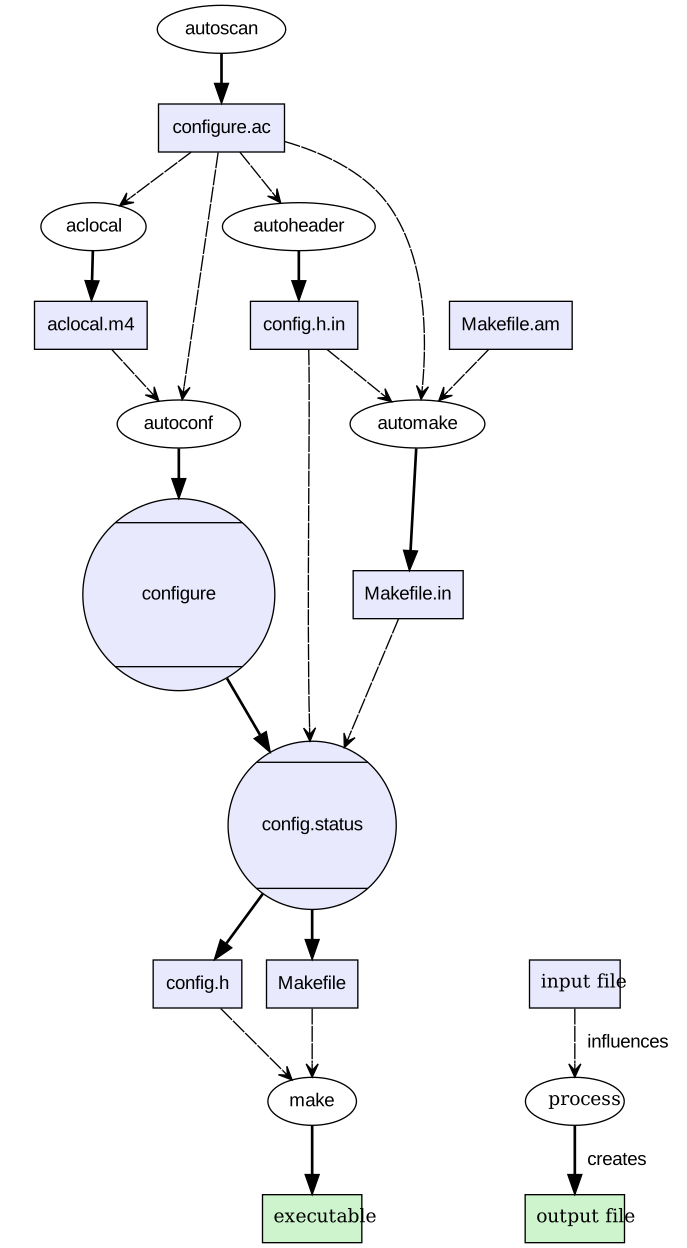
There is not some arbitrary notion of wheel reinvention just for browsers. Calling browsers 'just browsers' is doing their feature set a huge disservice: they are bona fide operating systems or virtual machines, which have to load and run untrusted, unverified data and code within critical system libraries (many of which with kernel-mode access, such as GPU drivers, sound drivers, USB subsystems, and more), and do a huge amount of sandboxing to guard against escalations. Within Google, a Chromium build uses remote build execution by default, upstream Clang by default (for the latest features and fixes, and Chromium developers regularly contribute to LLVM), and needs to cross-compile easily for at least a dozen different OS-architecture triples (Linux x86-64, Linux ARM, macOS, Windows x86-64, Windows on ARM, iOS, Android x86-64, Android ARM, Android TV, some BSDs, etc). Everything you've listed—from ninja, to Clang, to libraries with custom patches, to Clang releases, including requiring pre-releases sometimes—is optimised for Google's scale, rather than the lone warrior developer. What you call 'sane Linux defaults' (especially the examples you have listed: GCC, automake, so-called 'system libraries') are highly antagonistic to all of the above. They may make life easy for the so-called 'default case' of desktop Linux (arguable; Chromium was first released on Windows, and secondly since desktop Linux's most common C library, glibc has an unstable ABI, making back-portability impossible), but make it incredibly hard to get out a project of such immense complexity. All of Chromium's tooling and 'complexity' was developed in response to the 'sane' defaults being not so sane after all. To get a GCC cross-compile for a given set of architecture triples, one needs a complete graph of GCC toolchains targeting every pair of host and target. On the other hand Clang is natively a cross-compiler; pass in `--sysroot` and the host compiler will redirect for the target instantly. Automake (and the autotools in general) is slow as molasses compared to ninja. It is based on computing and compilation from the 1970s, and their defaults probe for long-since-dead string comparison functions that are expected to work by default nowadays on most hosted systems. Not to mention it has an extraordinarily complicated configure step[1], and an equally appalling macro-based configure language. Ninja is purely declarative, and is not even meant to be human-readable, as it is a back-end for a variety of build generator tools (CMake, XMake, build2, Bazel (Blaze internally at Google), Meson, probably more). Google have in fact rewritten Ninja to be a remote-build-capable tool from the outset[2], and they call it Siso. Siso has more than halved my Android build times even compared to Ninja because of its incredible use of RBE. Frankly I think it should be evident why they have opted for 'rewriting the world' including vendoring and modifying system libraries, as well as including efforts like Skia, ANGLE, and more: directly relying on 'system libraries' is painful. I mentioned GPU drivers. Imagine rewriting the same code over and over to have precisely the same behaviour on D3D, Vulkan, OpenGL, Metal, and every single vendor GPU driver on every single system (and there are a lot more on mobile than on desktop: ARM Mali, Qualcomm Adreno, Samsung Xclipse, Imagination PowerVR, Huawei, MediaTek; this is not even close to exhaustive, just look at the Khronos vendor list). When comments like yours are made I wonder if there is ever a consideration beyond 'it makes the developer's life hard'. As developers, our ultimate target audience are the users of our software. We should be willing to do anything come hell or high water, even making the dev-ex extraordinarily convoluted, if it means the user experience will be the smoothest and fastest possible. Sure, there is a balance, but I believe it should be strongly skewed towards the user story first. [1]: https://upload.wikimedia.org/wikipedia/commons/8/84/Autoconf... [2]: https://chromium.googlesource.com/build/+/refs/heads/main/si... | ||||||||||||||||||||||||||||||||||||||||||||||||||||||||
| ||||||||||||||||||||||||||||||||||||||||||||||||||||||||