| ▲ | ChemSpider 2 hours ago | |
"insulin resistance trends" - whaaaaat? how would they do THAT? That would be huge for so many people, including diabetics, obese people or women with PCOS (PCOS alone affects more than 10% of women of reproductive age) Is that measurement accurate? Like, a person starts taking Metformin -> and a few days later the watch detects a drop in insulin resistance? | ||
| ▲ | obmelvin an hour ago | parent | next [-] | |
I'm quite curious. Friends I've talked to have been very pessimistic about accurately measuring blood sugar via a watch. If they are actually able to get an optical measurement which is good enough for MoM or WoW trends, I'd agree it's pretty big even if they can't provide anything precise enough for real time / daily use. Just being able to roughly validate diet changes for women with PCOS could be very impactful and that's the smallest of the 3 populations you called out. | ||
| ▲ | ortusdux an hour ago | parent | prev | next [-] | |
FDA compliance has been tough for optical measurement of blood sugar and blood pressure. I'd imagine that this is why they are doing a monthly averages and keeping their claims subdued. | ||
| ▲ | jerlam 2 hours ago | parent | prev | next [-] | |
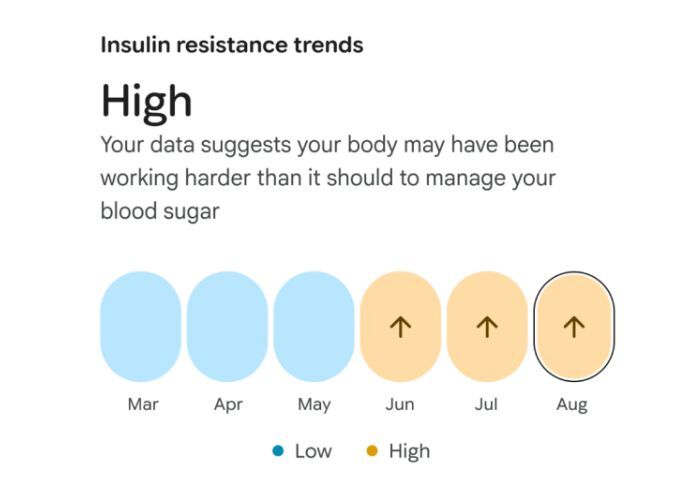
It does monthly trends: https://m-cdn.phonearena.com/images/articles/452350-image/in... That image also implies that not only does it know trends, but it also has an absolute good/bad value. | ||
| ▲ | Someone1234 2 hours ago | parent | prev [-] | |
Yeah, I was researching this just last week and there is tons of funding going into wearable blood sugar monitors but nothing wearable sized coming out (several lab sized ones though). I’d love to read more about what this is, and what technical signals / data they’re using. | ||