| ▲ | jwatzman 4 hours ago | |||||||
There are a few others. “Quite” comes to mind — “I am quite hungry” or “that meal was quite good” can mean opposite things, depending on the speaker region and even voice inflexion if spoken. | ||||||||
| ▲ | MrJohz 4 hours ago | parent | next [-] | |||||||
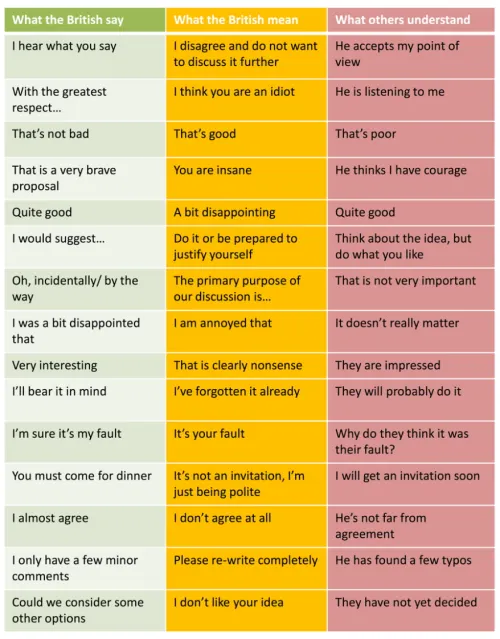
Once you start going in that direction, a lot of things that British people say can require some amount of translation, see e.g. this table: https://miro.medium.com/v2/resize:fit:640/format:webp/0*0Fs1... | ||||||||
| ||||||||
| ▲ | dofm 3 hours ago | parent | prev [-] | |||||||
Quite, indeed, has no simple meaning in British English. Any non-British attempt to assign one meaning that is different to their regional meaning is doomed to failure :-) I use it in different senses all the time. | ||||||||