| ▲ | bonoboTP 6 hours ago | |||||||
Simply anticipating basic push backs from reviewers makes sure that you do a somewhat thorough job. Not 100% thorough and the reviews are sometimes frivolous and lazy and stupid. But just knowing that what you put out there has to pass the admittedly noisily gatekept gate of peer review overall improves papers in my estimation. There is also a negative side because people try to hide limitations and honest assessments and cherry pick and curate their tables more in anticipation of knee jerk reviewers but overall I think without any peer review, author culture would become much more lax and bombastic and generally trend toward engagement bait and social media attention optimized stuff. The current balance where people wrote a paper with reviers in mind, upload it to Arxiv before the review concludes and keep it on Arxiv even if rejected is a nice balance. People get to form their own opinion on it but there is also enough self-imposed quality control on it just due to wanting it to pass peer review, that even if it doesn't pass peer review, it is still better than if people write it in a way that doesn't care or anticipate peer review. And this works because people are somewhat incentivized to get peer reviewed official publications too. But being rejected is not the end of the world either because people can already read it and build on it based on Arxiv. | ||||||||
| ▲ | bjourne 3 hours ago | parent [-] | |||||||
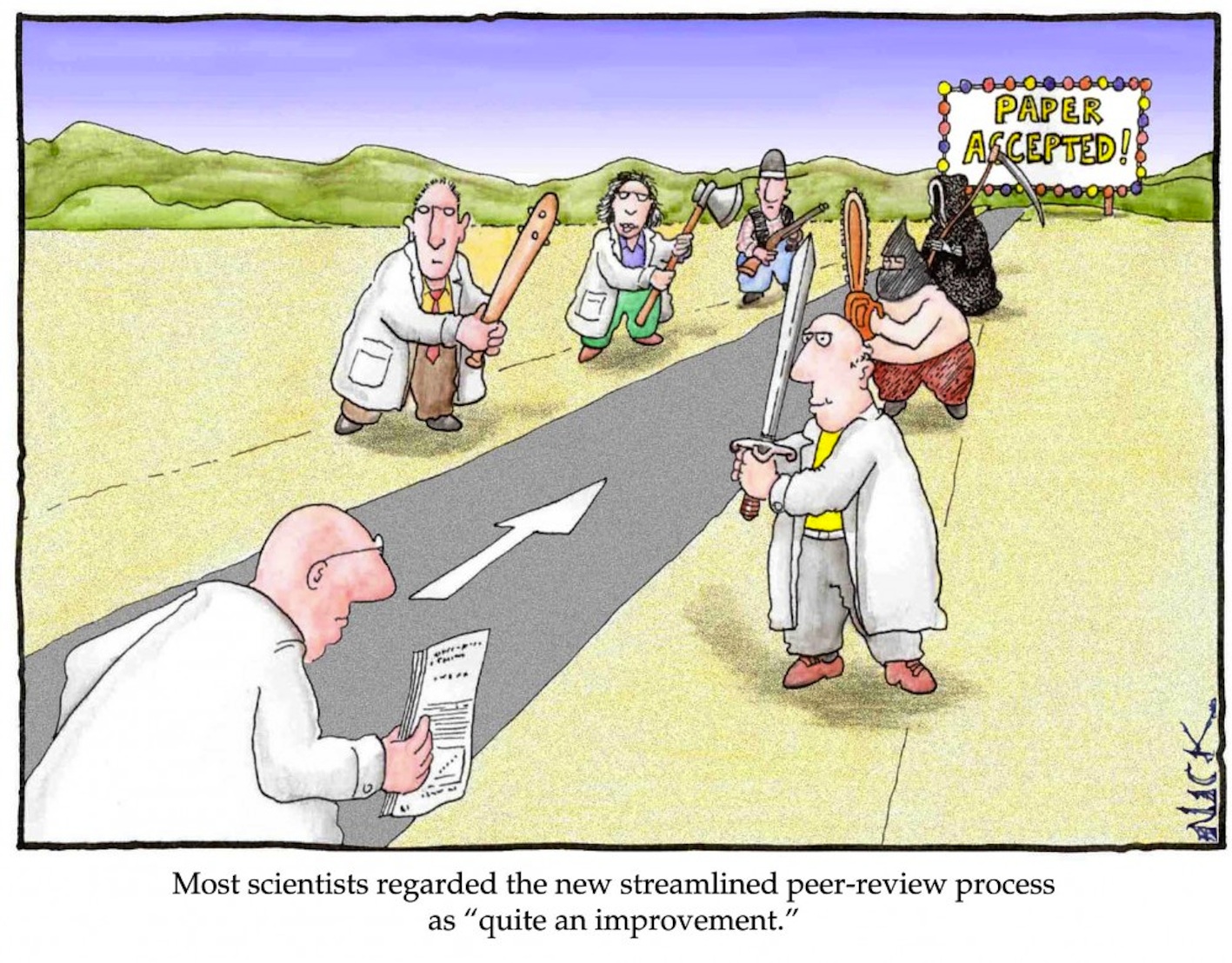
I really am not sure about that: https://biologue.plos.org/wp-content/uploads/sites/7/2020/05... The problem is that "optimizing for peer-review" is not the same thing as optimizing for quality. E.g., I like to add a few tongue-in-cheeks to entertain the reader. But then I have to worry endlessly about anal-retentive reviewers who refuse to see the big picture. | ||||||||
| ||||||||