| |
| ▲ | linkjuice4all 5 hours ago | parent | next [-] | | LA is fortunate in that it doesn't suffer from freeze/thaw cycles and can put down a lot more concrete without worrying about expansion/contraction and water ingress. I've noticed that a fair amount of concrete sidewalk in Los Angeles appears to have been poured when the neighborhoods were first developed (as in post-WW2) and haven't been removed or updated since then (at least based on the date/contractor stamps). Again, the lack of freezing weather, wide streets that don't necessitate parking/loading on the sidewalk, and fewer tree roots to uproot/disturb the gutters and sidewalks means that the original infrastructure is still in use. More to the point - creating curb cuts is more than just customizing concrete forms. Oftentimes you'll need to regrade the surrounding area to reduce slope, move any in-ground utilities, and revisit any other updates to building codes (such as the bike lane stuff mentioned in the article). Not everything in/under the streets is owned by the same city/county/state/federal department/private org so that further complicates the work. If only the real estate speculators that settled this swampy valley had considered this stuff in the early 20th century... | | |
| ▲ | mschuster91 2 hours ago | parent [-] | | > LA is fortunate in that it doesn't suffer from freeze/thaw cycles and can put down a lot more concrete without worrying about expansion/contraction and water ingress. The freeze thaw cycles more impact the asphalt. Basically, wherever there is a joint that has been improperly sealed with tar, or the asphalt cracks due to overload - e.g. from heavy vehicles in general or especially surrounding bus stops due to the force of buses accelerating in the summer, when the asphalt is softer, you get water seeping through into the asphalt... and when it then freezes, it expands, making the pothole worse with every cycle of thawing and freezing. That is why it is so important to properly repair potholes. Some youtubers have made themselves infamous by fixing potholes themselves, but they use non-melting ready mix... that works in a pinch to make sure that vehicles don't get damaged, but you will need to rip that out to the foundation, fix the holes with gravels, compact that, place proper hot molten asphalt, compact that, fill again and compact, and then seal the edges with tar. Otherwise the ready-mix will disintegrate over time and you'll end up with the original pothole, or with an even worse one if you have freeze and thaw cycles. |
| |
| ▲ | mdorazio 5 hours ago | parent | prev | next [-] | | Worth noting that LA does not have freeze cycles. I wonder what the pothole formation likelihood is as a result. | | |
| ▲ | kevin_thibedeau 4 hours ago | parent [-] | | LA uses asphalt overlays on top of concrete. These have adhesion problems compared to monolithic asphalt over gravel. |
| |
| ▲ | djoldman 5 hours ago | parent | prev [-] | | Interesting! Is it possible to make the ramps offsite and then fit into place? EDIT: I'm assuming the difficulty here is the pedestrian ramps at intersections. NOT the curb that spans the entirety of a road section. | | |
| ▲ | fsckboy 4 hours ago | parent | next [-] | | I don't know what you mean, but I belive we're talking about "wheelchair ramps" at street corners some of the laws mandating that type of thing specify "if/when you renovate something, you need to bring it up to code, otherwise you can skate on the code" this affects a lot of the little tiny shops in NYC. if you change your facade or bathrooms, they need to be made accessible. however, it's not the cost of renovation, it's that accessibility can entail many many square feet of space that is now inaccessible-to-make-any-money-from, making the rent much more unaffordable. so, renovations are still done, but meticulously match what any previous plans on file would look like. | | |
| ▲ | cucumber3732842 4 hours ago | parent [-] | | Around here real estate listings are starting to not do interior pictures because the towns are known to predate on them for "hey you didn't get a permit for that bathroom reno" type crap. | | |
| ▲ | mschuster91 2 hours ago | parent [-] | | Y'all need permits for non-structural (i.e. layout/framing stays the same) bathroom renovations? Holy shit. | | |
| ▲ | cucumber3732842 38 minutes ago | parent [-] | | It's a make work scheme. They don't give a crap. They'll rubber stamp just about anything. It's like $50. They just want to force you to use a licensed trade if applicable. The trades themselves don't pull permits because it's not about the permissionn, it's about using them. The towns don't care unless you've cut them out so much that they feel slighted in which case they'll send you angry letters about violations, demand a million bucks and you'll hire a $10k lawyer (another licensed trade, lol) who'll get you off for $1k. Needless to say compliance is pretty low outside of the rich neighborhoods because normal people can't afford to tack $4k of engineering onto a "repave my shitty 2-car driveway" project or a $3k panel upgrade onto a "renovate my 50yo bathroom and add a couple outlets". It's all shit and should be replaced with a much lower touch system that's cheap enough people can afford to comply with it. But there's so many parties in on the racket that it'll come crashing down before that happens. |
|
|
| |
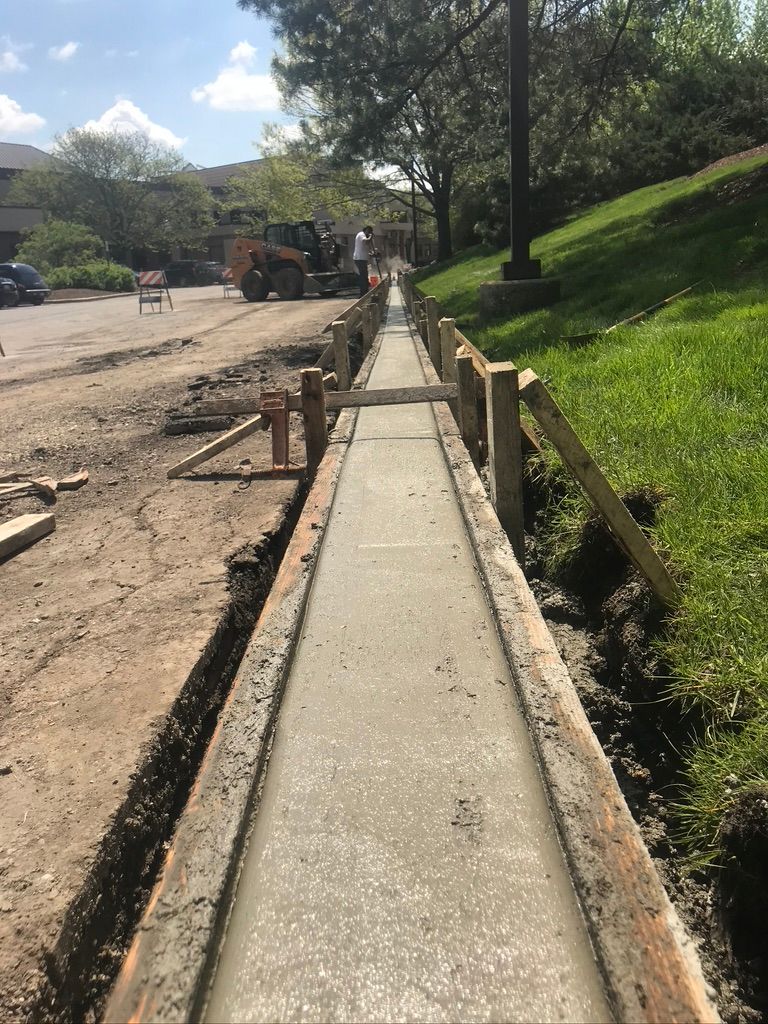
| ▲ | mschuster91 2 hours ago | parent | prev [-] | | > EDIT: I'm assuming the difficulty here is the pedestrian ramps at intersections. NOT the curb that spans the entirety of a road section. The curb elements are made offsite. All you do onsite is to cut the stones to length if need be. The challenge is properly anchoring them into the surrounding soil, and for that you need a concrete foundation. Basically, you make a gravel (or concrete) foundation, then you put down the curb element onto a few small pieces of wood, then you make a sort of mold cavity, and then you pour that mold full of concrete. Once that has cured, you put gravel to have an equal height with the road's gravel foundation on the road side and either soil or gravel on the pedestrian side to grade height - gravel if you want to place paving stones for pedestrians, or straight out soil if you want a grass siding. You can see a few pictures and diagrams on how we do it in Germany here [1]. [1] https://www.beton-info.de/randsteine-setzen/ | | |
|
|