| ▲ | avidiax 6 hours ago | |
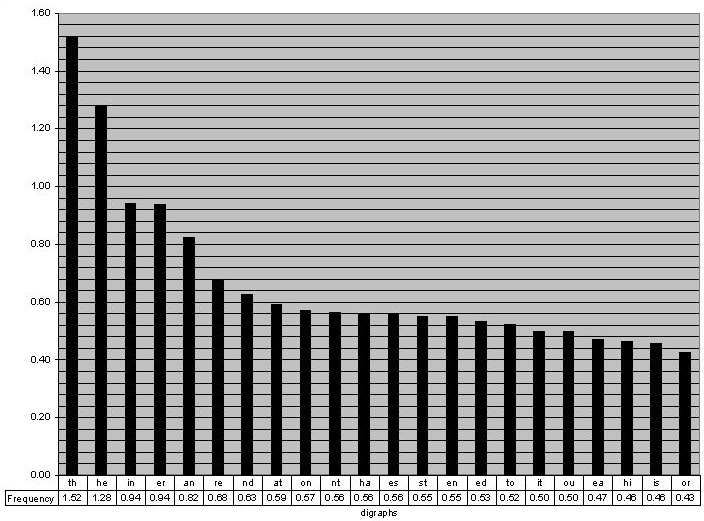
Looking at the English keyboard and the English digraphs, it doesn't seem like the coverage is that well optimized. We are currently capturing 8.65% of the digraph weight, but just getting the top-5 would account for 5% by itself. I also feel like distance travelled is the wrong (or an incomplete) metric. Change in direction seems like a good proxy for mental or physical effort. To take it to an extreme, I'd be very satisfied with a keyboard that had me move my thumb in a circle as on the original iPod, provided it just read my mind and inputted the right text. That's extreme distance but little effort. https://pi.math.cornell.edu/%7Emec/2003-2004/cryptography/su... See also: https://en.wikipedia.org/wiki/Typewise | ||
| ▲ | BrenBarn 5 hours ago | parent [-] | |
I agree that distance is not a great metric. The maximum travel distance on a smartphone screen is already tiny. I'd say the best metric is accuracy or lack of amibiguity, something like average confidence level that any given swipe means a particular word and not another. (This is assuming swipe-based word entry, which I much prefer to anything tap-based.) | ||