| ▲ | bpt3 4 hours ago | ||||||||||||||||
Most households are able to afford more than the essentials and do care about the cost of entertainment. There's value in the index you described as well, but IMO it doesn't make sense to use it as the basis for the overall economy. | |||||||||||||||||
| ▲ | darth_avocado 3 hours ago | parent | next [-] | ||||||||||||||||
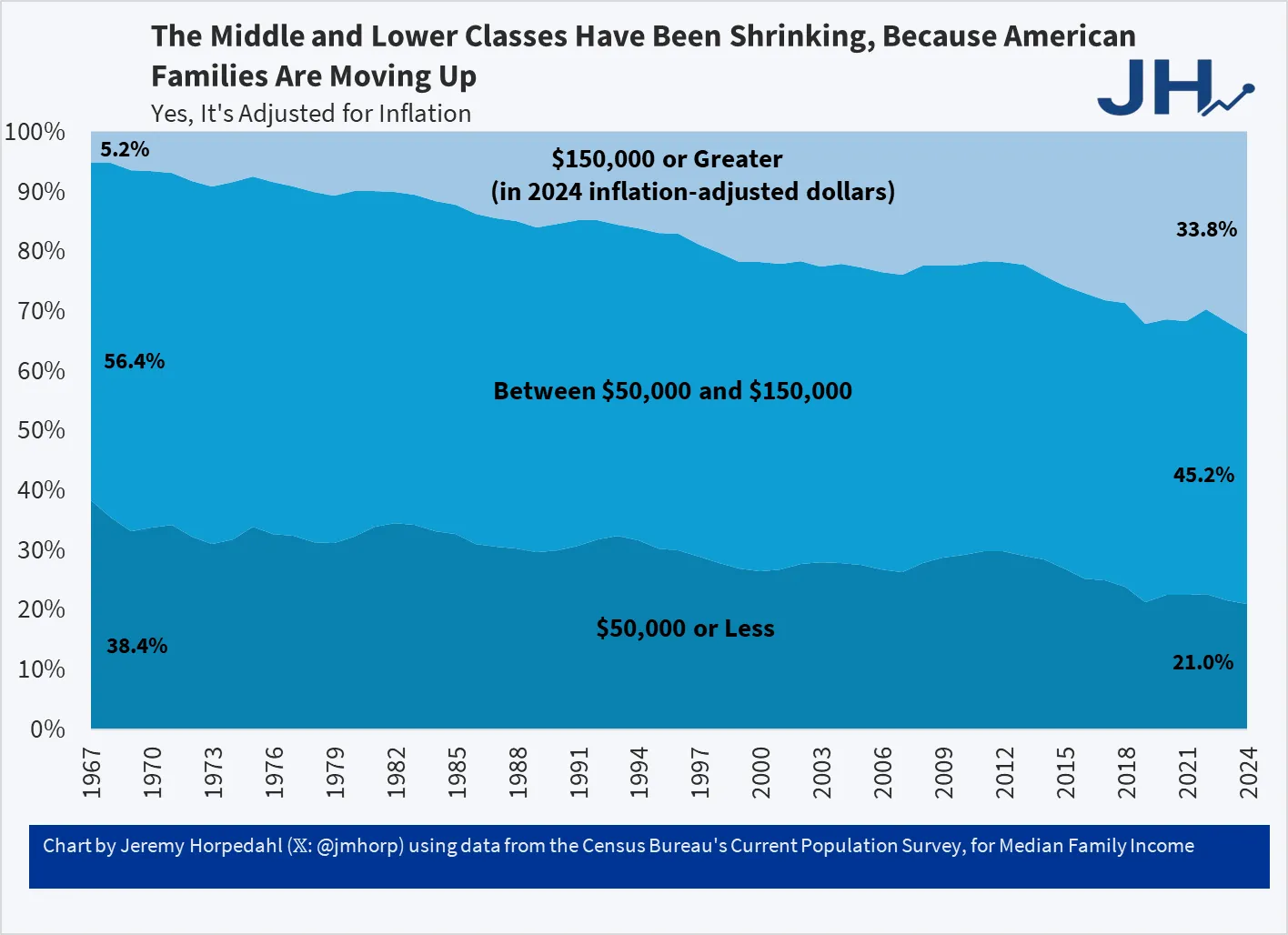
> Most households are able to afford more than the essentials and do care about the cost of entertainment. 1/3 of the households make less than $50k. Mean survival budget is $35k-40k. After taxes, if a third of the population can barely meet a survival budget, an index like this needs to be part of the overall economy. And the point of the ALICE index is exactly to address what you are pointing out. When wages, social security etc. were increasing proportionally to the essential goods, it made sense to have the CPI include other goods and services, allowing policy makers to use it as a basis for policy directions. However, when essentials become expensive faster than non essentials, it creates a problem for policy makers. It explains the “vibeflation” where policy makers were pushing back hard on economic struggles that most people are feeling by pointing to CPI numbers that show a 2-3% inflation, meanwhile people are struggling and dipping into savings to make things work. We need to have both. | |||||||||||||||||
| |||||||||||||||||
| ▲ | turtletontine 3 hours ago | parent | prev | next [-] | ||||||||||||||||
Thinking about the “overall economy” increasingly means focusing on the spending of the rich, and ignoring the poor and struggling. A consequence of increasing inequality is the rich make up more and more consumer spending. Consumer spending can therefore easily look great while most people are struggling to get by. There really is no “overall economy”, there are many many different stories happening all at once, and focusing on simple metrics lets you easily fool yourself. | |||||||||||||||||
| |||||||||||||||||
| ▲ | t-3 2 hours ago | parent | prev [-] | ||||||||||||||||
It doesn't make a lot of sense to measure the cost of entertainment in terms of monetary inflation though. Hugely price-tiered status-signaling goods like kids toys just don't respond to market forces in the same way commodities do. | |||||||||||||||||