Remix.run Logo
em-bee 6 hours ago

having kids is no longer an imperative for humans living in the 21st century

on the contrary. global population growth will plateau in a few decades, and negative population growth is already a problem in many countries, like all western countries, south korea, and also china.

isodev 5 hours ago | parent [-]

Stop looking it country by country. Globally, the trend is that of an increasing population. And fast. Humans are reproducing at unsustainable level.

macintux 4 hours ago | parent [-]

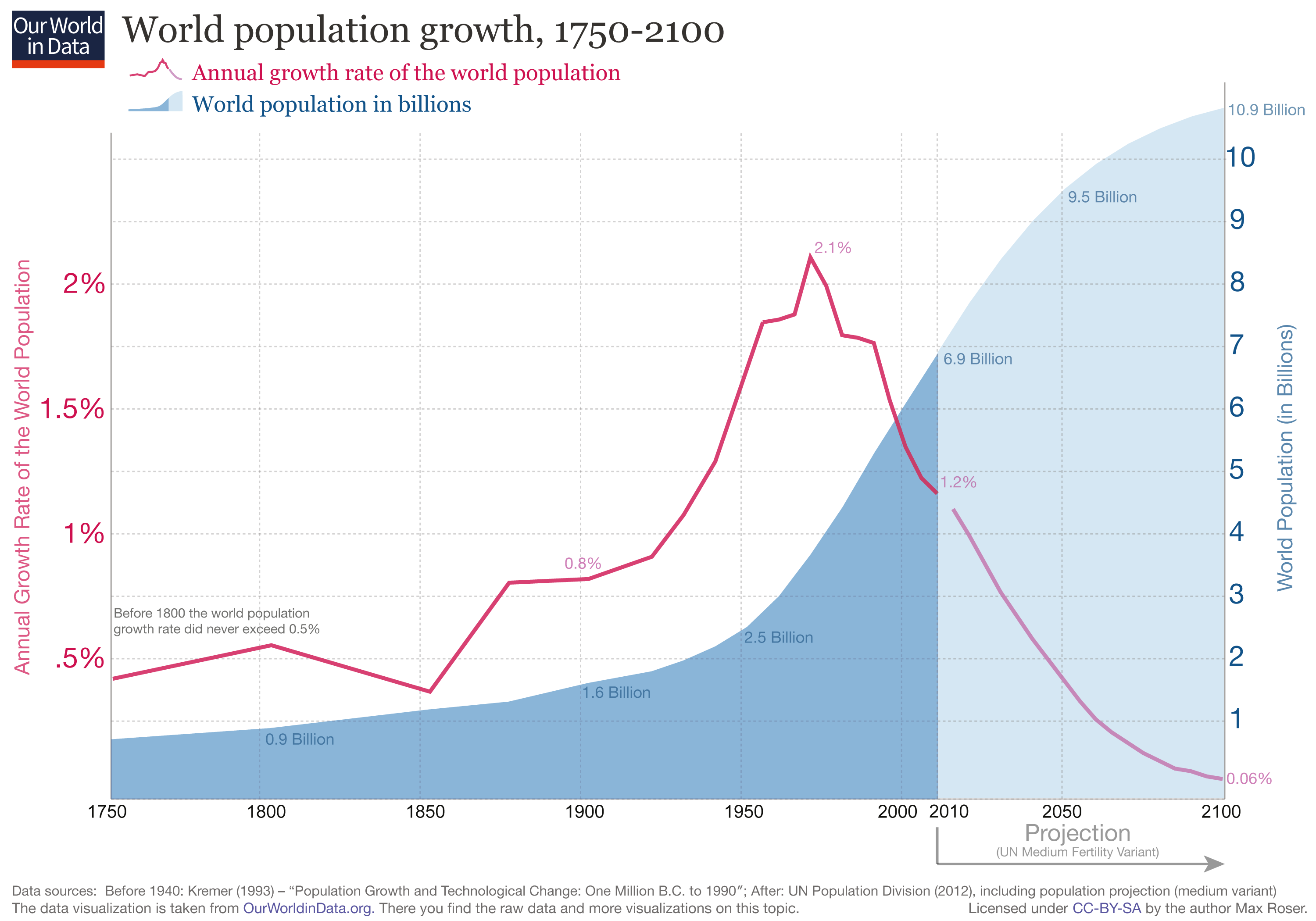
The number is still rising but the growth rate is plummeting.

https://assets.ourworldindata.org/uploads/2016/03/ourworldin...

isodev 3 hours ago | parent | next [-]

It’s a trend and it’s slowing down not plummeting. And even if it is, there are already more of us than we know how to sustain.

The problem at hand is not growth rate slowing down, it’s humans divided in tiny pockets of countries burning through what little we have left of natural resources.

People who have kids today, do so knowing that their children will most certainly be displaced by natural disasters.

em-bee 3 hours ago | parent | next [-]

there are already more of us than we know how to sustain

what is the evidence for that? if that were true then we would have lot's of people going hungry, but that's simply not the case. poverty is getting reduced world wide. if we could not sustain the current population, we should have lots of people dying from hunger and the population should stop growing. but the reason why population is growing especially in africa is exactly because the growth is still sustainable. if it wasn't, then it could not be growing.

avadodin an hour ago | parent | prev [-]

In 100 years, "us" is going to be Elon Musk's grandchildren, people from Niger, etc. and none of them are going to think like you whether they have to move or not.

em-bee 3 hours ago | parent | prev [-]

here is a more current graph that predicts the growth rate to become negative in the 2080s:

https://population.un.org/wpp/graphs?loc=900&type=Probabilis...