| ▲ | morsch 19 hours ago |
| In Germany most traffic lights have a full set of traffic signs that are in effect in the rare occasion that the light is out. |
|
| ▲ | t0mas88 19 hours ago | parent | next [-] |
| Same setup in the Netherlands, there are right of way signs everywhere that apply when the lights don't work. One interesting effect is that there are also often pedestrian crossings that have priority over everyone. Normally those are limited by lights, but without lights a steady stream of pedestrians stops all traffic. Seen that happen in Utrecht near the train station recently, unlimited pedestrians and bikes, so traffic got completely stuck until the police showed up. |
| |
| ▲ | anal_reactor 18 hours ago | parent [-] | | Except in NL you guys actually have someone sit and think about the flow of traffic, in most other countries the design is usually pretty much random. In my parents' city in Poland they decided to turn off the traffic lights at night and the result is much higher number of accidents. Funnily, my father failed to yield the right of way exactly when talking about the issue. Yes, theoretically all intersections do have full set of signs, but in practice the visibility of those signs is extremely limited. | | |
| ▲ | mejutoco 18 hours ago | parent [-] | | > Same setup in the Netherlands, there are right of way signs everywhere that apply when the lights don't work. Most places in Poland have this exact setup. And I say most because I have not seen one that does not, but I am guessing they exist. Maybe some of them have bad visibility even? If one does not respect the yield sign that does not seem a signaling problem. | | |
| ▲ | Ekaros 18 hours ago | parent | next [-] | | Some don't in Finland. But then it is back to basic rule of yielding to traffic from right. Which is pretty common on smaller roads so drivers should think about it enough. | |
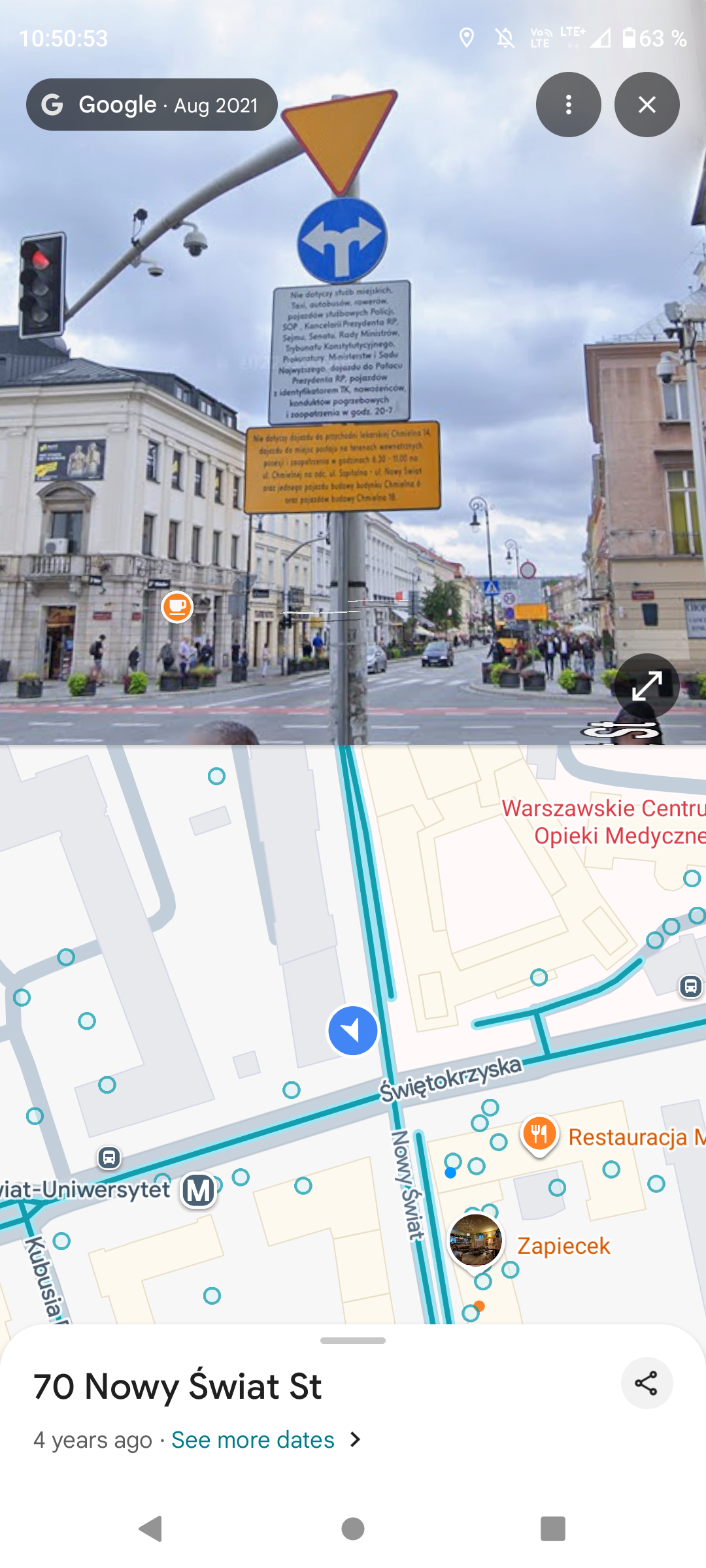
| ▲ | anal_reactor 17 hours ago | parent | prev [-] | | > that does not seem a signaling problem. Average signaling in Poland be like https://files.catbox.moe/ipl96o.png | | |
| ▲ | namibj 4 hours ago | parent [-] | | Are the words critical?
As a German I read that as "you are not the priority road; you may only go left or right, but not straight"? | | |
| ▲ | anal_reactor 4 hours ago | parent [-] | | The words sum up to "don't go straight unless you have business being there" but still, it really sums up the approach to signaling. Nobody in the whole command chain sat and thought "that might be a tiny bit difficult to parse". | | |
| ▲ | ncruces 3 hours ago | parent [-] | | I mostly read those signs as “don't go there unless you already know you can” which as a “tourist” I just assume can't (unless I'm a local, and figure it out). What I've recently found troubling is the places that use similar signs for emissions controls. With a rental you usually have a recent enough car that you can ignore those. Being able to distinguish between “low emissions zone, but any car from this decade can go in” and “local traffic only, you need to live in this neighborhood to enter” in a foreign language, bit me a couple of times while traveling. |
|
|
|
|
|
|
|
| ▲ | ailurooo 6 hours ago | parent | prev [-] |
| san francisco really really needs this.. the traffic lights were incredibly hard to see with the fog and rain.. |