| ▲ | danpalmer a day ago | |
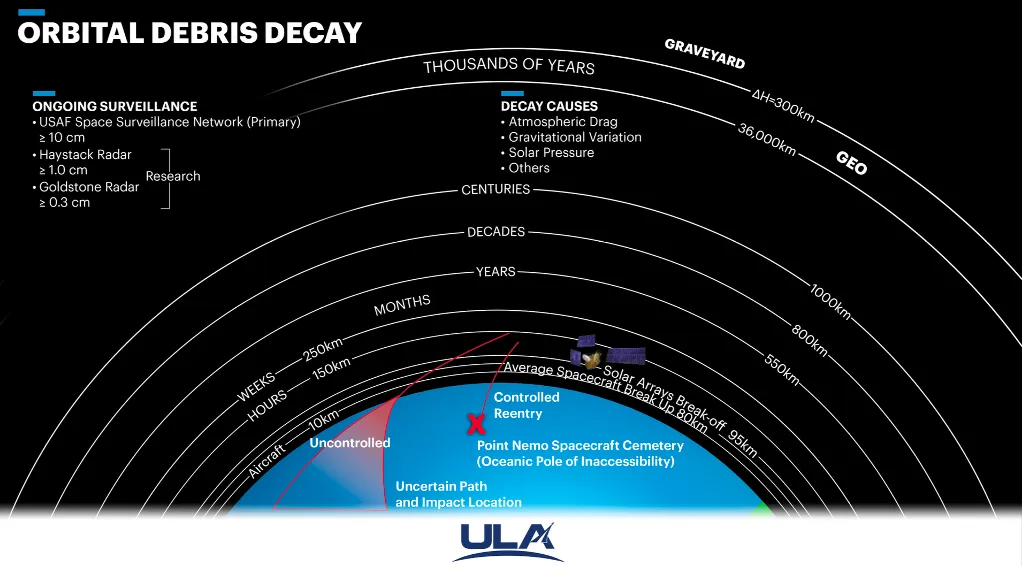
My understanding was that anything at ~500km needed readjustments every few months in order to not come down. Much less than 2-3 years. I'd be interested to know what the average lifespan or failure rate of Starlink has been. That's good that some are still up there 6+ years later, but I know many aren't. I'm not sure how many of those ran out of fuel, had hardware failures, or were simply obsolete, but an AFR would be interesting to see. | ||
| ▲ | jaywee 12 hours ago | parent | next [-] | |
Quite helpful infographics from ULA: https://blog.ulalaunch.com/hubfs/orbital%20debris.jpeg | ||
| ▲ | jaywee 7 hours ago | parent | prev | next [-] | |
Jonathan McDowell keeps track of all the Starlink Sat orbits, including failures: | ||
| ▲ | verzali 16 hours ago | parent | prev [-] | |
The atmosphere is still thick enough to drag you down at 500km. You would last typically last a few years before burning up - the rate of fall is pretty low at 500km. But you do need fuel to do collision avoidance manoeuvres and for attitude control (otherwise your panels will no longer face the Sun and your antennas will not face the ground). | ||